
HGLRC Mini M100 GPS Module
4.6Editor score
Compatible with 2-7 Inch Drones
3.3V to 5V Power Input
Onboard Status Indicator Lights
Discover the top GPS modules for drones in October 2026. This guide compares precision, compatibility, and features to help you choose the right GNSS receiver
GPS modules are essential for modern drone flight, enabling precise navigation, stable hovering, and reliable return-to-home functions. Selecting the right GNSS receiver ensures your aircraft maintains accurate positioning even in challenging environments with signal interference or magnetic anomalies.
We evaluated ten leading GPS modules based on chipset generation, satellite constellation support, compass integration, and compatibility with popular flight controllers. Our analysis focuses on real-world performance metrics like lock speed, update rates, and signal stability across various drone platforms and flying conditions.
Each selection highlights specific strengths such as compact size, low power consumption, or multi-protocol support. While our rankings reflect current market performance and user feedback, remember that pricing and availability can change frequently so check the latest details before purchasing.
4.6Editor score
4.8Editor score

4.8Editor score
This side-by-side comparison highlights the core specifications and capabilities of the top ten GPS modules available today. Reviewing these details helps you match the right receiver to your specific flight controller and aircraft type for optimal performance.




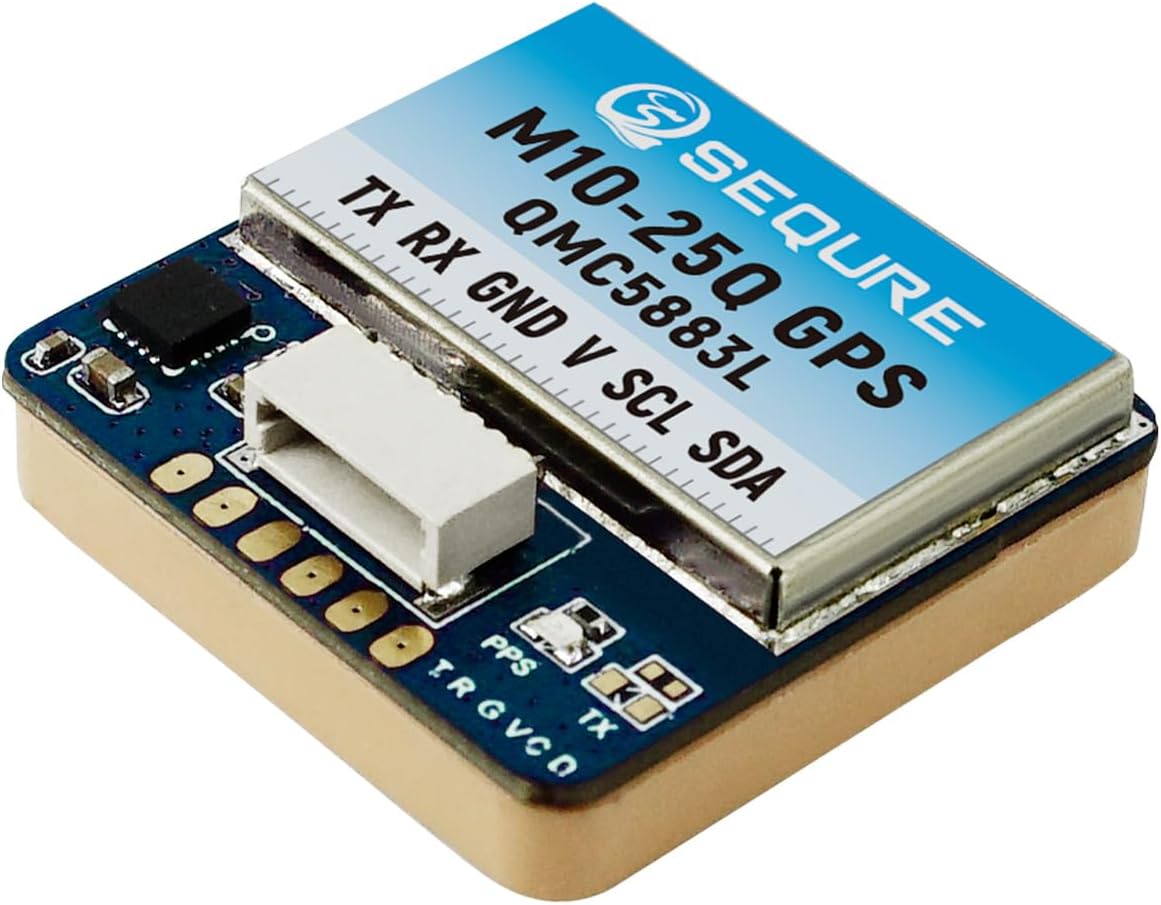
The SEQURE M10-25Q stands out as our top choice for FPV and fixed-wing drone enthusiasts who need reliable navigation without compromising on features. It boasts an excellent rating among users who praise its quick lock times and robust signal stability in varied environments. This module combines modern chipset technology with practical design choices that simplify integration into existing flight setups.
We may earn a commission when you buy through this link, at no additional cost to you.
At its core is the upgraded 10th generation UBLOX M10 chip which supports multiple GNSS constellations including GPS GLONASS BDS GALILEO SBAS and QZSS. This multi-system approach ensures you capture more satellites for better accuracy even in urban canyons or dense forest areas. The ceramic antenna and expanded PCB design further enhance signal reception while keeping power consumption low during extended flights.
While the plug and play connector option is convenient for beginners soldering provides a more secure connection for high vibration racing drones. The onboard compass helps maintain accurate heading data which is critical for autonomous flight modes and return to home functions. Some users note that initial configuration requires patience but the long term reliability justifies the effort.
If you need a versatile GPS module that balances performance ease of use and compatibility with F4 F7 flight controllers the SEQURE M10-25Q is an outstanding investment. It delivers consistent positioning data that enhances flight safety and enables advanced features like waypoint navigation. We highly recommend this for both hobbyists and semi-professional pilots seeking dependable GNSS performance.
Support for both NMEA and UBX protocols allows seamless integration with a wide range of flight controllers and telemetry systems without needing custom firmware modifications.
The advanced chipset and antenna design ensure rapid signal acquisition meaning you spend less time waiting on the ground and more time flying your drone effectively.
We may earn a commission when you buy through this link, at no additional cost to you.
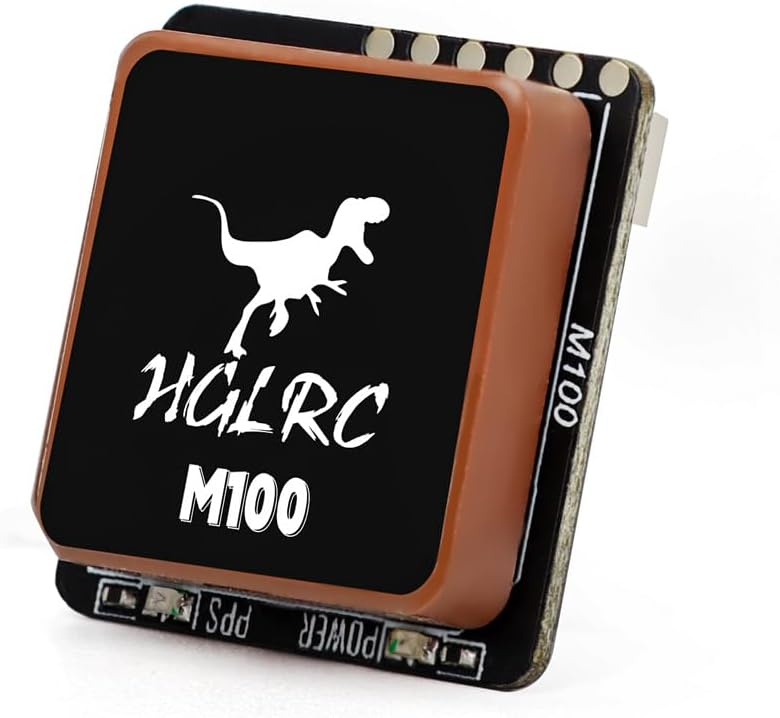
The HGLRC Mini M100 GPS Module is specifically designed for pilots who build small FPV racing drones where weight and space are critical constraints. Its tiny footprint allows installation on 2 to 7 inch traversal drones without adding significant bulk or affecting aerodynamic performance. Users appreciate its straightforward design that focuses on essential navigation capabilities without unnecessary complexity.
We may earn a commission when you buy through this link, at no additional cost to you.
This module features a selected ceramic antenna and externally expanded PCB to ensure stable signal reception despite its small form factor. It supports a wide voltage input range from 3.3V to 5V DC making it compatible with most standard flight controllers used in racing setups. The onboard power and PPS indicator lights provide immediate visual feedback on connection status and satellite lock quality.
Although it lacks some advanced features found in higher-end models like multi-protocol switching it delivers reliable positioning for basic autonomous modes and return to home functions. The ceramic antenna choice is a smart move for cost efficiency while maintaining decent sensitivity in open sky conditions. However dense tree cover might slightly reduce lock speed compared to larger antennas.
For budget conscious racers looking to add safe return to home capabilities without breaking the bank this module offers excellent value. It proves that small GPS units can still provide dependable data for flight stabilization and navigation. We recommend it for entry level FPV pilots who need essential GNSS functions in a package that fits tight builds.
The miniature form factor ensures minimal added weight preserving the agility and speed that are crucial for competitive FPV racing and freestyle flying.
Support for both 3.3V and 5V inputs simplifies wiring and reduces the need for additional voltage regulators in your power distribution setup.
We may earn a commission when you buy through this link, at no additional cost to you.
The JeeFly M8N GPS Module targets professional users and researchers who demand high precision and compatibility with advanced flight control systems like Pixhawk and PX4. With a high sensitivity 72-channel Ublox M8N chip it tracks up to 26 satellites simultaneously delivering exceptional accuracy for complex autonomous missions. This unit is built for reliability across diverse conditions and supports multiple GNSS constellations for global coverage.
We may earn a commission when you buy through this link, at no additional cost to you.
Its built-in compass provides essential heading data which reduces dependency on separate magnetometer modules and simplifies system integration. The 10Hz update rate ensures ultra-responsive positioning suitable for real-time navigation adjustments and smooth return to home functions even during dynamic flight paths. Status LEDs clearly indicate satellite lock and power states helping you verify connection integrity quickly.
While the module requires a longer cable and potentially firmware updates for certain Pixhawk models the stability it offers is unmatched for serious applications. The wide temperature operating range from negative 40 to 85 degrees Celsius ensures performance in extreme weather conditions where cheaper units might fail. Installation includes a mounting base and a 270mm cable for flexible placement away from magnetic interference.
If you operate drones for inspection surveying or scientific research this GPS module provides the accuracy and consistency needed for safe and efficient operations. Its robust construction and comprehensive feature set justify the higher investment for users who cannot afford navigation errors. We highly recommend it for any project requiring precise autonomous flight capabilities.
The 72-channel receiver allows simultaneous tracking of GPS GLONASS BeiDou and QZSS satellites ensuring maximum availability and redundancy for critical navigation tasks.
Designed specifically for Pixhawk and PX4 ecosystems this module integrates seamlessly with existing autonomous flight stacks and telemetry systems.
We may earn a commission when you buy through this link, at no additional cost to you.
The HGLRC M100 Pro GPS module is engineered for FPV fixed-wing UAVs that require robust navigation systems for long distance flights and autonomous missions. It features an upgraded 10th generation chip and a dedicated QMC5883L compass to ensure accurate heading and positioning data. With 120 receiving channels it can track a vast number of satellites improving lock stability during extended operations.
We may earn a commission when you buy through this link, at no additional cost to you.
This module is designed to work seamlessly with flight controllers common in fixed-wing setups providing reliable data for waypoint navigation and return to home functions. The manufacturer emphasizes their direct factory support and quick response times which adds confidence for users building complex aircraft. The compass integration is crucial for maintaining correct orientation especially when flying at high speeds or through varying wind conditions.
While it is slightly larger than mini racing modules it offers a balance of performance and durability suited for larger airframes. The expanded channel count helps maintain signal integrity even when satellite geometry changes during long distance travels. Some users note that setup requires careful wiring but once configured the module performs consistently over time.
For pilots flying fixed-wing aircraft who need dependable navigation without excessive weight this module provides an excellent solution. It ensures that your UAV returns to its home point accurately regardless of signal conditions. We recommend it for those seeking a robust GPS system designed specifically for the demands of fixed-wing flight dynamics.
With 120 receiving channels the module maintains strong satellite connectivity even in environments where signal obstructions might otherwise cause dropouts.
The design prioritizes stable long-term signal reception which is critical for fixed-wing missions that may last for hours without intermediate checks.
We may earn a commission when you buy through this link, at no additional cost to you.
The HGLRC M100-5883 Compass Module offers a refined design focusing on signal stability and multi-system support for FPV and fixed-wing aircraft. It utilizes a carefully modulated ceramic antenna and an external expansion PCB to effectively receive satellite signals. The 10th generation chip ensures fast positioning across GPS Galileo and BDS constellations delivering reliable location data for your flight controller.
We may earn a commission when you buy through this link, at no additional cost to you.
Its compact 21mm by 21mm size and light weight of 7.73 grams make it an easy fit for smaller UAVs where space is at a premium. The integrated QMC5883 compass helps quickly identify direction and ensures accurate positioning during flight. Users appreciate the balance between performance and physical footprint which is essential for building agile aircraft.
While the ceramic antenna is efficient it may require clear placement away from other electronic components to avoid interference. The module supports three-mode positioning which enhances reliability in regions where one constellation might be weaker than others. Setup is generally straightforward but ensuring proper grounding helps maintain signal integrity during high speed maneuvers.
This module is a solid choice for pilots who need a lightweight yet capable GPS solution for their FPV projects. It delivers consistent performance for basic navigation tasks and return to home functions. We suggest it for builds where minimizing weight is a priority without sacrificing essential GNSS capabilities.
The modulated ceramic antenna provides a compact solution for signal reception that maintains good performance in open environments.
Support for GPS Galileo and BDS ensures you have more satellites available for a stable lock regardless of your location.
We may earn a commission when you buy through this link, at no additional cost to you.
The Readytosky M10 GPS Module is specifically designed for users of the Pixhawk 2.4.8 flight controller offering a tailored solution for that hardware. It features a new generation M10 GPS chip with low power consumption and high precision positioning accurate to 1.5 meters CEP. The module includes onboard FLASH memory which saves configuration settings so you do not lose them when power is turned off.
We may earn a commission when you buy through this link, at no additional cost to you.
It comes with an external compass and a dedicated GPS holder to ensure optimal placement away from magnetic interference. This separation is critical for accurate heading data and reliable autonomous flight performance. Users who rely on Pixhawk hardware appreciate the plug and play compatibility that reduces the need for custom wiring and complex setup procedures.
While the module is excellent for its intended platform it lacks versatility for other flight controllers which limits its broader application. The external compass requires careful mounting to avoid errors but when placed correctly it performs very well. The inclusion of a holder makes physical installation on your aircraft much easier and more secure.
If you are running a Pixhawk 2.4.8 system this GPS module is a reliable choice for precise navigation. It offers the specific features needed for advanced autonomous missions and safe return to home. We recommend it primarily for those committed to the Pixhawk ecosystem who need dependable sensor integration.
Onboard FLASH memory preserves your GPS settings even after power cycles so you do not need to reconfigure the module every time you fly.
The 1.5m CEP accuracy ensures that your drone stays close to its intended flight path which is vital for autonomous waypoint missions.
We may earn a commission when you buy through this link, at no additional cost to you.
The Dual Protocol GPS BZ-251 module is engineered for FPV drone rescue and fail-safe applications with a perfect user rating reflecting its reliability. It features the latest u-blox M10 chip for faster and more stable positioning even in complex signal environments. The module supports GPS GLONASS and BDS joint positioning which searches more satellites to deliver high 2D positioning accuracy of 1.5 meters.
We may earn a commission when you buy through this link, at no additional cost to you.
Its dual protocol support for both NMEA and UBX ensures compatibility with a wide range of flight controllers and communication systems. The oil-sprayed ceramic antenna offers extra durability and resistance to scratching and oxidation which helps maintain signal stability over time. Users report that it achieves quicker satellite acquisition which is crucial for emergency return to home functions.
The focus on fail-safe features makes this module a top choice for pilots who want extra security during flights. It provides critical location data to enable reliable automatic return to home which can save your aircraft from loss. While setup may require specific configuration for your controller the performance once running is consistently strong.
For those prioritizing safety and reliable rescue functions this module stands out in its category. It delivers dependable data when you need it most without compromising on speed or accuracy. We highly recommend it for pilots who fly in challenging environments or want maximum assurance against signal loss.
Designed specifically for rescue scenarios this module ensures that critical location data is available when your flight controller triggers an emergency return.
The oil-sprayed ceramic antenna resists environmental wear ensuring long term signal stability even in harsh outdoor conditions.
We may earn a commission when you buy through this link, at no additional cost to you.
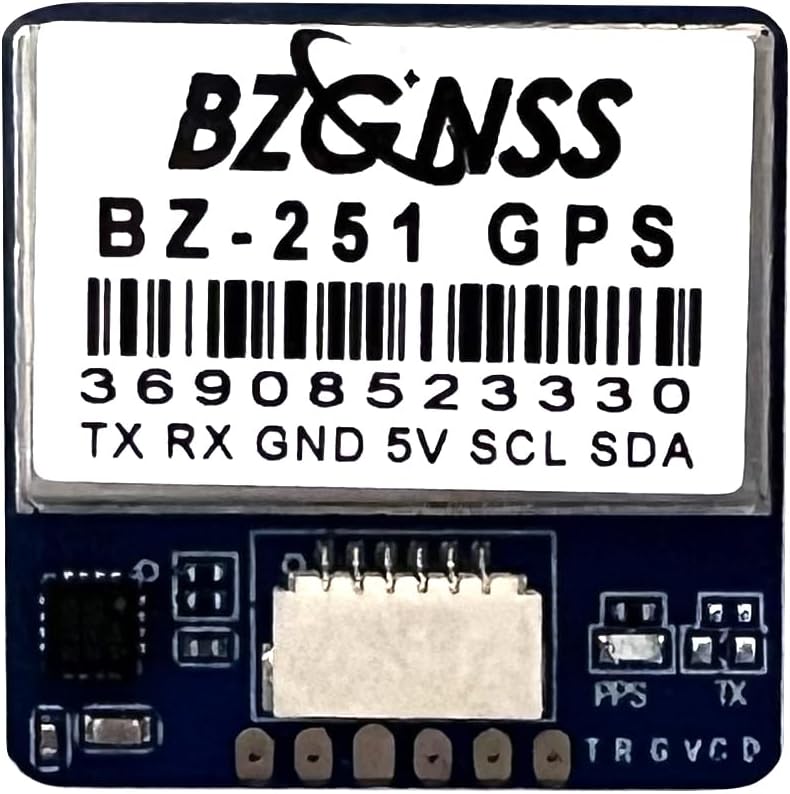
The BZGNSS BZ-251 FPV GPS Module is tailored for long-range racing and fixed-wing flight where reliable positioning over distance is essential. It is compatible with F405 and F722 flight controllers and supports both NMEA and UBX protocols for flexible integration. The module features an M10 GPS system with BDS satellite support and a built-in battery to eliminate issues from poor battery connections.
We may earn a commission when you buy through this link, at no additional cost to you.
Its ultra-compact and lightweight design makes it easy to mount on RC airplanes and FPV aircraft without affecting performance. The module is engineered to lock onto satellite signals rapidly even in challenging environments allowing you to take off with minimal wait time. Users appreciate the simple installation process that reduces setup time before flight.
While the built-in battery helps maintain stable settings it may require occasional checks to ensure long-term functionality. The dual protocol compatibility ensures it works with various popular flight stacks without complex modifications. This makes it a versatile choice for pilots who build multiple aircraft with different controllers.
If you need a reliable GPS solution for long-range missions this module offers the necessary features and compatibility. It ensures safe navigation over extended distances and accurate return to home. We recommend it for racers and range pilots who value ease of installation and robust performance.
The integrated battery helps maintain configuration settings and ensures stable performance even if your main power source fluctuates temporarily.
Compatibility with both NMEA and UBX protocols allows you to switch between flight stacks without needing different hardware modules.
We may earn a commission when you buy through this link, at no additional cost to you.
The AERO SELFIE FK-C1 M9 GPS Module uses the M9 chipset to support GPS GLONASS Galileo and BeiDou for enhanced positioning in challenging environments. It includes an integrated IST8310 magnetic compass which provides reliable heading data for waypoint navigation. Its compact 20mm by 20mm by 8mm size and light 7g weight make it ideal for FPV and racing drones.
We may earn a commission when you buy through this link, at no additional cost to you.
With support for up to 32 satellites the module maintains strong positioning accuracy in areas like urban canyons or forests where signals may be obstructed. The low power consumption of just 80mA makes it energy efficient for battery-powered drones. Real-time feedback is provided by a blue LED indicator that blinks when a 3D GNSS fix is acquired.
While the 9th generation chip is slightly older than the latest M10 models it still delivers reliable performance for most flight scenarios. The wide operating temperature range from negative 20 to 80 degrees ensures durability in various weather conditions. Setup requires soldering which may be a barrier for beginners but ensures a secure connection.
This module is a solid choice for pilots flying in environments where signal reflections or obstructions are common. Its integrated compass and compact size simplify the build process without sacrificing essential features. We recommend it for those needing dependable multi-constellation support in a small package.
Access to four major GNSS networks increases the number of visible satellites improving reliability in complex signal environments.
The blue LED indicator gives immediate visual confirmation of your GNSS fix status so you know when your drone is ready to fly.
We may earn a commission when you buy through this link, at no additional cost to you.
The FK-D1 GNSS Module features an upgraded 10th generation chip for fast and accurate positioning with a 10Hz update rate. It supports GPS GLONASS BeiDou and Galileo satellites tracking up to 32 satellites simultaneously. The integrated QMC5883L magnetic compass enhances orientation accuracy ensuring reliable drone flight control even in dynamic environments.
We may earn a commission when you buy through this link, at no additional cost to you.
Equipped with a high-gain 25mm by 25mm by 4mm antenna it provides optimal performance in challenging conditions such as urban areas. Built-in flash memory saves user settings for hassle-free operation eliminating the need for reconfiguration after power cycles. It is compatible with popular flight control systems like Inav Betaflight Ardupilot and PX4.
At 12g this module is slightly heavier than mini racing options but remains lightweight for most medium and large drones. The wide compatibility and robust antenna make it suitable for robotics and drone projects alike. Users appreciate the ease of setup and the consistent performance during various flight missions.
This module is a versatile choice for builders who need a reliable GPS solution across different platforms. It delivers accurate data and easy integration without complex setup. We recommend it for general drone use and robotics applications where dependable navigation is critical.
The large ceramic antenna ensures strong signal reception in areas where smaller modules might struggle to maintain a lock.
Settings are saved to onboard flash memory so your configuration persists without needing repeated adjustments after each flight.
We may earn a commission when you buy through this link, at no additional cost to you.
Selecting the right GPS module involves understanding your drone type flight controller compatibility and specific navigation needs. This guide outlines key factors to consider before making your purchase.
Modern modules use 10th generation UBLOX M10 chips which offer faster satellite acquisition and better power efficiency compared to older models. Look for units with high channel counts as they improve accuracy by tracking more satellites simultaneously.
Choose the latest chipset available for your budget to ensure future-proof performance and quick lock times in challenging environments.
Flight controllers support different communication protocols such as NMEA and UBX. Verify your controller supports the protocol used by the GPS module to avoid connection issues. Dual protocol modules offer greater flexibility across different systems.
Ensure the module protocol matches your flight controller requirements or supports both for maximum compatibility.
An integrated compass helps provide accurate heading data essential for return to home and autonomous flight modes. External compasses reduce magnetic interference but require careful mounting away from motors and wiring.
Opt for modules with integrated compasses unless you have a specific layout requiring external placement for magnetic cleanliness.
Ceramic antennas are common for their compact size and good performance. Ensure the antenna is placed away from other electronics to avoid interference. Some modules feature oil-sprayed coatings for durability against scratches and oxidation.
Look for antenna placement that is clear and distant from noisy components to maintain signal stability.
For racing drones weight is critical. Choose ultra-compact and lightweight modules to avoid affecting flight dynamics. Larger modules may be acceptable for fixed-wing or heavy lift drones where space is less constrained.
Prioritize weight and size that fit your airframe design without compromising performance.
A 10Hz update rate ensures responsive positioning which is crucial for autonomous flight and accurate return to home. Lower rates may introduce lag in navigation feedback during fast maneuvers.
Select modules with at least a 10Hz update rate for smooth real-time navigation data.
Modules generally accept 3.3V to 5V inputs. Verify compatibility with your flight controller voltage regulator to prevent damage. Some units include built-in batteries or flash memory to retain settings.
Ensure voltage compatibility to avoid powering issues and ensure stable operation.
Check that the GPS module is tested with your specific flight controller firmware such as Betaflight Inav or Ardupilot. Some modules require firmware updates to work correctly with certain systems.
Always review compatibility lists before purchasing to avoid integration issues.
Mount your GPS module at a clear location on your aircraft away from magnetic interference from motors and power wires. For best accuracy ensure it has a direct view of the sky during testing.
Connect the module to your flight controller following the pinout diagram carefully. Double check polarity and signal wires before powering on to avoid damage to either component.
Update your flight controller firmware to support the specific GPS module you purchased. Perform a calibration routine with your drone stationary on a level surface for accurate magnetic heading.
Not all drones require a GPS module but those intended for autonomous flight return to home features or precise navigation benefit significantly. Basic FPV racing drones may fly without it but GPS adds an extra layer of safety.
GPS modules provide accurate location data enabling critical safety features like automatic return to home when battery is low or signal is lost. They also help stabilize flight in windy conditions by allowing position hold.
NMEA and UBX are communication protocols used by GPS modules to send data to flight controllers. UBX is proprietary to Ublox and often offers faster data rates and more control options while NMEA is a standard text-based format.
GPS provides latitude and longitude but not direction. A compass measures magnetic heading allowing the flight controller to orient the drone correctly for return to home and stable navigation in all directions.
Most modern flight controllers support standard GPS modules but you must verify pinout compatibility and supported protocols. Some specialized controllers require specific GPS units for full functionality.
Typically a minimum of four satellites is required for a 3D fix providing accurate latitude longitude and altitude data. More satellites improve precision and reliability especially in areas with partial sky visibility.
Mount the GPS module on a clean surface away from motors and power cables. Use a holder or stand to elevate it from the drone body which helps reduce magnetic interference and improves signal clarity.
Some modules may require firmware updates to ensure compatibility with specific flight controller versions. Check the manufacturer instructions to confirm if updates are needed for optimal performance.
We reviewed ten top GPS modules highlighting their unique strengths from the versatile SEQURE M10-25Q to the lightweight HGLRC Mini M100. Each option provides reliable navigation for different flight styles and controller setups ensuring safe autonomous flight and accurate return to home.
When selecting your module prioritize chipset generation protocol compatibility and antenna design to match your aircraft requirements. A well chosen GPS system enhances flight safety and enables advanced navigation features that elevate your flying experience.
Remember that product details and availability may change so always verify the latest specifications and pricing before purchase. Check the current status on the manufacturer or retailer sites to confirm compatibility before finalizing your order.