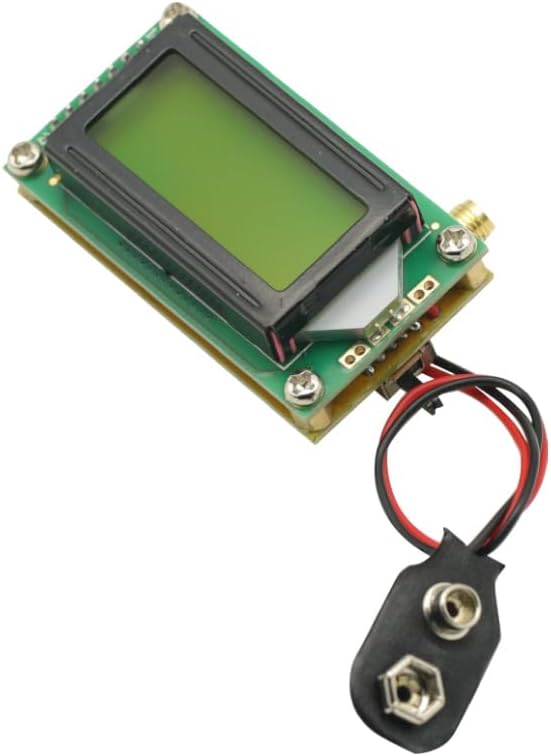
1MHz -500 MHz Counter Board
3.6Editor score
Low power consumption
Affordable entry level price
Basic LCD display
This guide compares the top Frequency Counter for Ham Radio devices to help you choose the right tool for accurate signal measurement and radio maintenance.
Finding the right Frequency Counter for Ham Radio is essential for enthusiasts who need precise signal measurements. Whether you are tuning antennas or verifying transmission frequencies, having a reliable tool ensures your equipment operates within legal and optimal ranges for clear communication.
We compared ten leading frequency counters based on accuracy, portability, frequency range, and user feedback. Each product was evaluated for its ability to handle various bands from HF to UHF while offering features like CTCSS decoding and compact designs for field use.
Each pick below highlights specific strengths to help you match a device to your needs. Note that prices and availability change frequently, so verify current details before purchasing to ensure you get the best value for your specific radio setup.
3.6Editor score

4.1Editor score

5.0Editor score
The following table provides a side-by-side comparison of all ten products to help you quickly identify key specifications and features for each model.


The Surecom SF401 Plus stands out as a reliable tool for measuring frequencies from 27MHz to 3000MHz. It features a built-in signal strength indicator and supports CTCSS and DCS decoding which is useful for identifying specific radio channels.
We may earn a commission when you buy through this link, at no additional cost to you.
Its TCXO technology ensures temperature compensated accuracy ranging from 45 C to 65 C. The device comes with a VU 144/430MHz antenna and a UHF 400-470MHz antenna covering most common ham radio bands effectively.
While it is designed for continuous wave signals and not suitable for wide bandwidth measurements the four-button control makes it easy to operate. The compact size allows technicians to carry it easily during field maintenance tasks.
This counter is ideal for anyone needing a portable solution to verify transmission frequencies on walkie-talkies and two-way radios. Its balance of features and portability makes it a top choice for general use.
The TCXO oscillator ensures consistent performance across varying environmental conditions for reliable readings.
Includes antennas for both VHF and UHF bands to cover a wide range of radio frequencies.
We may earn a commission when you buy through this link, at no additional cost to you.
This variant of the SF401 Plus offers the same robust features for measuring continuous carrier signals across a broad spectrum. It maintains a strong reputation for reliability among wireless enthusiasts and maintenance personnel.
We may earn a commission when you buy through this link, at no additional cost to you.
The device covers frequencies from 27MHz to 3000MHz which includes most two-way radio bands. The inclusion of both VHF and UHF antennas ensures you can test various radio types without needing additional purchases.
Accuracy is maintained through the TCXO technology which compensates for temperature fluctuations. The signal strength indicator helps users quickly assess the quality of the signal being measured during testing.
It is a practical choice for those who need a dependable portable counter for routine checks. The ease of use and comprehensive range make it suitable for both hobbyists and professionals.
The wide frequency range allows measurement of most standard two-way radio communications.
Simple button controls make operation straightforward even for new users.
We may earn a commission when you buy through this link, at no additional cost to you.
The FC-2800M is designed to handle both analog and digital radio signals making it suitable for modern DMR users. It measures frequencies from 2MHz to 2800MHz covering CB and Ham Radio bands effectively.
We may earn a commission when you buy through this link, at no additional cost to you.
Its built-in DCS and CTCSS decoder helps identify specific signal types quickly. The device uses a low PPM crystal time base which contributes to high accuracy during measurements.
Users appreciate the compact design which fits easily in a pocket or tool kit. The four-button interface is user friendly and allows quick switching between different frequency ranges.
This counter is recommended for users who need to verify DMR radio frequencies alongside traditional analog signals. The warranty adds peace of mind for long-term use in various environments.
The digital mode ensures compatibility with modern DMR radio systems.
Low PPM crystal provides stable and precise frequency readings.
We may earn a commission when you buy through this link, at no additional cost to you.
This TinySA model functions as both a spectrum analyzer and a frequency counter offering deep insight into signal quality. It supports frequencies from 100kHz to 960MHz with selectable resolution bandwidth for flexible testing.
We may earn a commission when you buy through this link, at no additional cost to you.
The device includes a built-in signal generator and calibration source which allows for self-test and low-input calibration without external tools. This makes it highly versatile for bench and field work.
The 2.8-inch touchscreen provides a clear view of up to 290 scan points. Its compact body and rechargeable battery support extended use during ham radio station maintenance or antenna tuning.
It is ideal for those who want more than just frequency readouts and need to analyze signal strength and harmonics. The PC control feature adds another layer of convenience for detailed analysis.
Allows for internal testing and calibration without needing external signal sources.
The touchscreen display makes it easy to visualize signal spectra and issues.
We may earn a commission when you buy through this link, at no additional cost to you.
This handheld counter focuses specifically on VHF and UHF bands which are common for local communication. It features a simple one-button control mechanism that simplifies the testing process for field users.
We may earn a commission when you buy through this link, at no additional cost to you.
The device is equipped with a 9V battery and antenna allowing immediate use upon unboxing. It measures frequencies within a 1 meter range which is sufficient for close proximity testing.
Its mini size makes it exceptionally easy to carry in a tool bag or pocket. The design prioritizes portability and simplicity over extensive range coverage.
It is a great secondary tool for quick checks on standard two-way radio frequencies. Users who need a lightweight option for routine maintenance will find it very convenient.
One-button control reduces complexity for quick frequency checks.
Includes battery and antenna so no extra purchases are needed.
We may earn a commission when you buy through this link, at no additional cost to you.
The Anysecu SF-103 is an upgraded version that offers a broad frequency range from 2MHz to 2.8GHz. It is designed to measure continuous wave signals from two-way radios efficiently.
We may earn a commission when you buy through this link, at no additional cost to you.
A notable feature is the signal strength indicator which helps assess the quality of the radio transmission. The device uses four buttons for control providing a balance between functionality and simplicity.
Its compact size makes it easy to carry anywhere. The ranges cover most frequencies that typical two-way radios use making it a practical choice for general maintenance.
This counter is suitable for technicians who need a robust tool for verifying frequencies across a wide spectrum. It offers reliable performance for everyday radio testing tasks.
The built-in indicator helps users judge signal strength quickly.
Covers a wide range ensuring compatibility with most two-way radios.
We may earn a commission when you buy through this link, at no additional cost to you.
This handheld unit provides accurate frequency readings with TCXO technology ensuring stability across temperatures. It is ideal for measuring signals in the 2m HAM radio and VHF UHF bands.
We may earn a commission when you buy through this link, at no additional cost to you.
The device includes a signal strength indicator which is useful for tuning antennas and verifying transmission levels. It supports DMR radio signals making it versatile for modern communication systems.
Users should note the maximum direct input signal limit to avoid damage. The four-button control is intuitive and allows quick selection of frequency ranges.
It is a solid choice for enthusiasts who need precise measurements for maintenance tasks. The combination of accuracy and portability makes it a reliable tool for field work.
TCXO ensures consistent accuracy regardless of environmental temperature changes.
Supports DMR radio signals common in modern two-way communications.
We may earn a commission when you buy through this link, at no additional cost to you.
This module offers a low-cost way to measure frequencies up to 500 MHz for hobbyists. It uses a digital LCD display to show the measured values clearly.
We may earn a commission when you buy through this link, at no additional cost to you.
The product is sold as a PCB module meaning it may require integration into a larger project. It is suitable for basic testing where high precision is not strictly required.
Accuracy is limited to the second digit of the decimal point which is acceptable for general reference. The material is PCB and FR4 ensuring durability for electronic work.
It is a good option for those building custom radio projects or learning about frequency counting. The low price makes it accessible for experimenting without significant investment.
Designed to be integrated into custom electronics projects easily.
Provides basic frequency measurement capabilities at a very low cost.
We may earn a commission when you buy through this link, at no additional cost to you.
This board is designed as a kit for measuring frequencies from 1MHz to 500 MHz. It features an LCD display and is known for low power consumption during operation.
We may earn a commission when you buy through this link, at no additional cost to you.
The device is suitable for basic frequency measurement tasks in educational or experimental settings. It provides a straightforward interface for viewing measured frequency values.
It is a simple tool that covers common radio bands but lacks advanced features like decoding or wide range. The design prioritizes low cost and simplicity over complex functionality.
It is ideal for students or hobbyists looking to build or test simple radio circuits. The board serves as an entry point into understanding frequency counter modules.
Well suited for learning basic concepts of frequency measurement.
Designed to consume minimal power which is beneficial for battery kits.
We may earn a commission when you buy through this link, at no additional cost to you.
The TinyGTC is a portable high-precision frequency counter that includes a built-in GPS disciplined oscillator for excellent long-term stability. It offers 40ps resolution which is ideal for detailed RF testing and calibration.
We may earn a commission when you buy through this link, at no additional cost to you.
With dual-channel capability it can measure frequency phase and time intervals across a wide range. The device supports battery power and features a responsive touchscreen for intuitive control during field use.
Advanced functions like real-time charting FFT analysis and data logging are available on the device. This makes it suitable for professional SDR tuning and electronics DIY projects requiring high accuracy.
It is the ultimate choice for serious enthusiasts who need precision beyond basic frequency counting. The inclusion of GPSDO ensures reliable stability that standard counters cannot match.
GPSDO locks to satellite signals for superior long-term frequency accuracy.
Built-in FFT and deviation analysis provides deep insight into signal quality.
We may earn a commission when you buy through this link, at no additional cost to you.
Selecting the right frequency counter involves considering factors like range accuracy and portability to match your specific radio setup.
Ensure the device covers the bands you use most often such as HF VHF or UHF. A wider range offers more versatility for different radio types.
Choose a model that spans at least 27MHz to 3000MHz for broad compatibility.
Look for counters with TCXO or GPSDO technology to minimize drift due to temperature changes. High accuracy is critical for precise tuning and legal compliance.
Prioritize devices with specifications like +/- 4ppm or better for reliable measurements.
Features like CTCSS and DCS decoding help identify specific subtones and radio channels. This is useful for identifying private or filtered signals in busy environments.
Select a counter that explicitly supports decoder features if you need channel identification.
Field work requires a compact design that fits easily in a pocket or tool kit. Check the weight and physical dimensions to ensure it is easy to carry.
Handheld models with built-in batteries are ideal for remote antenna testing.
Long battery life ensures the device works during extended field sessions without interruption. Rechargeable options like lithium-ion provide convenience over disposable batteries.
Verify the battery type and expected runtime to avoid downtime during measurements.
A clear display and intuitive controls are essential for quick readings in various lighting conditions. Touchscreens or large LCDs improve usability.
Choose a model with a readable screen and logical button layout for ease of use.
Some advanced counters offer PC control or data logging for detailed analysis. USB ports enable software integration for complex testing scenarios.
Check for USB or Bluetooth capabilities if you need to record data or control remotely.
Rugged builds and longer warranties indicate better long-term value for professional use. Look for models with at least a one-year warranty for peace of mind.
Select devices from reputable brands with good after-sales support.
To begin measuring ensure the device is powered on and connected to an antenna suitable for the frequency range. Position the antenna close to the transmitter source for the strongest signal reading.
Set the frequency range on the counter to match the expected transmission band. If the device has an automatic mode enable it to simplify the selection process.
Maintain the counter by storing it in a dry place and avoiding direct exposure to extreme temperatures. Clean the display gently with a soft cloth to ensure readability over time.
A frequency counter measures the exact transmission frequency of your radio to ensure it stays within legal and allocated bands. This helps prevent interference with other users and verifies that your equipment is operating correctly for clear communication.
For most hobbyist applications accuracy within 4 ppm is sufficient. However professional calibration work requires higher precision which can be achieved using TCXO or GPS disciplined oscillators for better stability.
Yes most portable frequency counters support the CB band which starts around 27 MHz. Ensure the device covers the specific MHz range you intend to measure before purchase.
CTCSS uses analog sub-audible tones while DCS uses digital codes to open a receiver. Both are features that help identify specific channels and are supported by many advanced frequency counters.
Yes an antenna is essential to capture the signal from the radio. Most counters come with included antennas for common bands but you may need additional ones for different ranges.
Avoid applying high voltage directly to the input as this can damage the device. Use the included attenuators or cables to ensure the signal level remains within safe limits.
Many modern counters support DMR and digital radio modes allowing them to measure digital signals accurately. Look for models that explicitly state digital mode compatibility.
A TCXO is a temperature compensated crystal oscillator that maintains stable frequency accuracy despite environmental changes. It is a common feature in high-performance portable counters.
Choosing the right frequency counter depends on your need for precision portability and specific band coverage. The Surecom SF401 Plus remains a top choice for most users due to its balanced features and wide range.
Prioritize accuracy features like TCXO or GPSDO if you require precise calibration work. For general maintenance consider models with clear displays and convenient buttons for field use.
Always check the current prices and availability to ensure you get the best value for your budget. The right tool will enhance your ability to maintain and optimize your radio communication systems effectively.