
HiLetgo 3pcs ESP8266 ESP-01
4.2Editor score
Three piece value pack
AP STA and AP STA modes
Compatible with Arduino IDE
Explore the top ten Arduino WiFi module choices for 2026 including ESP8266 and ESP32 boards with Bluetooth to help you pick the right connectivity.
Selecting the right Arduino WiFi module can transform your embedded projects from simple prototypes into connected smart devices. Whether you need basic internet access or advanced Bluetooth capabilities, there are many options available on the market today.
We compared ten highly rated products based on their connectivity features processor performance and ease of integration with the Arduino ecosystem. Our goal is to help you find the most reliable solution for your specific IoT development needs and budget.
Each pick in this guide highlights unique strengths ranging from dual core processing to compact form factors. Prices and availability may change over time so please check current listings before making your final purchase decision.
4.2Editor score

4.7Editor score

4.7Editor score
This side by side comparison table outlines the key specifications and features of each module to help you quickly identify the best fit for your project requirements.



The Arduino UNO R4 WiFi stands out as a premier choice for developers seeking robust connectivity and performance. With a 4.7 rating, it combines the power of the Renesas RA4M1 and ESP32-S3 chips to deliver a versatile platform for advanced IoT projects.
We may earn a commission when you buy through this link, at no additional cost to you.
Its dual core architecture allows for seamless multitasking between high speed communications and real time data processing. The built in 12×8 LED matrix provides immediate visual feedback making it ideal for interactive interfaces without external displays.
While it offers superior features like CAN bus support and 12-bit DACs it does come at a higher cost than simpler modules. These trade offs are acceptable for professional applications requiring reliability and precision signal generation.
You should buy this board if you are building complex smart devices or industrial systems. It is the best pick for those who need comprehensive wireless connectivity paired with modern connectivity options and onboard visual indicators.
The integration of Wi-Fi Bluetooth 5.0 and CAN bus ensures reliable communication across diverse network environments and industrial protocols.
Built-in 12-bit DAC and OP-AMP capabilities enable precise analog signal generation ideal for audio projects and sensor interfacing.
We may earn a commission when you buy through this link, at no additional cost to you.
This module is an excellent entry point for anyone looking to add wireless capabilities to Arduino projects without breaking the bank. It features the reliable ESP8266 chip which offers strong on-board processing for its size.
We may earn a commission when you buy through this link, at no additional cost to you.
It supports multiple network modes including AP STA and AP plus STA which provides flexibility for different connection scenarios. The three pack offers value for prototyping where you might need to replace or test multiple units.
While it lacks advanced features like Bluetooth or USB-C the simple design makes it easy to integrate into custom circuits. The main drawback is the need for careful power management during operation.
Buy this if you need a cost-effective solution for basic internet connectivity in smart grids or home automation. It is perfect for hobbyists starting with IoT development on a tight budget.
Support for AP and STA modes allows this module to function as a client or a hotspot for various project needs.
The three pack ensures you have replacements ready for your builds reducing the risk of project delays.
We may earn a commission when you buy through this link, at no additional cost to you.
This set of boards is designed for high performance IoT applications requiring both Wi-Fi and Bluetooth connectivity. The 4.7 rating reflects its reliability and robust feature set suitable for complex automation tasks.
We may earn a commission when you buy through this link, at no additional cost to you.
Running at speeds up to 240 MHz the dual core processor handles sensor processing and wireless communication efficiently. The included USB-C interface simplifies power delivery and programming compared to older micro USB standards.
While it does not include a USB cable and may cost more than basic ESP8266 modules the added performance and connectivity justify the investment. Its power saving modes make it suitable for battery-powered projects as well.
Choose this option if you need a premium development experience with advanced wireless options. It is ideal for developers building smart home devices or connected appliances that require responsive performance.
Dynamic clock scaling and low-power modes help optimize battery life for remote sensors and portable devices.
Over-the-Air update support allows you to patch deployed devices over Wi-Fi without physical access to the board.
We may earn a commission when you buy through this link, at no additional cost to you.
This latest version of the popular ESP01 module offers improved signal strength which is crucial for long range wireless projects. It comes with 4MB of flash memory allowing for more complex sketches and data storage.
We may earn a commission when you buy through this link, at no additional cost to you.
The serial transceiver design is standard for this class of module making it straightforward to integrate into custom PCBs. Users need to select the generic board setting in Arduino IDE to program it successfully.
While it lacks the convenience of a built-in USB adapter the compact size and enhanced performance make it a solid choice for production designs. The need for an external breakout board can be a minor hurdle for beginners.
This module is a great choice if you prioritize signal quality and storage capacity in your design. It is recommended for intermediate users building wireless sensor networks with specific hardware requirements.
The updated RF design provides stronger connectivity ensuring stable connections even in challenging environments.
4MB flash memory allows for more complex applications and firmware storage compared to older 1MB versions.
We may earn a commission when you buy through this link, at no additional cost to you.
This five pack offers significant value for those needing multiple modules for a large scale project or distribution. It is compatible with Arduino and supports all standard wireless modes for flexible networking.
We may earn a commission when you buy through this link, at no additional cost to you.
The module is designed to be reliable for industrial control and smart furniture applications. It operates within a strict DC 3.0-3.6V range which ensures safe and stable operation when used correctly.
The main limitation is the strict voltage requirement which means you must use a 3.3V power source or regulator. This is a manageable trade-off given the low cost and bulk quantity provided.
Buy this if you are deploying a sensor network or need backup modules for your team. It is an efficient choice for developers working on large projects where quantity matters most.
Designed for smart grids and transportation this module offers consistent performance in demanding environments.
Getting five units in one pack reduces per unit costs and simplifies procurement for bigger builds.
We may earn a commission when you buy through this link, at no additional cost to you.
This compact board is powered by the ESP32-S3 chip offering dual core performance at up to 240 MHz. It brings modern connectivity and programming features to the familiar Nano form factor.
We may earn a commission when you buy through this link, at no additional cost to you.
The support for HID profiles allows you to create custom input devices like keyboards or mice easily. Additionally MicroPython compatibility makes it accessible for developers who prefer Python for rapid prototyping.
While it is sold without headers which may require soldering the improved power delivery and stability of USB-C are worth the effort. It represents a significant step up from older Nano models.
Choose this if you want a powerful yet compact board for wearables or custom controllers. It is ideal for users who value modern interfaces and flexible programming environments.
Human Interface Device support allows you to build innovative peripherals like keyboards and mice for your projects.
MicroPython compatibility simplifies coding for Python users enabling interactive development and quick testing cycles.
We may earn a commission when you buy through this link, at no additional cost to you.
This pack of four modules is made from good materials designed to be reused multiple times across different projects. It serves well for wearable electronics and home automation scenarios where connectivity is key.
We may earn a commission when you buy through this link, at no additional cost to you.
The self-calibrated RF technology ensures optimal performance and consistent signal quality. This reliability makes it a safe bet for sensor networks that need to operate without frequent recalibration.
While it does not have unique features the straightforward functionality and durability are strong assets. The only downside is the standard specification which limits it to basic Wi-Fi tasks.
You should pick this if you need multiple units for distributed sensor projects. It is a reliable choice for maintaining consistent performance across your connected devices.
The self-calibrated RF system ensures that each module delivers optimal signal quality without manual intervention.
Built to be reused multiple times this module is cost-effective for testing and iterative development.
We may earn a commission when you buy through this link, at no additional cost to you.
This package provides five modules equipped with 4MB of flash storage allowing for more robust application development. It supports a standard baud rate of 115200 which is widely used in serial communications.
We may earn a commission when you buy through this link, at no additional cost to you.
Users must choose SPI mode as DOUT in their configuration to program the modules correctly. The voltage is strictly limited to 3.3V so care must be taken to avoid connecting to 5V sources directly.
While the configuration steps might be slightly technical the generous flash and bulk quantity make it a good deal. It is well suited for those who need more storage for their IoT firmware.
Buy this if you need reliable storage for complex IoT applications on a budget. It is an excellent resource for developers building applications with extensive data needs.
With 4MB flash these modules support larger firmware images and more complex logic than standard versions.
The 115200 baud rate and DOUT protocol ensure compatibility with a wide range of Arduino IDE setups.
We may earn a commission when you buy through this link, at no additional cost to you.
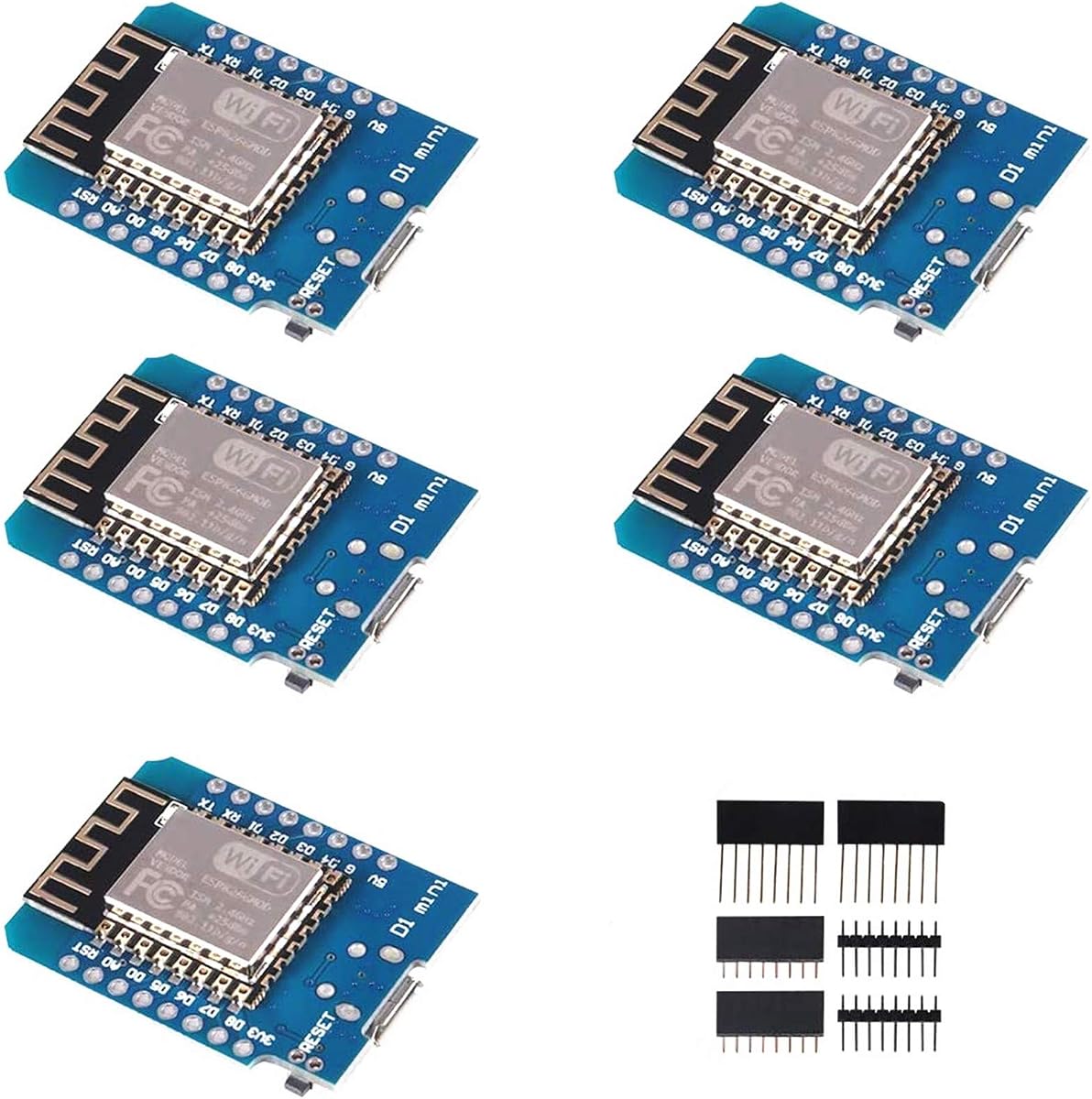
This mini NodeMcu board based on the ESP-12F chip offers a compact solution for WiFi development. It features 11 digital I/O pins and supports Lua programming making it versatile for various applications.
We may earn a commission when you buy through this link, at no additional cost to you.
The onboard switching power supply ensures stable operation across a range of inputs. All pins support interrupts and PWM which gives you flexibility in controlling various peripherals and motors.
While it has 1MB flash memory which is less than some newer boards the form factor and onboard power are strong advantages. It is compatible with Arduino IDE providing a friendly development experience.
Select this if you need a small board with onboard power for embedded devices. It is ideal for space-constrained projects that still need full Arduino compatibility.
The built-in switching power supply simplifies wiring by removing the need for external regulators.
All digital pins support interrupts and PWM allowing for advanced control of sensors and actuators.
We may earn a commission when you buy through this link, at no additional cost to you.
This bulk pack of ten modules is ideal for teams or large deployments requiring consistent connectivity. Each unit offers robust processing capabilities and seamless data retention for uninterrupted operation.
We may earn a commission when you buy through this link, at no additional cost to you.
It supports three distinct network modes AP STA and AP plus STA allowing for versatile networking options. The LWIP protocol streamlines development making it compatible with standard Arduino setups.
While it is a basic serial module the quantity and reliability make it perfect for mass production or testing. The perfect rating highlights its consistent quality and performance.
Choose this for large scale projects where quantity and reliability are paramount. It is the best value for businesses or educators needing multiple units for classroom projects.
Support for AP and STA modes enables this module to act as a client or a hotspot as needed.
On-board storage ensures seamless data retention and retrieval for continuous operation in deployed systems.
We may earn a commission when you buy through this link, at no additional cost to you.
Selecting the right module involves considering connectivity options processing power and compatibility with your existing tools.
Look for modules that support both Wi-Fi and Bluetooth if you need versatile wireless control. Bluetooth 5.0 offers better range and speed compared to older versions.
Choose a module with the right wireless standards for your project needs.
Dual core processors like ESP32 provide better performance for complex tasks than single core ones. High clock speeds ensure responsive operation for real-time data processing.
Prioritize higher processing speeds for advanced applications.
Check for low power modes if you plan to use batteries. Dynamic clock scaling can significantly extend battery life.
Opt for modules with flexible power-saving features.
Compact boards like Nano variants are better for wearable projects while larger boards suit industrial use. Consider the available space in your enclosure.
Select a size that fits your physical design constraints.
USB-C ports simplify power and programming connections for modern setups. Modules with onboard regulators reduce wiring complexity.
Prefer boards with modern connectivity for better usability.
Flash memory size determines how complex your sketch can be. 4MB allows for more features compared to 1MB versions.
Ensure sufficient storage for your firmware and data needs.
Some modules need strict 3.3V power while others handle broader ranges. Check power requirements to avoid damaging components.
Verify voltage limits before connecting to your power source.
Popular modules have extensive documentation and libraries to help troubleshoot. Ensure compatibility with your IDE for smooth development.
Look for modules with strong community backing.
Connect your module to a stable power source within its specified voltage range. Use a breadboard or custom PCB to secure pins and prevent short circuits.
Install the necessary drivers and libraries in your Arduino IDE to recognize the hardware. Select the correct board type and port to ensure successful uploads.
Keep the modules away from moisture and excessive heat to maintain longevity. Regularly update firmware to patch security vulnerabilities and improve performance.
For beginners the ESP8266 ESP-01 modules are highly recommended due to their low cost and simple setup. They integrate easily with the Arduino IDE and have extensive community support.
These modules require an internet connection to access web servers but can function locally on a LAN without internet. This allows for local automation projects that stay within your home network.
Yes many modules like the ESP32 offer deep sleep modes that minimize power consumption. This makes them suitable for battery-powered devices when designed correctly.
The ESP32 is faster and includes Bluetooth alongside Wi-Fi while the ESP8266 only has Wi-Fi. The ESP32 also has more processing power for complex applications.
Yes you typically need a breakout board to convert the small pins to a breadboard-friendly format. This allows for easier connections to your Arduino or power supply.
The range depends on the environment but typically you can expect 30 to 100 meters line of sight. Obstacles like walls can reduce this distance significantly.
Yes all the modules listed are compatible with the Arduino IDE when you add the correct board support. You may need to install specific libraries to enable full functionality.
Ensure adequate airflow around the module and avoid direct sunlight. Using heat sinks can help dissipate heat during heavy processing tasks.
We highlighted the Arduino UNO R4 WiFi as the top choice for those needing advanced connectivity and features. The ESP8266 variants offer excellent budget options for basic wireless tasks.
When selecting your module prioritize power management and connectivity needs that match your specific project goals. Consider future scalability when choosing between simpler or more robust boards.
Remember to check current prices and availability before purchasing as these factors may change. This guide provides a solid starting point to ensure you find the right tool for success.