
M-AUDIO Keystation 88 MK3 USB MIDI Controller
4.5Editor score
Plug and play connectivity
Slimline design
Included music software
Discover the top 88 key weighted MIDI controllers for producers and pianists. We compare key action, DAW integration, and features to help you choose.
Finding the right 88 key weighted MIDI controller is crucial for musicians who want a true piano feel in their digital setup. These instruments bridge the gap between acoustic pianos and modern software, offering expressiveness and control for recording and live performance.
We evaluated ten leading models based on key action quality, connectivity options, DAW integration, and overall build durability. Our analysis focuses on how each controller supports various workflows, from home studio production to professional stage performances.
Each selection highlights unique strengths such as hammer action realism, software bundles, and control surface capabilities. Please note that availability and pricing fluctuate frequently, so verify current details before making your final purchase decision.
4.5Editor score

4.6Editor score
4.6Editor score
This side-by-side comparison outlines the core specifications and unique selling points of every model in our list to help you visualize the differences in features and design.


The Novation Launchkey 88 [MK3] stands out as a top choice for producers seeking deep integration with their digital audio workstation. It combines a premium full-size keybed with intuitive controls that map directly to common software parameters.
We may earn a commission when you buy through this link, at no additional cost to you.
Its standout feature is the seamless DAW integration which allows for immediate access to mixing and transport controls without complex setup. The powerful arpeggiator with Strum Mode adds rhythmic creativity, while Scale and Chord Modes assist in composition.
While the semi-weighted keys may not satisfy pianists seeking a heavy hammer action, they offer excellent responsiveness for general music production. The lack of physical knobs compared to other controllers is a trade-off for its streamlined design.
This controller is ideal for electronic producers and composers who prioritize workflow speed and software connectivity over pure piano emulation. Its combination of creative tools and reliable performance makes it a strong contender for modern studios.
The deep integration with major DAWs means you can adjust volume and pan without taking your hands off the keyboard.
Scale and Chord Modes let you trigger complex harmonies with a single finger, speeding up the songwriting process.
We may earn a commission when you buy through this link, at no additional cost to you.
The M-AUDIO Keystation 88 MK3 is designed for creators who need a reliable and straightforward MIDI controller without unnecessary complexity. It features 88 full-size velocity-sensitive keys that provide a comfortable playing experience for various instruments.
We may earn a commission when you buy through this link, at no additional cost to you.
Its immediate connectivity is a major strength, allowing users to plug directly into a Mac or PC via USB without needing drivers or an external power supply. The included music software like MPC Beats and Ableton Live Lite adds significant value for new producers.
The trade-off lies in its minimal control surface which lacks the extensive knobs and faders found on more expensive models. However, for basic tracking and sketching ideas, its slimline design and essential transport buttons are sufficient.
This model is perfect for home studios, students, or anyone needing a cost-effective full-size keyboard for entry-level production work. It focuses on core functionality while maintaining a sleek profile that fits easily into small spaces.
The USB connection requires no additional power or driver installation, making it ready to use immediately after unboxing.
Its slimline design allows it to fit on most desks without crowding other essential studio equipment.
We may earn a commission when you buy through this link, at no additional cost to you.
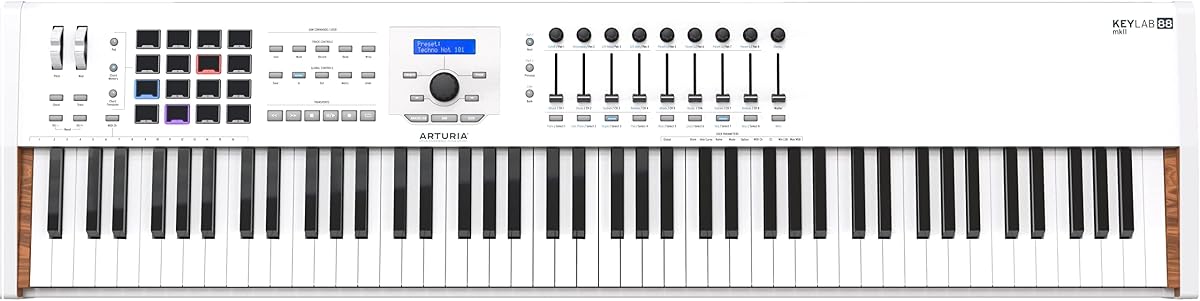
The Arturia KeyLab 88 MkII combines a high-quality Fatar TP/100LR keybed with an extensive array of controls for total command of your production. It offers a true hammer-action experience that closely mimics the feel of an acoustic piano.
We may earn a commission when you buy through this link, at no additional cost to you.
Its control surface is highly versatile, featuring 16 RGB-backlit pads, 9 faders, and 9 rotary knobs for tactile manipulation of virtual instruments and effects. The included Analog Lab V software provides thousands of curated preset sounds to inspire creativity.
The price reflects its premium construction and feature set, which may be a barrier for those on a tight budget. Additionally, its weight makes it less portable than lighter alternatives, though this ensures stability during vigorous performance.
This controller is tailored for professional producers and pianists who demand realistic key feel and comprehensive control over their DAW. It excels in environments where detailed mixing and expressive playing are paramount.
The Fatar keybed provides a weighted hammer action that is ideal for classical pieces and expressive solos.
The combination of faders and knobs allows for detailed tweaking of software parameters without mouse interaction.
We may earn a commission when you buy through this link, at no additional cost to you.
The M-AUDIO Hammer 88 Pro distinguishes itself with Native Kontrol Standard integration which allows for direct control of Native Instruments software. It features a graded hammer action that replicates the heavy feel of an acoustic piano in the lower register.
We may earn a commission when you buy through this link, at no additional cost to you.
Users can browse and control presets effortlessly with its 16 RGB backlit pads and extensive fader and knob layout. Smart Chord and Scale modes along with an onboard arpeggiator provide creative assistance for building tracks quickly and efficiently.
Despite its strong feature set, user ratings suggest some variability in quality or software experience that potential buyers should consider. The premium price point also places it in competition with higher-rated alternatives in the same category.
This controller is best suited for musicians heavily invested in the Native Instruments ecosystem who want seamless hardware control. It offers a robust toolkit for production but requires a significant investment in both time and money.
NKS integration allows you to browse sounds instantly on the keyboard without using the mouse.
Smart Chord and Scale modes help musicians create harmonically correct progressions with minimal effort.
We may earn a commission when you buy through this link, at no additional cost to you.
The Arturia KeyLab 88 mk3 in Black represents a modern evolution of the KeyLab series with a focus on streamlined design and updated connectivity. It offers fully weighted hammer-action keys for an authentic playing experience across all 88 notes.
We may earn a commission when you buy through this link, at no additional cost to you.
Key improvements include USB-C power which simplifies setup, and an included sheet music stand that enhances usability for traditional players. The 12 pressure-sensitive performance pads provide additional tactile control for triggering samples or drum patterns.
While detailed feature lists are sparse compared to previous models, the focus appears to be on core performance and reliability. The updated connectivity and modern build suggest a device intended for long-term use in professional settings.
This controller appeals to musicians looking for a sleek, contemporary instrument that balances traditional piano feel with modern convenience. It is a solid choice for those who value aesthetics and updated connectivity standards.
The switch to USB-C ensures compatibility with modern computers and reduces cable clutter.
The included sheet music stand supports users who rely on printed scores during practice.
We may earn a commission when you buy through this link, at no additional cost to you.
The White version of the Arturia KeyLab 88 mk3 offers the same performance as the Black model but with a distinctive finish that suits minimalist studio designs. It features fully weighted hammer-action keys and includes a sheet music stand.
We may earn a commission when you buy through this link, at no additional cost to you.
Connectivity is updated to USB-C, offering faster data transfer and power delivery. The 12 pressure-sensitive performance pads provide robust tactile control for drum triggering or sample mapping during performance.
User ratings vary, suggesting potential differences in manufacturing consistency or feature satisfaction. The premium pricing reflects the brand's reputation and the included hardware enhancements like the sheet stand.
This unit is ideal for producers who prioritize visual integration with their studio gear and demand reliable hammer action. It serves as a high-end tool for those who value design aesthetics alongside functionality.
The white finish offers a clean and modern look that complements light-colored studio environments.
Accessories like the sheet stand come standard, ensuring everything is ready for use out of the box.
We may earn a commission when you buy through this link, at no additional cost to you.
The Studiologic SL88 MK2 is engineered for stage performance with a focus on reliability and tactile control. It features weighted action keys that provide a solid feel, complemented by an onboard display for quick parameter changes.
We may earn a commission when you buy through this link, at no additional cost to you.
With seven encoders and strong compatibility with Numa Player systems, it offers substantial control over sound shaping. The design is slim yet robust, making it ideal for touring musicians who need a durable controller.
The lack of extensive drum pads or deep DAW-specific scripts may limit its appeal for home producers relying heavily on software integration. However, its core performance as a piano controller is excellent.
This controller is best suited for live performers and pianists who prioritize key feel and stage-ready construction. It delivers a professional experience without unnecessary digital clutter.
The onboard display allows for quick adjustments without needing to switch modes or use a computer.
Built for touring, the chassis withstands the rigors of frequent transport and live use.
We may earn a commission when you buy through this link, at no additional cost to you.
The YAMAHA P71 delivers an acoustic piano feel with touch-sensitive keys designed to replicate the weight and resistance of a traditional instrument. It includes 10 unique voices and layered sound modes for rich audio output.
We may earn a commission when you buy through this link, at no additional cost to you.
Designed with streamlined functionality, it focuses on simplicity with one-button operations that keep attention on playing. The included sustain pedal allows for expressive control over notes and dynamics.
While primarily a digital piano, it offers basic MIDI capabilities for connecting to external software but lacks extensive control surfaces like faders or pads. Its primary strength remains the quality of its key action and tone.
This model is ideal for students and pianists seeking a dedicated practice instrument that can also interface with a computer. It prioritizes playing experience over production versatility.
The weighted action provides a consistent feel across all notes, helping build proper finger technique.
Dual Mode enables blending piano with strings for a more orchestral and inspiring performance.
We may earn a commission when you buy through this link, at no additional cost to you.
The Arturia KeyLab Essential mk3 introduces new creative features like Scale Mode and Chord Mode to make composition more intuitive for users at all levels. It uses a hybrid synth-piano feel keybed expanded to a full 88-key range.
We may earn a commission when you buy through this link, at no additional cost to you.
The bright 2.5-inch LCD screen offers real-time feedback and easier control over DAW parameters. It includes Analog Lab Pro with over 2000 presets, providing a vast sound library for exploration.
While the keybed is not fully weighted, it offers a comfortable and responsive experience for general use. The lack of premium hardware features is compensated by the generous software bundle and helpful interface.
This controller is perfect for beginners and songwriters who want immediate access to great sounds and composition tools. It reduces the technical barriers to starting music production.
Scale Mode ensures every note you play fits the chosen key, preventing dissonant errors.
The LCD screen displays current parameters clearly, reducing the need to look at the computer screen.
We may earn a commission when you buy through this link, at no additional cost to you.
The Roland A-88MKII features the PHA-4 keyboard which offers unmatched playability with premium materials like wood for durability. Its thin design with shallow depth makes it suitable for today's studio environments without sacrificing feel.
We may earn a commission when you buy through this link, at no additional cost to you.
It includes customizable zones, an onboard arpeggiator, and chord memory for advanced control. The USB-C connectivity and bus power simplify cabling while its MIDI 2.0 ready status ensures future compatibility.
The higher price reflects its robust build and forward-looking technology. However, some users may find the specific feature set less compelling than competitors with similar pricing tiers.
This controller is tailored for users seeking a high-end build with advanced customization options. It stands out for its focus on quality materials and future-proof connectivity standards.
The inclusion of wood and premium plastics ensures the controller feels substantial and built to last.
MIDI 2.0 readiness ensures compatibility with emerging high-resolution MIDI protocols and software.
We may earn a commission when you buy through this link, at no additional cost to you.
Choosing the right controller involves balancing key feel, connectivity, and control surfaces to match your specific workflow and studio needs.
Key action determines how responsive and realistic the playing experience feels. Weighted hammer actions replicate the mechanical feel of an acoustic piano with resistance that varies by key position. Semi-weighted actions offer less resistance and are faster for synth leads and general MIDI work. Consider whether you prioritize piano realism or speed when selecting your model.
Select fully weighted keys if you play classical or acoustic styles often. Choose semi-weighted if you produce electronic music or need quicker response times.
Seamless integration with your Digital Audio Workstation saves time and improves workflow efficiency. Controllers with specific scripts for major software like Ableton Live, Logic Pro, or FL Studio allow direct access to transport and mixing controls. Deep integration eliminates the need to mouse over constantly, keeping your hands on the instrument.
Check if your preferred DAW has a custom script for the controller. Look for immediate access to essential controls like play, stop, and volume via physical faders.
The arrangement of physical controls like knobs, faders, and pads defines how much you can adjust without touching the screen. A mix of rotary knobs and sliders offers flexibility for tweaking synth parameters and mixing tracks. Drum pads are essential for beat makers who need to trigger samples with velocity sensitivity.
Prioritize a layout that matches your production habits. If you adjust many parameters, ensure the controller has enough encoders to match your typical workflow.
Modern controllers use USB-C or USB-B for data and power connection to your computer. Bus-powered models reduce cable clutter by drawing power directly from the computer port. Traditional MIDI out jacks are still important if you need to connect to external hardware synthesizers or modules.
Verify your computer's ports to ensure compatibility. If you use legacy gear, confirm the controller includes standard 5-pin MIDI output capabilities.
A sturdy chassis ensures the controller survives frequent transport and daily use without wear. Look for units with solid plastics or wood accents that provide stability on desks or stages. The weight of the unit can affect portability, so consider how often you will move it.
Heavier units often feel more stable but are harder to carry. Lighter models are better for travel but might slide on a desk during intense performance.
Many controllers come with DAW editions and virtual instruments that add significant value to the purchase. These include versions of Ableton Live Lite, MPC Beats, or proprietary synths like Analog Lab. Such software allows immediate production without additional licensing costs.
Review the specific software included to ensure it meets your needs. Some bundles offer full versions while others provide limited feature sets suitable for beginners.
Full-size 88 key controllers require significant desk space. Slimline models reduce the footprint while maintaining the same number of keys. Ensure your workspace can accommodate the length and depth of the chosen model without crowding other gear.
Measure your available desk area before buying. Consider wall mounts or stands if space is limited and you need to elevate the unit.
Price varies widely based on the number of features and build quality. Higher cost models generally offer better key beds and more robust controls. Balance the cost against the essential features you need to avoid overpaying for unused capabilities.
Decide on a maximum budget and prioritize features that directly support your main workflow. This ensures you get the most value for your investment.
Connect the controller to your computer via a high-quality USB cable. Install any necessary drivers if the operating system does not recognize the device automatically. Configure your DAW to select the new controller as the default MIDI input device.
Keep the keys clean by wiping them with a dry microfiber cloth after use. Dust can accumulate in the gaps of keys and pads, affecting performance. Use compressed air sparingly to blow out debris from the control buttons and encoders.
Store the controller in a dry environment away from direct sunlight and heat sources. If transporting frequently, use a padded case to protect the keys and faders from physical damage. Regularly update firmware to maintain compatibility with new software versions.
Semi-weighted keys have a light spring mechanism that allows for faster playing but lacks the resistance of a real piano. Fully-weighted keys use a hammer mechanism to mimic the weight and return feel of an acoustic instrument. Fully-weighted keys are better for classical and dynamic playing, while semi-weighted suits fast synth lines.
Many modern controllers are bus-powered via USB, meaning they draw power directly from the computer without needing a wall adapter. However, some premium models with extensive features may require an external power source. Always check the specific product documentation before setup.
Most models can connect to iOS devices using a USB Camera Adapter or USB-C connection depending on the device. Ensure the controller is class-compliant so it works without specific drivers. Some may require battery power for mobile use as USB ports may not provide enough energy.
MIDI 2.0 is the next generation protocol offering higher resolution and more expressive data transmission. Controllers ready for this standard can take advantage of future updates for finer control over sound and performance. While current setups often use MIDI 1.0, having 2.0 readiness future-proofs your hardware.
Check your USB connection and try a different cable or computer port first. Ensure the device is recognized in your computer's sound settings. Updating the firmware or resetting the controller to factory settings can often resolve software glitches affecting response.
Software bundles often include powerful DAW Lite versions and synth plugins that are fully functional and worth the value. While they may lack some advanced features, they are excellent for professional sketching and full production. Users often upgrade to full versions later, making these bundles a strong starting point.
Yes, many 88-key controllers are designed specifically for live stage use with sturdy chassis and essential transport controls. Look for models with battery options or USB-C bus power to avoid needing a wall outlet on stage. Durability and quick setup are key factors for live selection.
Our review highlights the Novation Launchkey 88 [MK3] as the Editor's Choice for its seamless integration, and the M-AUDIO Keystation 88 MK3 for its budget-friendly value. Each of the ten models offers distinct advantages depending on whether you prioritize piano feel, control surfaces, or connectivity.
Prioritize your main use case when selecting a model. If you produce electronic music, look for deep software integration. If you focus on traditional piano playing, ensure the keybed is fully weighted and responsive to dynamic nuances.
Remember that specifications and stock change frequently, so checking current availability ensures you get the exact model you expect. Investing time in comparing features will help you find a controller that grows with your creative process.