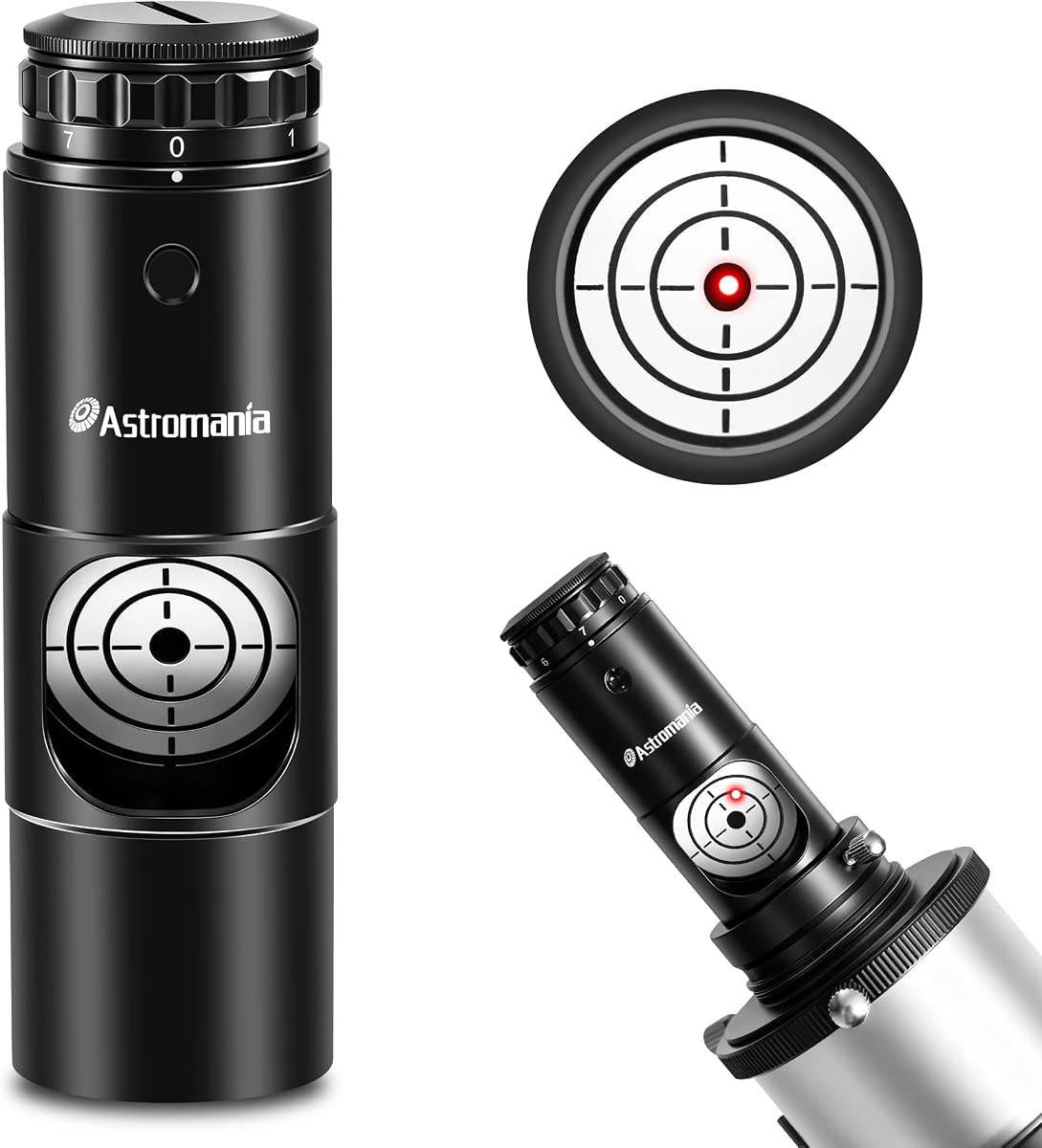
Astromania Laser Collimator 1.25" for Newtonian Marca Telescope Alignment
4.5Editor score
Compatible with standard 1.25 inch focusers
Lightweight and portable design
Includes detailed English and German instructions
Achieving sharp stellar images requires precise optical alignment. A laser collimator for telescope alignment helps you calibrate your reflector or Newtonian telescope quickly and accurately without relying on star testing alone.
We analyzed ten highly rated models based on build quality, beam stability, compatibility, and user feedback. Our comparison covers budget-friendly options, premium bundles, and advanced electronic tools for astronomers at every level.
Each pick highlights specific strengths like self-centering adapters, adjustable brightness, or bundled accessories. Keep in mind that availability and pricing can change, so verify current details before purchasing your ideal alignment tool.
4.5Editor score

4.5Editor score
4.7Editor score
As an Amazon Associate we earn from qualifying purchases.
The following table compares all ten selected laser collimator models side by side. Review the key specifications to determine which tool best suits your telescope type and alignment needs.


The Astromania Laser Collimator stands out as a top choice for Newtonian telescope owners. With a 4.5 star rating and robust metal construction, it delivers reliable precision for both beginners and experienced users.
We may earn a commission when you buy through this link, at no additional cost to you.
Its key strength lies in versatility. The removable 2 inch adapter allows compatibility with both 1.25 inch and 2 inch focusers. The seven adjustable brightness levels ensure you can align your optics in bright workshops or under dark skies without glare.
While the adjustment mechanism requires small screw caps to be unscrewed before tuning, this design protects internal parts from dust. The side window for checking reflections adds convenience but requires steady hands to interpret the beam correctly.
If you need a single tool for multiple telescopes that offers clear guidance and durability, this collimator is an excellent investment. It streamlines the alignment process so you can focus on observing the stars.
The included 2 inch adapter expands compatibility significantly. You can use it on standard 1.25 inch setups or upgrade to 2 inch systems without buying a new collimator.
Adjustable brightness ensures the laser dot remains visible even in ambient light. This feature helps you perform quick checks indoors before heading outdoors for imaging.
We may earn a commission when you buy through this link, at no additional cost to you.
This model offers the core features of the premium version at a lower price point. It is ideal for users with standard 1.25 inch focusers who want reliable performance without overspending on unnecessary adapters.
We may earn a commission when you buy through this link, at no additional cost to you.
The compact body fits naturally in your palm, making it easy to maneuver during alignment. The durable metal construction ensures it withstands regular use in observatory bags or vehicle storage compartments.
While it does not include a 2 inch adapter, the included battery allows immediate use. The sealed adjustment openings protect the internal mechanism from dust, maintaining calibration accuracy until you need to fine-tune it.
Choose this tool if you prioritize value and portability. It provides the essential features needed for accurate collimation in Newtonian telescopes, ensuring sharper views without breaking the bank.
Designed to be carried anywhere, this collimator fits easily in compact observing kits. Its small size reduces bulk when traveling to dark sky sites.
The included CR2032 battery means you can start aligning right away. No need to search for specific batteries before your first observing session.
We may earn a commission when you buy through this link, at no additional cost to you.
SVBONY is a trusted name in astronomy accessories, and this collimator reflects that reputation. It balances affordability with solid build quality, making it a strong contender for reflector telescope owners seeking precision.
We may earn a commission when you buy through this link, at no additional cost to you.
The triple cemented lens enhances stability, ensuring the laser beam remains steady during alignment. The 2 inch adapter is included, allowing seamless transition between 1.25 inch and 2 inch setups without extra purchases.
The solid metal body supports long-term use even in rugged field conditions. However, the adjustment openings are sealed, requiring a screw cap to be removed before you can tweak the beam alignment to your needs.
This is a versatile choice for users upgrading their equipment. It future-proofs your alignment tool by handling both standard and wide-format focusers effectively, delivering clear images quickly.
The triple cemented lens reduces vibration and beam wobble. This stability is crucial when you need to track the dot precisely during fine adjustments.
Upgrading your telescope does not mean buying new collimation tools. The included adapter ensures compatibility as you move to larger focusers.
We may earn a commission when you buy through this link, at no additional cost to you.
This bundle extends beyond basic collimation by including a telescope lens component. It is suited for users who want a comprehensive package to enhance both alignment and viewing performance simultaneously.
We may earn a commission when you buy through this link, at no additional cost to you.
The included eyepiece offers a wide 62 degree field of view. This wide angle provides a natural, immersive experience during observing sessions. The collimator itself retains adjustable brightness and standard metal durability.
Safety is prioritized with Class I laser standards. While the price is higher than single-unit options, the combined value of alignment and viewing improvements can justify the cost for dedicated observers.
Select this bundle if you seek an all-in-one upgrade. It addresses collimation needs while immediately improving your visual experience with the wide-field lens component.
The 62 degree apparent field of view creates a lost-in-space feeling. This feature makes it easier to locate and track celestial objects comfortably.
Class I standards ensure safe operation. Combined with the wide lens, it offers a safe and high-quality visual enhancement for your telescope setup.
We may earn a commission when you buy through this link, at no additional cost to you.
Alstar delivers a straightforward tool designed for simplicity. The laser arrives fully adjusted, reducing the time needed for initial setup. This makes it ideal for users who want a plug-and-play alignment solution.
We may earn a commission when you buy through this link, at no additional cost to you.
The side window with a disk oriented at 45 degrees allows you to monitor beam reflections easily. This feature simplifies the process of verifying alignment without needing extra tools or helpers.
One notable limitation is the exclusion of the battery. You will need to source a CR2032 lithium cell separately before use. Additionally, it fits 1.25 inch focusers only, limiting versatility for larger systems.
Choose this model if you prioritize immediate usability and have a standard 1.25 inch focuser. It streamlines the collimation workflow so you can start observing quickly.
The unit arrives fully adjusted to reduce initial setup time. This convenience helps beginners get started with alignment right away.
The side window reveals the beam reflection clearly. This aids in confirming that the laser returns to its source accurately.
We may earn a commission when you buy through this link, at no additional cost to you.
This model addresses compatibility by including a removable 2 inch adapter. It ensures your alignment tool works across standard and wider telescope configurations, offering flexibility for growing astronomy kits.
We may earn a commission when you buy through this link, at no additional cost to you.
The 120 degree adjustment openings allow for precise calibration. Sealed initially to protect against dust, they can be opened for fine-tuning when necessary. The durable metal build resists wear during transport.
While user ratings are slightly lower than premium options, the feature set remains competitive. It provides essential functionality like seven brightness levels and clear guidance in multiple languages for ease of use.
This is a practical choice for users needing dual compatibility without high cost. It balances versatility with reliability for regular alignment tasks in Newtonian scopes.
The included 2 inch adapter supports upgrades without new tools. This versatility keeps your kit streamlined as you expand your equipment.
Strategic adjustment openings allow meticulous calibration. These features ensure you can tune the beam accurately to your specific telescope requirements.
We may earn a commission when you buy through this link, at no additional cost to you.
This bundle targets astrophotographers needing to attach phones for imaging. It combines a standard collimator with a specialized adapter, offering a complete solution for alignment and mobile capture.
We may earn a commission when you buy through this link, at no additional cost to you.
The cell phone adapter features an adjustable locking mechanism with a steel bolt, ensuring a firm grip. The high-density EVA pads protect your device while fitting eyepiece diameters ranging from 25 to 48 millimeters.
While excellent for mobile setups, the complexity of managing both collimation and phone mounting can be challenging. Ensure your phone model is compatible as listed to avoid fit issues during imaging sessions.
If mobile imaging is a priority, this tool simplifies the workflow. It bridges the gap between alignment and capture, allowing you to document celestial objects without heavy equipment.
The adapter supports a wide range of smartphone models. This makes it easy to attach your phone securely for night sky photography.
High-density EVA pads protect your phone from scratches. The adjustable mechanism ensures a stable mount even with different device sizes.
We may earn a commission when you buy through this link, at no additional cost to you.
This package pairs the modern convenience of a laser collimator with the traditional reliability of a Cheshire eyepiece. It is ideal for astronomers who prefer dual verification methods to ensure absolute accuracy.
We may earn a commission when you buy through this link, at no additional cost to you.
The Cheshire component is precision machined from aluminum with fine crosshairs. Since it uses reflected light, no batteries are needed, making it perfect for daytime checks when the laser might be invisible.
The laser component retains standard features like seven brightness levels and a 2 inch adapter. This combination ensures you have both electronic and optical tools for verification, covering all alignment scenarios.
Select this bundle if you want thorough accuracy. The combination of laser speed and Cheshire precision offers a robust solution for critical imaging sessions or sensitive optics.
Using both tools verifies alignment from multiple angles. This thoroughness helps ensure your telescope optics are perfectly aligned for sharp images.
The Cheshire eyepiece works well during day. It allows quick checks without needing a power source, complementing the laser tool.
We may earn a commission when you buy through this link, at no additional cost to you.
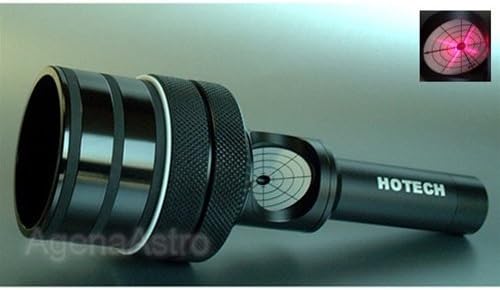
HoTech redefines precision with its patented Self-Centering Adapter (SCA) technology. This addresses the common industry issue of slop in standard focusers, ensuring the laser remains perfectly aligned with the optical axis.
We may earn a commission when you buy through this link, at no additional cost to you.
The crosshair model further refines accuracy by providing visual reference lines. This detail helps you confirm alignment beyond just hitting a center spot, offering the highest level of precision available in consumer tools.
While it is a significant investment, the reliability it offers justifies the cost for serious astronomers. It removes a major variable that typically frustrates users trying to achieve perfect collimation consistently.
If you demand absolute precision and repeatable results, this is the tool to choose. It sets the standard for what a laser collimator can achieve in modern optics.
The SCA adapter ensures precise and repeatable installation. It solves the common problem of wobbling in standard telescope focusers.
The crosshair design aids in verifying exact alignment. This feature provides an extra layer of assurance beyond simple spot detection.
We may earn a commission when you buy through this link, at no additional cost to you.
The Ocal Pro V4.0 introduces electronic precision to alignment. Using software-guided calibration circles, it enables pixel-level adjustments for high-precision optical alignment across various telescope types.
We may earn a commission when you buy through this link, at no additional cost to you.
It is factory-centered to ensure optimal baseline accuracy. This all-in-one design supports field adjustments, making it portable enough for mobile astronomy setups. The integration with smartphones adds a layer of modern control.
While it requires power and a compatible device, the precision it offers is unmatched by traditional lasers. It is particularly suited for complex optics like Schmidt Cassegrain systems where electronic accuracy is key.
Choose this if you prefer digital interfaces over mechanical adjustments. It represents the future of collimation, delivering professional-grade capabilities in a user-friendly package.
Software-guided circles enable quick adjustments. This digital approach ensures pixel-level accuracy without guesswork.
Designed for both Newtonian and Cassegrain scopes. This versatility allows you to use one tool across different telescope types.
We may earn a commission when you buy through this link, at no additional cost to you.
Selecting the right collimator depends on your telescope type, budget, and required precision. Consider the following factors to ensure compatibility and performance.
Ensure the collimator fits your focuser diameter. Most models offer 1.25 inch fit, but check if a 2 inch adapter is included for wider tubes.
Compatibility is essential for a secure fit that maintains calibration accuracy.
Look for adjustable brightness levels. This allows the laser to be visible in both bright workshops and dark skies.
Adjustable intensity ensures the beam remains clear without being too intense for the eye.
Metal construction is preferred over plastic. It resists wear and tear during transport and maintains structural integrity over time.
A durable body ensures the tool remains reliable through years of observing.
Triple cemented lenses or self-centering adapters prevent beam drift. Stability is critical for accurate alignment results.
Advanced tech eliminates wobbling issues found in basic models.
Check for included batteries or adapters. Some models ship ready to use, saving you extra costs.
Bundles may include eyepieces or phone mounts for added value.
Adjustment openings should be accessible yet protective. Sealed caps prevent dust but need to be removable for fine-tuning.
Easy-to-use adjustment points make maintenance simple without tools.
Decide if you need simple alignment or imaging capabilities. Basic collimators suit visual observing, while bundles suit astrophotography.
Your primary goal dictates whether a basic tool or bundle is necessary.
Higher price often means higher precision. Consider if standard accuracy is enough or if premium features like SCA are needed.
Balance cost with the level of optical performance you require.
Insert the collimator into the focuser securely. If using an adapter, ensure it fits snugly without wobbling to maintain accuracy.
Turn on the laser and observe the dot on the primary mirror. Adjust the screws until the dot centers perfectly on the target ring.
Store the tool in a protective case when not in use. Keep the laser lens clean and avoid exposing it to extreme heat or humidity.
A laser collimator aligns the optical axes of a telescope. It ensures that light passes through the optical system correctly for sharper images.
Yes, it significantly improves image quality. It is especially useful for reflector telescopes where alignment is critical for star definition.
Check alignment before every major observing session. Frequent handling or transport can knock the optics out of position.
Most are designed for Newtonians, but some bundles include Cheshires that work for both. Always verify compatibility with your specific model.
Unstable beams often indicate poor build quality or loose internal parts. Look for triple cemented lenses or self-centering adapters for better stability.
Adjustable brightness models can work in daylight. However, traditional Cheshires are better for visual checks in bright ambient conditions.
We reviewed ten top models ranging from budget options to premium tools with patented technology. Each offers unique advantages for different users.
Prioritize focuser compatibility and build quality to ensure your tool lasts. For best results, choose models with adjustable brightness and protective caps.
Remember to check current availability and verify compatibility with your specific telescope before purchasing to avoid issues.