
Pyle Premium Direct Injection Audio Box
4.5Editor score
Passive DI design
Hum eliminator included
1/4 inch input
Finding the right direct box is essential for any bassist looking to connect their instrument to a mixing console or audio interface without losing tone or introducing noise.
We evaluated ten highly rated models based on build quality, sound clarity, connectivity options, and value to create this comprehensive comparison for musicians and engineers.
Each pick highlights key features and ideal use cases so you can choose confidently knowing that prices and availability may change over time on retailer sites.
4.5Editor score

4.7Editor score
4.8Editor score
As an Amazon Associate we earn from qualifying purchases.
This side by side comparison breaks down the top ten direct boxes by key specifications so you can quickly see which model fits your specific audio routing needs.




This passive direct injection box offers a straightforward way to connect bass and guitar to balanced systems while eliminating hum for clean audio performance.
We may earn a commission when you buy through this link, at no additional cost to you.
It features an impedance transformer that converts unbalanced signals to balanced mic level outputs making it ideal for connecting to PA systems or recording mixers.
The lack of a pad switch and all plastic build may limit durability for heavy touring but it remains reliable for practice and occasional live use cases.
Beginners and budget conscious musicians will find this unit a practical entry point into professional signal routing without breaking the bank on equipment costs.
The impedance transformer ensures your instrument signal matches mixer requirements while canceling buzz and hum for clearer audio output.
You can connect keyboards guitars or even boom box outputs to sample records making it a flexible tool beyond just bass instruments.
We may earn a commission when you buy through this link, at no additional cost to you.
The PDC21 improves on the budget category with a steel chassis that promises longevity while retaining the hum elimination features of its predecessor models.
We may earn a commission when you buy through this link, at no additional cost to you.
It allows you to connect up to ten effects pedals and provides a ground lift adapter to reduce noise during live performances or recording sessions.
Although the steel build adds weight and it lacks advanced controls like attenuation pads it offers robust protection for signal integrity in noisy environments.
Musicians needing a reliable and heavy duty passive box for studio or stage work will appreciate the solid construction at an accessible price tier.
The all steel chassis ensures the unit withstands transport and setup wear while maintaining signal quality over years of use.
This box can power up to ten effects pedals making it a convenient hub for integrating external gear into your audio chain.
We may earn a commission when you buy through this link, at no additional cost to you.
Radial's Pro DI sets a high benchmark for passive direct boxes with its custom transformer and rugged I-beam construction that engineers trust for critical tasks.
We may earn a commission when you buy through this link, at no additional cost to you.
The custom transformer delivers accurate tone transfer with minimal coloration while the I-beam steel chassis resists damage from drops and heavy use on the road.
While it comes at a higher price point than budget alternatives it offers professional sound quality and durability that justifies the investment for serious musicians.
Recording engineers and touring bassists should choose this unit when reliable signal conversion and long term durability are top priorities for their setup.
The custom transformer ensures your bass tone remains intact while converting high impedance signals to balanced mic levels without noise.
The I-beam construction provides exceptional durability for touring ensuring the unit survives the rigors of live performance environments.
We may earn a commission when you buy through this link, at no additional cost to you.
The IMP 2 delivers professional sound quality in an economical package making it a favorite for those needing reliable performance without overspending on gear.
We may earn a commission when you buy through this link, at no additional cost to you.
It uses a TRHL transformer that is riveted rather than glued to the chassis ensuring mechanical stability and consistent audio transmission over time.
Though it lacks some advanced features like a ground lift switch its small footprint and excellent sound quality make it ideal for tight stage setups.
Musicians seeking a compact and affordable passive direct box that still meets professional audio standards will find this Whirlwind model a smart choice.
Its small size allows easy integration into crowded pedalboards or stage setups without taking up valuable space near your instrument.
The riveted TRHL transformer ensures mechanical durability and consistent signal quality even after years of repeated use on stage.
We may earn a commission when you buy through this link, at no additional cost to you.
The PDC22 expands versatility by offering two channels in a single unit which is useful for connecting multiple instruments or running stereo signals easily.
We may earn a commission when you buy through this link, at no additional cost to you.
It maintains the steel chassis and hum eliminator features found in other Pyle models ensuring durability and clean audio for live sound applications.
While the connectors are plastic and controls are minimal the dual channel capability provides added flexibility for small bands or multi instrument setups.
Players who need to run bass and another instrument simultaneously through one box will appreciate this budget friendly solution for signal routing needs.
Having two channels allows you to connect both a bass and a keyboard to the mixer through a single compact unit easily.
The built in hum eliminator helps remove ground loop noise ensuring your signal stays clean during live performances or recordings.
We may earn a commission when you buy through this link, at no additional cost to you.
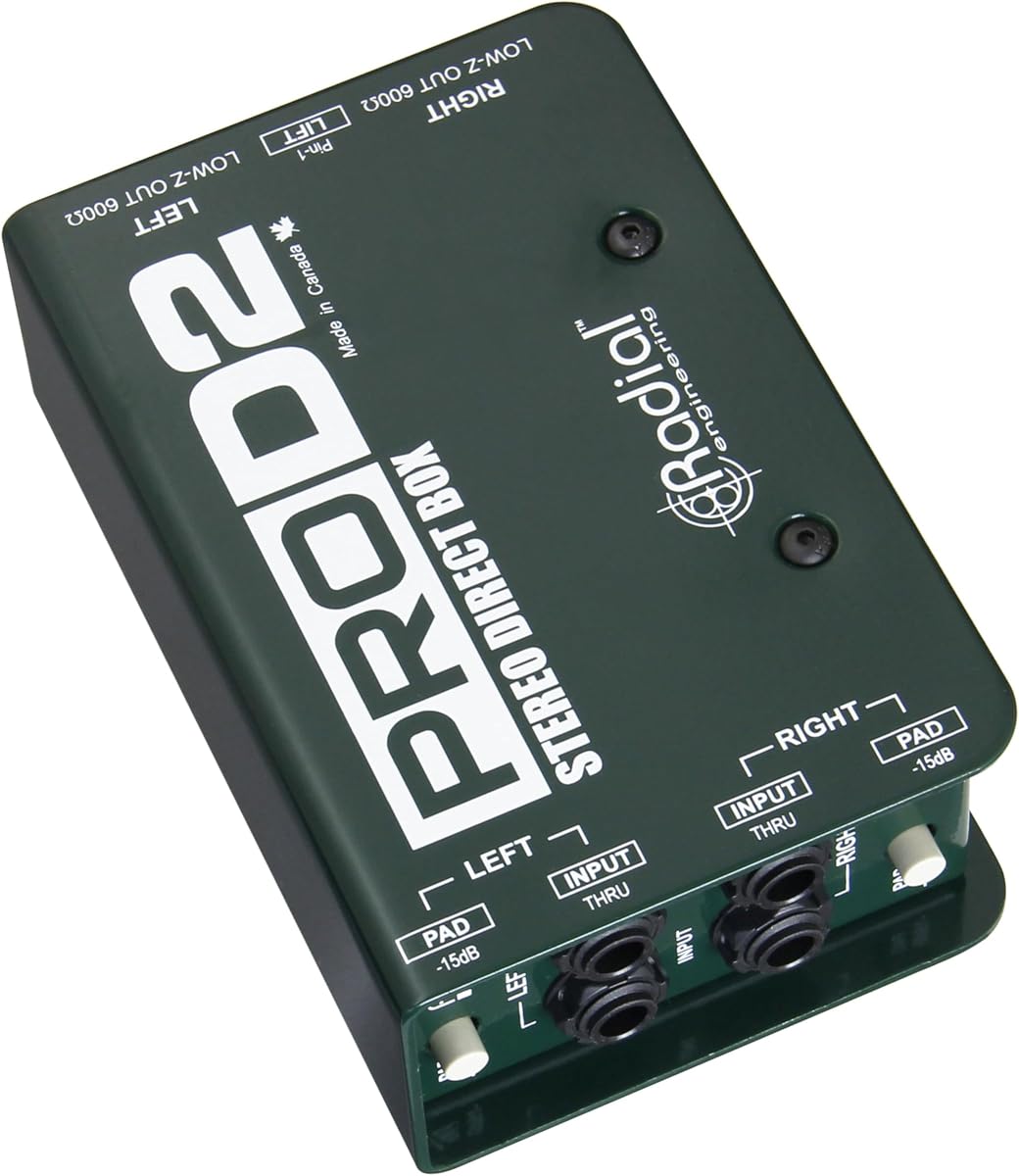
The ProD2 stands out as a premium choice with true stereo separation and dual isolation transformers that protect against noise and ground loops effectively.
We may earn a commission when you buy through this link, at no additional cost to you.
It includes a 15dB pad and ground lift switch giving you precise control over signal levels and noise reduction for any recording or live scenario.
Its higher price reflects the superior engineering and stereo capability that is essential for keyboardists or bassists using stereo pedals and effects.
Professionals requiring high fidelity stereo signal transfer and robust noise rejection will find this Radial unit worth the investment for top quality results.
Dual isolation transformers ensure your left and right channels remain separate and clean without crosstalk or signal degradation.
The 15dB pad and lift switch give you precise control over input levels to prevent clipping and remove ground noise issues.
We may earn a commission when you buy through this link, at no additional cost to you.
The DB2 offers dual channel passive conversion with a three step attenuation switch that helps prevent signal overload when using different instruments.
We may earn a commission when you buy through this link, at no additional cost to you.
It includes a ground lift switch to eliminate hum and ensures noise free transmission for both live performances and studio mixing sessions.
While the housing is durable but not all steel the unit provides excellent value for stereo setups and reamping tasks at an accessible price point.
Musicians needing a compact stereo DI with signal level control will find this Bolanle model a practical tool for diverse audio routing needs.
The three step attenuation switch helps prevent overload when connecting different sources ensuring optimal levels for your mixer or interface.
Its design supports reamping workflows allowing you to send signals back to amps easily for tone shaping in the studio.
We may earn a commission when you buy through this link, at no additional cost to you.
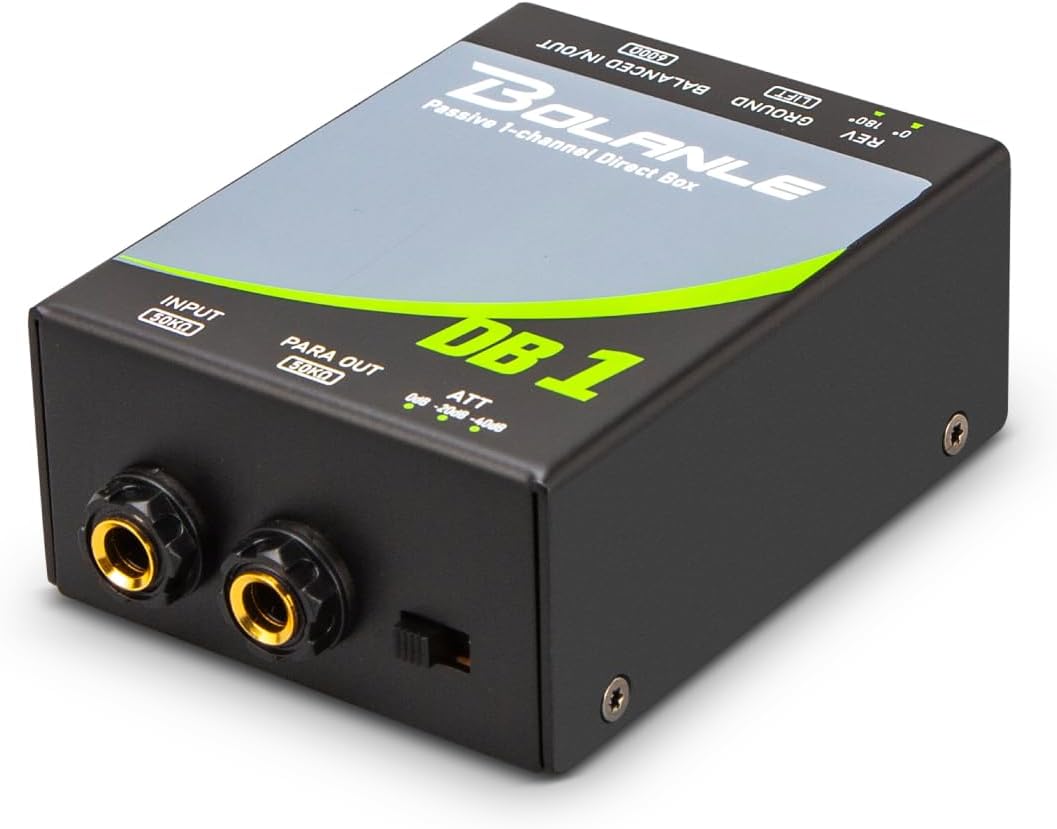
The DB1 focuses on pure signal conversion without requiring power making it ideal for bassists needing a reliable mono DI with amp parallel output.
We may earn a commission when you buy through this link, at no additional cost to you.
It features a built in hum eliminator and ground loop removal ensuring your performance stays clear and professional in any setting.
The parallel output allows you to send signal to both a mixer and amp simultaneously which is convenient for gigging musicians needing both options.
Those seeking a straightforward passive box with amp send capability and road ready durability will find this DB1 model a solid and practical choice.
Send your signal to the PA and your amp simultaneously so you hear your tone while the engineer mixes your sound properly.
No need for external power or batteries ensures you can rely on this box anytime without worrying about power sources failing.
We may earn a commission when you buy through this link, at no additional cost to you.
The J22 is unique for offering three power options including USB phantom and battery which ensures you can use it anywhere without power anxiety.
We may earn a commission when you buy through this link, at no additional cost to you.
It maintains stereo separation for dual outputs so your keyboard or synth signal remains true to the original mix without mono summing issues.
While it requires power sources which adds complexity the active design ensures a clean silent signal path that performs well even on noisy stages.
Musicians playing stereo keyboards or needing flexible power solutions will appreciate this active unit ability to deliver studio accurate sound on stage.
Whether you use USB battery or phantom power the box works reliably so you never get stuck without a power source.
Dual XLR outputs maintain full stereo separation ensuring your left and right channels stay intact for accurate sound reproduction.
We may earn a commission when you buy through this link, at no additional cost to you.
The Pro48 delivers high resolution active conversion with phantom power and includes a pad for high output instruments making it versatile for bass and guitar.
We may earn a commission when you buy through this link, at no additional cost to you.
It combines professional sound quality with a compact size that fits easily in gig bags while still providing robust signal handling capabilities.
While it depends on phantom power which limits use to powered mixers the active design ensures clarity and low noise even for demanding instruments.
Touring musicians needing a reliable compact active box for clean signal conversion will find this Radial unit a professional grade solution for live sound.
The active circuit provides high resolution conversion ensuring your bass tone remains clear and detailed through long cable runs.
The -15dB pad helps manage high level signals from active basses preventing clipping and maintaining clean audio quality.
We may earn a commission when you buy through this link, at no additional cost to you.
Selecting the right direct box depends on several factors including whether you need passive or active operation and your connectivity requirements.
Passive boxes require no power and work well for most passive instruments while active boxes need phantom power or batteries and excel with high impedance sources.
Choose passive for simplicity and active if you need higher signal strength or have very sensitive equipment requiring active buffering.
Most bassists need only mono inputs but stereo boxes are useful for keyboards or bass pedals that output two channels.
If you run stereo effects pedals ensure the DI box supports stereo input and output to maintain your full sound.
Look for metal chassis and rugged construction if you plan to tour or transport equipment frequently to withstand drops and wear.
A durable build ensures the unit lasts longer and maintains signal integrity over years of heavy use on stage.
Ensure the box offers the correct inputs like 1/4 inch and outputs like XLR to match your mixer and instruments.
Some units include parallel outputs or USB options which add flexibility for connecting multiple devices simultaneously.
Features like ground lift switches and attenuation pads help manage noise and prevent clipping when dealing with high output instruments.
These controls are essential for optimizing signal levels and avoiding hum in noisy electrical environments.
Active DI boxes need phantom power batteries or USB whereas passive units run without any external power source.
Consider where you will use the box and whether your mixer provides phantom power before choosing an active model.
Budget units are fine for home recording or casual gigs while professional models offer better build quality and clearer signal paths.
Balance your budget with the features you actually need to avoid overspending on unnecessary capabilities.
Some direct boxes allow reamping which lets you send recorded tracks back through guitar amps for tone shaping.
If you plan to do post production work look for units that support bidirectional signal flow for flexibility.
Connect your bass to the 1/4 inch input and run an XLR cable from the balanced output to your mixer or audio interface.
Engage the ground lift switch if you hear humming or buzzing to eliminate ground loop noise in your signal chain.
Store the unit in a protective case when not in use to prevent damage to connectors and internal components during transport.
Yes a direct box converts your instrument signal to a balanced mic level suitable for long cable runs and mixing consoles. It also reduces noise and hum that can occur with unbalanced connections in large venues.
Passive DI boxes use transformers and require no power whereas active boxes use circuitry needing phantom power or batteries. Active boxes generally handle high impedance sources better while passive are simpler.
Use the ground lift switch on your DI box to break the ground loop causing hum. Also ensure all cables are balanced and connections are secure to minimize interference.
Yes you can use a bass direct box for keyboards especially stereo models if you are playing keyboards or synths. Ensure the inputs match your keyboard output levels.
A pad attenuates the input signal to prevent clipping when using high output active instruments. It reduces the signal by 10 or 20 decibels depending on the model.
Quality direct boxes can last many years if handled properly. Rugged units with metal chassis withstand touring better than plastic models and require minimal maintenance.
Only active DI boxes require phantom power. Passive units work without any external power source so you can use them with any mixer or interface.
Reamping allows you to send a recorded signal back through an instrument amp using a DI box. This helps shape tone in post production by running tracks through real speakers.
We have reviewed ten excellent direct boxes ranging from budget friendly units to professional models like the Radial ProD2 for diverse needs.
Prioritize build quality and signal integrity based on whether you perform live or record at home to ensure reliable performance.
Always verify current availability and pricing on retailer sites before purchasing since costs can vary over time.