
1000X Handheld Digital Microscope for Kids
4.5Editor score
1000X magnification power
2MP camera resolution
8 adjustable LED lights
Discovering the hidden world of insects requires the right tools for observation. A digital microscope allows you to see intricate details that the naked eye cannot reveal, making it perfect for nature enthusiasts.
We evaluated ten top-rated models based on their magnification power, image resolution, connectivity options, and ease of use. Our comparison focuses on features that matter most for detailed insect study and field research.
Each pick highlights specific strengths like portability, screen size, or lens variety. Note that product availability and pricing may change over time, so verify current details before making your final purchase decision.
4.5Editor score
4.5Editor score

4.3Editor score
As an Amazon Associate we earn from qualifying purchases.
This side-by-side comparison highlights the key specifications and capabilities of each digital microscope model. Use this overview to quickly identify which device matches your specific needs for insect observation and study.




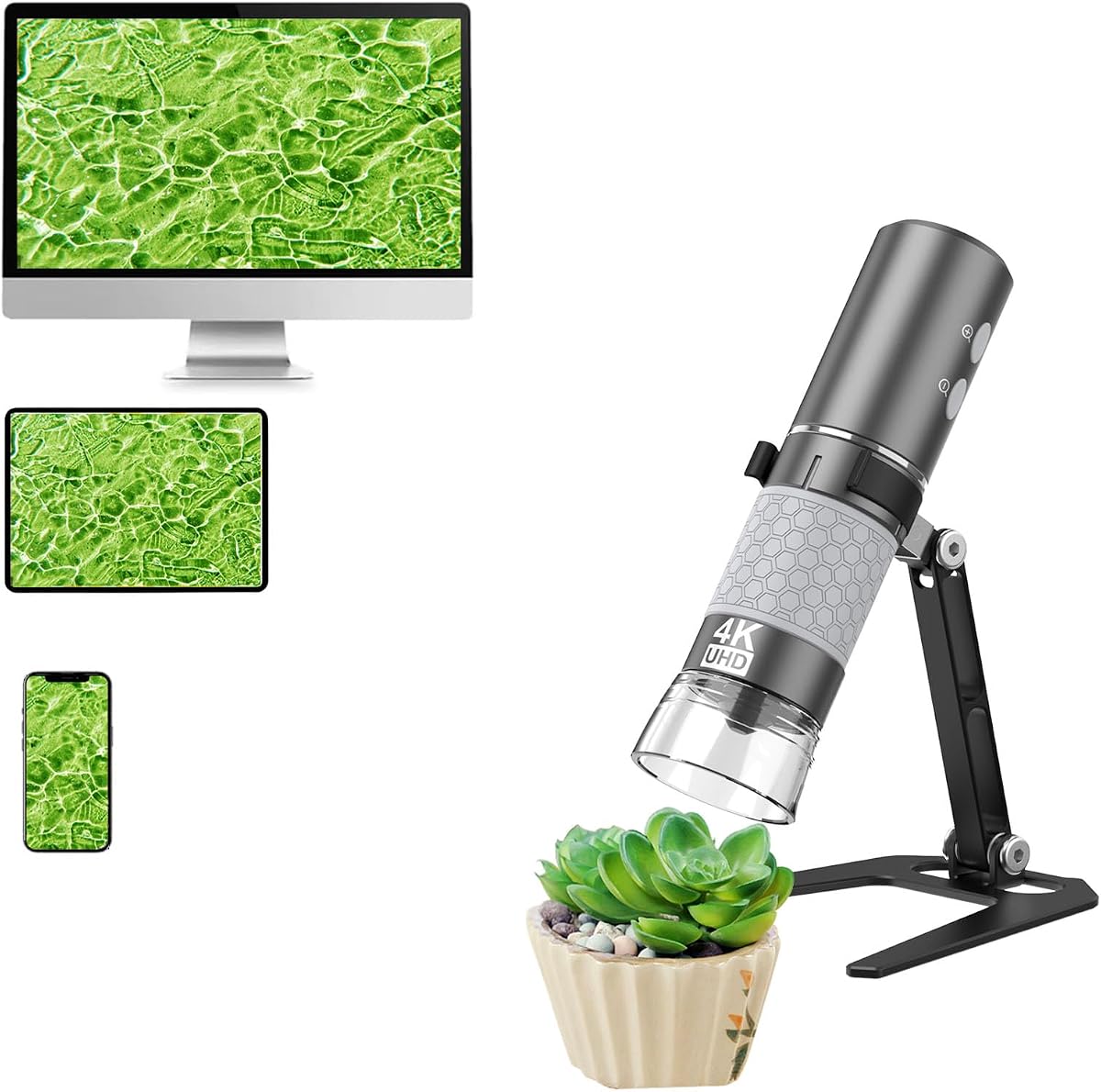
This WiFi Digital Microscope stands out for its ability to connect seamlessly to various devices. With a 4K resolution camera, it captures detailed images of insect structures like wings and legs effectively.
We may earn a commission when you buy through this link, at no additional cost to you.
The wireless connectivity allows for easy transfer of photos and videos to smartphones. Its 4-hour battery life ensures you can explore for extended periods without needing to recharge constantly.
While it requires an app download for full functionality, the setup is straightforward. The adjustable stand helps maintain stability during observation, reducing blur in your captured images.
This model is ideal for hobbyists who want high-quality digital images without complex cabling. It balances portability and performance well for studying insects in different environments.
The 4K resolution provides exceptional clarity for documenting fine details like insect hairs or vein patterns accurately.
WiFi connectivity lets you view and share results instantly on your phone without needing extra cables or adapters.
We may earn a commission when you buy through this link, at no additional cost to you.
This handheld microscope offers exceptional value for families looking to introduce children to insect study. Its 1000X magnification allows for clear views of plant cells and insect anatomy.
We may earn a commission when you buy through this link, at no additional cost to you.
The durable ABS plastic case ensures it can survive typical handling by young users. Manual focus control provides precise adjustments to get sharp images of small specimens like flies.
Storage capacity holds over 200 photos, so kids can keep a collection of their discoveries. The battery lasts about 2 hours, which is sufficient for short nature walks.
It is a practical choice for budget-conscious buyers who need reliable performance. The included USB connection makes it simple to share findings with teachers or parents.
Large focus dials and lightweight body make it easy for children to handle independently during outdoor exploration activities.
Internal memory saves photos directly to the device, removing the need for extra SD cards during initial use.
We may earn a commission when you buy through this link, at no additional cost to you.
The Andonstar AD266S is designed for serious observation needs requiring extreme detail. With up to 5000X magnification, it reveals microscopic structures on insects that others miss entirely.
We may earn a commission when you buy through this link, at no additional cost to you.
Five interchangeable lenses allow for versatile viewing of different specimen types. The metal stand minimizes shake, ensuring stable images even at high magnification levels.
Professional measurement software adds utility for precise analysis of insect features. The HDMI output connects to larger displays for group viewing or educational presentations effectively.
This model suits advanced students or professionals who need laboratory-grade features. It is an investment for those committed to detailed biological study and accurate documentation.
Five lenses cover a wide range of magnifications from 20X to 5000X to handle various insect study tasks efficiently.
The integrated metal stand reduces vibration, which is essential for clear images at maximum magnification levels.
We may earn a commission when you buy through this link, at no additional cost to you.
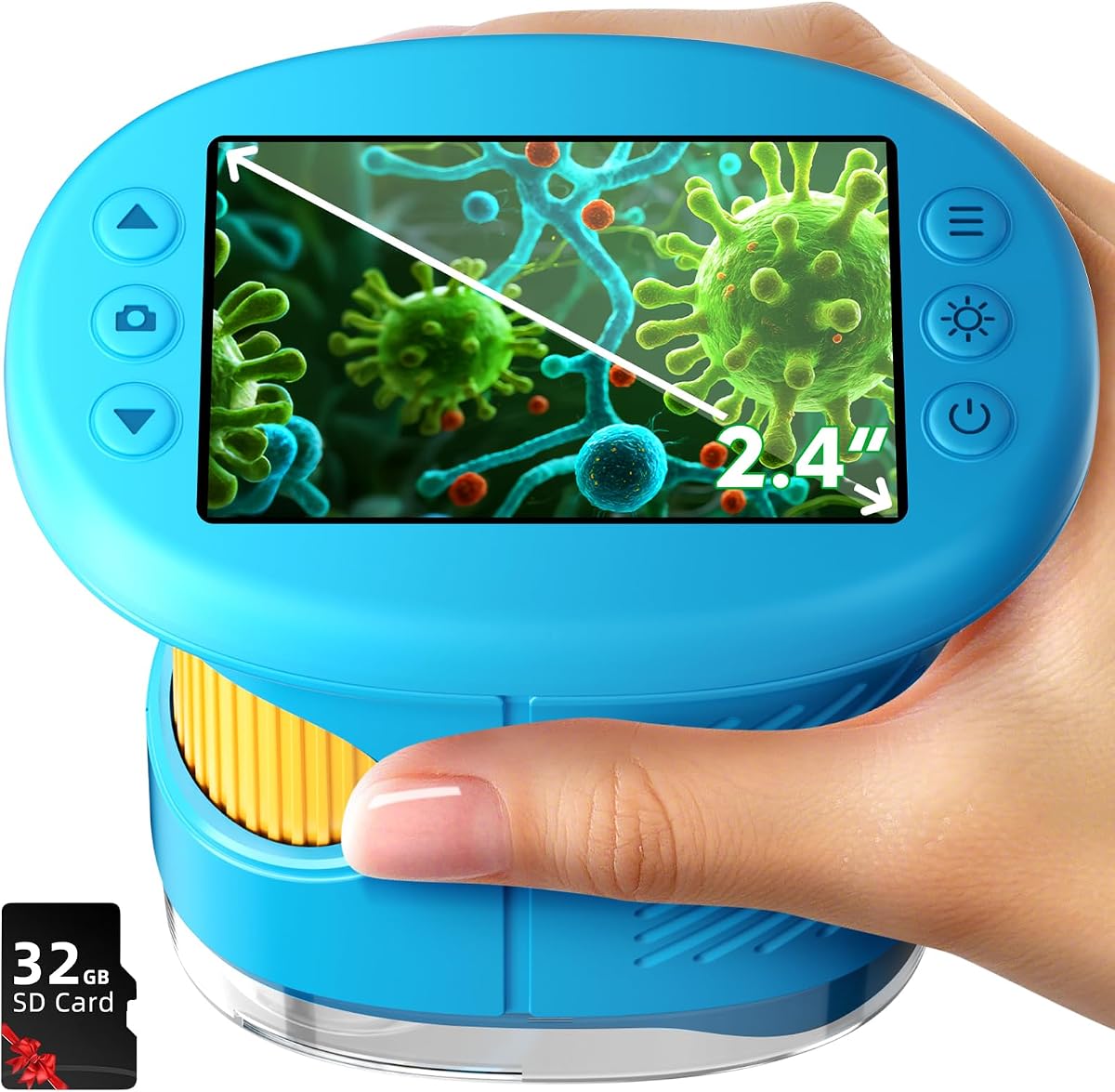
Odatay 4K microscope comes ready for use with a complete kit of accessories. The 32GB card and 12 prepared slides let you start exploring insects immediately without extra purchases.
We may earn a commission when you buy through this link, at no additional cost to you.
Its 2.4 inch screen provides a clear view for children during observation. The long-distance viewing feature allows you to see larger objects like whole leaves or bugs from a distance.
Adjustable LED brightness ensures visibility in various lighting conditions. However, some users may find the screen brightness insufficient for very bright outdoor settings.
This is an excellent educational tool for young students. It combines fun with learning, making it a great gift for curious kids interested in nature and science.
Included slides and a large memory card ensure you can begin recording and studying insects right out of the box.
Lightweight build and a lanyard strap make it easy to carry during field trips or backyard explorations.
We may earn a commission when you buy through this link, at no additional cost to you.
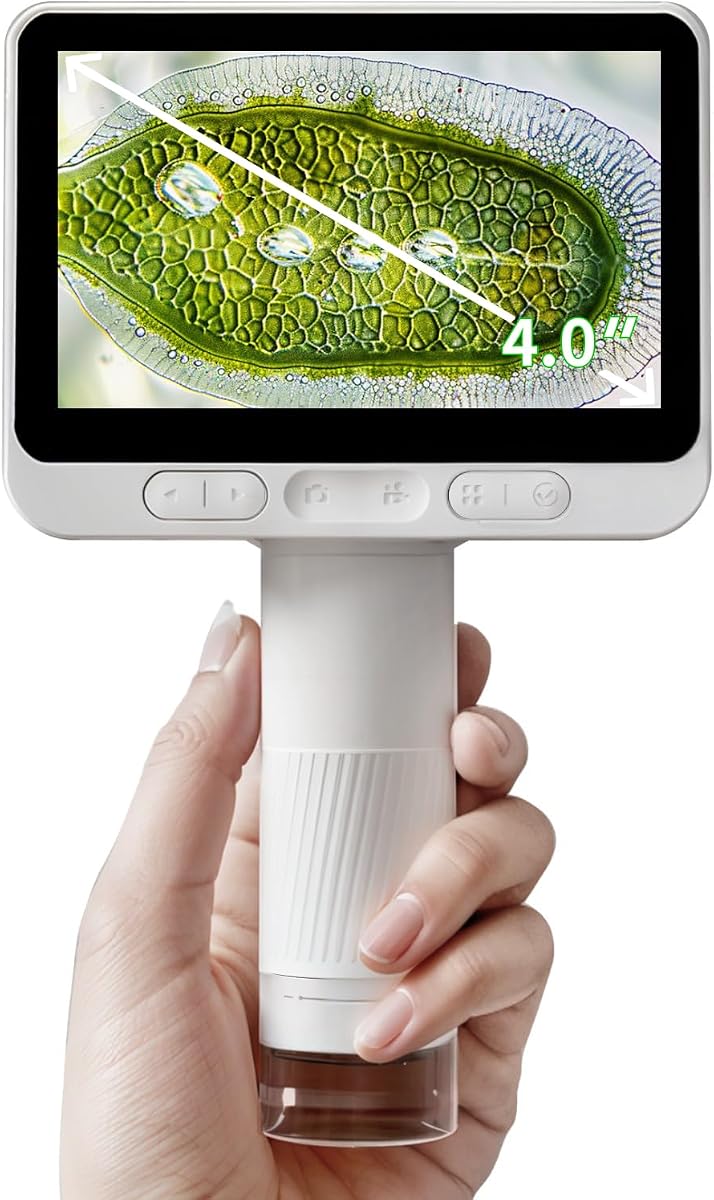
The BEAVERLAB Finder features a 4 inch display that makes viewing insect details easier for kids. This larger screen reduces eye strain during longer observation sessions.
We may earn a commission when you buy through this link, at no additional cost to you.
With 1600X magnification, it captures significant detail on small specimens like ants or flower parts. The built-in hotspot allows easy file uploads to phones for sharing.
Adjustable lights help illuminate specimens clearly in any environment. However, using the screen frequently can drain the battery faster than models with smaller displays.
This model is best for users who prioritize screen visibility. It offers a balance of performance and usability for educational purposes at home or school.
A 4 inch screen provides ample space to see images clearly without needing to squint or use external devices.
The built-in hotspot simplifies sharing photos and videos to social media or personal devices instantly.
We may earn a commission when you buy through this link, at no additional cost to you.
The Skybasic microscope works well on both mobile devices and computers. It offers 50X to 1000X magnification with WiFi for phones or USB for PCs.
We may earn a commission when you buy through this link, at no additional cost to you.
Eight adjustable LED lights provide excellent illumination for capturing details. Its compact size makes it easy to carry in a bag for field studies.
Fixed focus means you must maintain a specific distance from the subject. This can be a challenge when examining moving insects like live flies.
This versatile tool is good for casual study. It supports many operating systems, making it accessible for most users without needing special hardware.
Support for both WiFi and USB ensures you can connect to almost any device you have available at home or school.
Eight adjustable LEDs allow you to customize brightness to suit different specimen needs and reduce shadows.
We may earn a commission when you buy through this link, at no additional cost to you.
This microscope includes a stabilization design to keep images steady. The oversized focus wheel is easy for children to turn for sharp views.
We may earn a commission when you buy through this link, at no additional cost to you.
It supports USB-C charging which is convenient for modern devices. Built-in storage saves photos directly without requiring an SD card.
The 2 inch screen shows clear images of insects. However, the battery only lasts 3 hours, so frequent charging may be necessary for extended trips.
It is a solid choice for active explorers. The durable build handles drops well, making it suitable for rugged outdoor use.
Enhanced stabilization helps prevent blurry images even when holding the device with young or shaking hands.
USB-C charging ensures compatibility with standard cables, reducing the need for extra adapters.
We may earn a commission when you buy through this link, at no additional cost to you.
Andonstar AD246S-M offers three different lenses for varied study needs. You can use the HD HDMI output to connect to a large monitor for better viewing.
We may earn a commission when you buy through this link, at no additional cost to you.
The adjustable stand provides stability for precise observation. Remote control allows you to take photos from a distance without disturbing specimens.
It requires a bit of setup compared to handhelds, but the features justify it. Measurement software helps quantify insect sizes accurately for educational purposes.
This is a great option for classrooms or labs. It supports both basic and advanced users with its versatile lens system and recording capabilities.
HDMI output connects to TVs or monitors, allowing groups to view insect details simultaneously during lessons.
A remote control lets you capture images without moving the device, ensuring stability during critical moments.
We may earn a commission when you buy through this link, at no additional cost to you.
This model uses AI algorithms to adjust focus automatically. The TOF sensor ensures quick refocus on moving subjects like live insects.
We may earn a commission when you buy through this link, at no additional cost to you.
An 8 inch screen provides a vivid view of 4K video. Split-screen functions allow you to compare different samples side by side.
It may be complex for young children, but offers professional features for serious study. The built-in battery supports outdoor usage without constant power sources.
It is best suited for advanced users. The high resolution and auto-focus make detailed documentation easier without manual adjustments.
AI-driven focus keeps moving specimens sharp without manual intervention, reducing effort during observation.
View multiple images simultaneously to compare features across different insects or body parts easily.
We may earn a commission when you buy through this link, at no additional cost to you.
This microscope offers 4K wireless streaming to most smart devices. It includes a wide angle lens to capture entire specimens like whole leaves or bugs.
We may earn a commission when you buy through this link, at no additional cost to you.
Compatibility extends to Linux systems, which is rare in this category. The telephoto capability helps maintain distance from sensitive electronic work.
Zoom buttons work on mobile but not PC, which can be limiting. Still, the resolution and connectivity make it a strong choice for general study.
It fits well in a multi-user environment. The flexibility to work on different operating systems makes it a practical tool for shared resources.
A wide angle allows you to capture the whole insect or specimen in frame without excessive zooming.
Support for Linux and Chrome OS ensures users on less common platforms can still utilize the device effectively.
We may earn a commission when you buy through this link, at no additional cost to you.
Selecting the right digital microscope involves balancing magnification, screen size, and connectivity. This guide outlines key factors to help you find a model that suits your study needs.
Magnification determines how large an object appears. For insect study, 1000X is sufficient to see details like compound eyes and wing structures.
Choose higher magnification if you need microscopic detail, but keep in mind that stability becomes more critical at these levels.
Higher resolution like 4K or 1080P ensures clear images. This helps in documenting fine details that might be blurry at lower settings.
Look for cameras with at least 2MP for decent clarity. Good resolution makes digital sharing and storage more useful.
Connectivity defines how you transfer images. WiFi allows wireless transfer to phones, while USB connects directly to computers for storage.
Consider your preferred workflow. WiFi is convenient for quick sharing, but USB is often more stable for long sessions.
The display screen lets you view images without a computer. Larger screens reduce eye strain and make focusing easier for kids.
Models with 2 to 4 inch screens are common. Choose a size that fits your portability needs and viewing comfort.
LED lights illuminate specimens. Look for adjustable brightness to adapt to different environments like outdoor fields or dark labs.
8 to 12 LEDs provide ample light. Adjustable intensity helps avoid glare on shiny insect surfaces.
Portability matters for field work. Lightweight and durable materials ensure the device survives drops during outdoor exploration.
Check weight and size. Compact models are easier to carry in a backpack or pocket for hiking.
Battery life dictates how long you can work without charging. Aim for at least 3 to 4 hours for a full day of use.
USB rechargeable batteries are standard. Ensure you have access to power sources for extended trips.
Multiple lenses provide flexibility. Interchangeable lenses allow you to switch between macro and high magnification as needed.
Consider models with different focal lengths. This versatility supports both large and small insect studies.
Start by securing your microscope on a stable surface or stand. This prevents shaking that can blur images, especially at higher magnifications.
Adjust the LED lights to illuminate the specimen evenly. If the image looks too dark or too bright, change the brightness setting until details are clear.
Clean the lens with a soft cloth after every use to remove dust or debris. Store the device in a protective case when not in use to avoid damage.
Yes, most digital microscopes work with live insects. Just ensure the focus is stable and the specimen is kept still enough to avoid blur during capture.
For detailed observation, 1000X is typically sufficient. Higher magnifications like 2000X are useful for microscopic structures but require steady hands.
No, many models work directly on phones or tablets via WiFi or USB. A computer is only needed if you want to store large files on a hard drive.
Most are not waterproof. Keep them away from water or moisture to prevent damage to the internal electronics and camera sensor.
Use a soft, dry microfiber cloth to wipe the lens gently. Avoid using harsh chemicals that could scratch the surface or damage the coating.
Yes, most support saving to an SD card or transferring via USB. WiFi models let you send photos directly to your phone for easy sharing.
Choosing the right digital microscope depends on your specific goals. The WiFi Digital Microscope stands out for its balance of features and ease of use.
If budget is a concern, the 1000X Handheld model offers great value for beginners. For advanced needs, the Andonstar AD266S provides professional-grade magnification.
Remember to check current availability and pricing before buying. Prices can fluctuate, and new models may offer better features over time.