
Berkeley Varitronics Octopus 4G LTE
4.6Editor score
True RSRP RSRQ RSSI readings
No SIM or subscription required
Supports all US carriers
Finding the right cellular signal meter for antenna aiming is crucial for anyone installing signal boosters or optimizing wireless connections. These devices provide the accuracy needed to align outdoor antennas with nearby cell towers for maximum strength.
We have evaluated ten leading models based on frequency coverage, sensitivity, portability, and ease of use. Our analysis covers tools ranging from basic handheld meters to advanced spectrum analyzers suitable for professional installations.
Each product entry highlights key specifications, real-world performance traits, and ideal use cases. Please note that prices and availability can change quickly, so verify current details before making your final purchasing decision today.
4.6Editor score

4.3Editor score

4.4Editor score
As an Amazon Associate we earn from qualifying purchases.
This comparison table provides a side-by-side view of all ten featured products. It highlights key specifications and capabilities to help you quickly identify which tool meets your specific antenna aiming and RF measurement needs.


The SureCall Five-Band RF Signal Meter stands out as a top choice for installing cellular boosters. It offers high sensitivity and covers the essential bands needed for modern 4G LTE networks, making it a reliable tool for accurate antenna alignment.
We may earn a commission when you buy through this link, at no additional cost to you.
This device supports five distinct frequency bands including PCS, Cellular, AWS, and two LTE ranges. Its sensitivity reaches -110dBm, allowing users to detect even faint signals during the aiming process. The rechargeable NiMH battery design ensures you can work for several hours without swapping batteries.
While it excels in coverage and sensitivity, the battery life can vary between 2.5 to 3.5 hours depending on usage. Additionally, it is tuned to specific bands and may not be ideal for testing other technologies. These trade-offs are acceptable given its specialized purpose for booster installation.
Installers and homeowners looking to optimize their cellular signal boosters should prioritize this meter. Its combination of frequency coverage and sensitivity provides the data needed to fine-tune antenna positioning effectively for better call quality and data speeds.
Supports PCS Cellular AWS and LTE bands to ensure compatibility with major US carriers.
Detects weak signals at -110dBm to help you find the optimal antenna direction even in remote areas.
We may earn a commission when you buy through this link, at no additional cost to you.
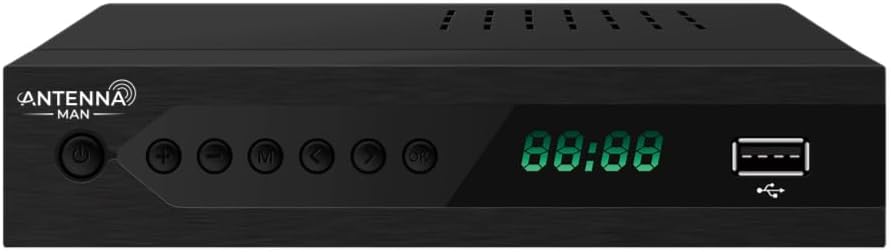
The Antenna Man Signal Meter is an affordable option for those seeking basic signal strength insights. It operates as an ATSC digital converter box with a built-in tuner, offering real-time signal data that can be useful for TV antenna aiming.
We may earn a commission when you buy through this link, at no additional cost to you.
This tool focuses on simplicity with a plug-and-play design that requires no complex setup. It provides real-time signal strength readings to help you adjust your antenna for better channel reception. The inclusion of a digital converter box adds value for over-the-air TV users.
However, its rating is lower than other options on this list, suggesting potential limitations in accuracy or build quality. It is more suited for TV signals than cellular networks, which might not align with every cellular booster installer's needs.
Consider this meter if you need a budget-friendly tool for general antenna aiming tasks. Its ease of use makes it accessible for beginners, though professionals might require more specialized equipment for precise cellular measurements.
The plug-and-play design allows users to get started immediately without technical configuration.
Best suited for over-the-air TV antenna aiming rather than cellular booster optimization.
We may earn a commission when you buy through this link, at no additional cost to you.
The Berkeley Varitronics Octopus 4G LTE is a premium tool designed for advanced cellular signal analysis. It provides true RSRP, RSRQ, and RSSI measurements which are critical for professional network optimization and complex antenna aiming projects.
We may earn a commission when you buy through this link, at no additional cost to you.
Unlike many consumer meters, this device does not require SIM cards or phone subscriptions to function. It supports AT&T, Verizon, T-Mobile, and all regional US carriers. The true RSRP RSRQ RSSI measurements offer deeper insights into signal quality and strength for precise tuning.
Its main drawback is the high price compared to basic meters. For simple home installations, this level of detail might be unnecessary. However, for professionals or those dealing with EV charging stations and IoT devices, the accuracy justifies the investment.
Choose this meter if you need granular data for critical network deployments. Its domestic manufacturing and carrier support make it a robust choice for demanding environments where signal reliability is paramount.
True RSRP RSRQ RSSI measurements provide deep insights into signal quality beyond simple strength indicators.
Supports all major US carriers without requiring SIM cards or subscriptions for testing.
We may earn a commission when you buy through this link, at no additional cost to you.
The RF Explorer Pro Spectrum Analyzer combines multiple measurement tools into one portable platform. It covers a wide frequency range from 15MHz to 6.1GHz, making it versatile for various RF testing scenarios beyond standard cellular bands.
We may earn a commission when you buy through this link, at no additional cost to you.
This device features an 8-inch high-definition touchscreen for clear visualization of spectrum data. It includes advanced tools like zero span, tracking generator, and waterfall modes. These features enable detailed interference analysis and cable diagnostics for professionals.
The complexity of its features might overwhelm casual users who only need basic signal strength readings. Additionally, the cost is higher than entry-level meters. However, for engineers and RF professionals, its comprehensive capabilities are invaluable for thorough troubleshooting.
If you require deep insight into RF environments, this analyzer offers the precision and tools needed. Its modular design allows you to choose configurations that best fit your specific testing requirements and budget constraints.
The 8-inch HD touchscreen provides clear real-time views of complex RF signals and data.
Includes tracking generator and waterfall modes for advanced interference analysis and cable diagnostics.
We may earn a commission when you buy through this link, at no additional cost to you.
The NetAlly AirCheck G3 Pro Kit is a comprehensive tool for advanced network testing. It focuses on Wi-Fi 6 6E and Bluetooth/BLE, but also includes spectrum analysis that can provide broader signal insights for specific users.
We may earn a commission when you buy through this link, at no additional cost to you.
This kit includes an external directional antenna and the NXT-2000 tri-band spectrum analyzer. These tools allow for physical location detection and site surveys with remote collaboration features. It is designed for professionals who need to troubleshoot complex networks efficiently.
While highly capable, its focus is more on Wi-Fi than cellular signal aiming. The price is also at the premium end. However, for integrated network environments where cellular and Wi-Fi overlap, it offers unique value.
Choose this kit if you manage networks requiring both cellular and Wi-Fi optimization. Its remote collaboration features can save time and travel costs for teams working on critical infrastructure projects.
Combines cellular and Wi-Fi testing capabilities for a holistic view of network performance.
Facilitates collaboration between on-site technicians and remote engineers for faster troubleshooting.
We may earn a commission when you buy through this link, at no additional cost to you.
The Extech 480836 is primarily designed for EMF measurements but covers a frequency range relevant to cellular bands. It offers non-directional isotropic measurement which is useful for assessing overall exposure rather than precise aiming.
We may earn a commission when you buy through this link, at no additional cost to you.
It features a three-channel triaxial probe for accurate detection across all axes. This ensures you get a true reading of the RF field around you. The memory function allows storing up to 99 sets for later analysis.
While it covers 50MHz to 3.5GHz, its non-directional nature makes it less ideal for aiming directional antennas. It is better suited for compliance testing or general EMF safety checks than installation alignment.
Consider this meter if you need to verify environmental safety or general RF levels. For precise antenna alignment, a directional device would be more effective, though this tool provides valuable context.
Non-directional measurement ensures accurate field strength readings regardless of device orientation.
Store and recall up to 99 sets of readings for detailed comparative analysis over time.
We may earn a commission when you buy through this link, at no additional cost to you.
The MINI1300 Antenna Analyzer is a compact device offering a 4.3 inch touchscreen interface. It covers frequencies from 0.1 to 1300MHz, which includes many cellular bands used for 4G LTE and other wireless technologies.
We may earn a commission when you buy through this link, at no additional cost to you.
It supports various measurement modes including single point, frequency sweep, and TDR mode. The SWR measurement range helps users understand antenna efficiency. Its compact design makes it easy to carry for field work and on-site testing.
Note that the firmware cannot be updated, which might limit future functionality. While it is excellent for antenna tuning and SWR analysis, it may lack the cellular-specific display metrics of dedicated meters.
Use this analyzer if you want a versatile tool for general antenna tuning. Its touchscreen and frequency range make it a flexible option for those working with various RF frequencies beyond just cellular signals.
A large 4.3 inch screen makes navigation and reading complex data simpler in the field.
Coverage from 0.1 to 1300MHz supports a wide array of HF VHF UHF and cellular bands.
We may earn a commission when you buy through this link, at no additional cost to you.
The SA6 6GHz Portable Spectrum Analyzer combines analysis and generation in one handheld unit. It covers a broad frequency range from 35 to 6200MHz, supporting technologies like Wi-Fi, 4G LTE, and GLONASS for versatile testing.
We may earn a commission when you buy through this link, at no additional cost to you.
It features a 3.2 inch full-color resistive touchscreen and physical buttons for control. The integrated tracking generator allows frequency response measurements for filters and amplifiers. This dual functionality makes it useful for both troubleshooting and component testing.
Battery life can vary between 3 to 4 hours depending on the batch. While the interface is user-friendly, it may not offer the same depth as more expensive professional spectrum analyzers.
This is a solid choice for technicians needing basic spectrum analysis with generation capabilities. Its support for multiple cellular generations makes it adaptable to legacy and modern networks in the field.
Switch instantly between analyzer and generator modes for comprehensive RF testing and component verification.
Supports legacy 2G 3G and modern 4G LTE and GLONASS for diverse network compatibility.
We may earn a commission when you buy through this link, at no additional cost to you.
This variant of the SA6 analyzer offers a rugged portable design suitable for tight spaces. It covers frequencies from 35 to 6200MHz, including common wireless technologies like 4G LTE and GSM for broad utility.
We may earn a commission when you buy through this link, at no additional cost to you.
It includes an integrated tracking generator for characterizing passive components. The device is compact and lightweight, making it easy to carry. It also offers fast full-span scan speeds for quick RF environment assessment.
Accessories like extension cables and connectors are included. However, generic branding means specs can vary. The build quality might be less refined than name-brand equivalents.
Choose this if you need a cost-effective tool for basic RF analysis. Its rugged build and included accessories make it convenient for technicians working in challenging environments.
Compact housing allows easy transport to tight or remote workspaces for efficient on-site testing.
Fast sweep rates enable rapid assessment of RF environments to identify interference quickly.
We may earn a commission when you buy through this link, at no additional cost to you.
The Channel Master TV Antenna Signal Strength Meter is designed specifically for over-the-air TV alignment. It supports all ATSC frequencies within the USA and displays signal level and SNR for accurate optimization.
We may earn a commission when you buy through this link, at no additional cost to you.
It features a color touch-screen display and comes with a stylus and protective carrying case. The built-in rechargeable battery ensures you can work without constant power sources. This tool is straightforward for TV installation tasks.
Its limitations lie in cellular focus. If your goal is cellular booster aiming, this device will not support the necessary bands. It is best reserved for broadcast TV antenna installations where precision is key.
Consider this for household OTA TV setups where signal quality matters. Its display capabilities and included accessories provide a complete package for typical residential installation needs.
Designed for ATSC frequencies to optimize over-the-air TV antenna alignment effectively.
Comes with a stylus and protective case to ensure safe handling and operation.
We may earn a commission when you buy through this link, at no additional cost to you.
Selecting the right signal meter requires understanding specific technical needs. Here are key factors to consider before purchasing a tool for your installation.
Ensure the meter supports the specific bands used by your carrier and booster. Look for devices that cover LTE, PCS, and AWS bands if you are working with 4G networks. Missing a critical band can lead to suboptimal antenna alignment.
Always verify compatibility with your network provider to ensure accurate readings during installation.
Advanced tools provide metrics like RSRP and RSSI which offer deeper insights than simple signal bars. These details help distinguish between strong and noisy signals for better tuning. This is essential for professional-grade installations.
Prioritize meters that display detailed metrics for more precise antenna aiming results.
Field work often requires compact devices that are easy to carry and operate outdoors. Look for handheld models with ergonomic designs. Lighter tools reduce fatigue during long installation sessions.
Choose a size that balances screen readability with ease of transport in the field.
Rechargeable batteries are convenient but check their expected runtime per charge. Some meters offer 3 to 5 hours of operation which covers most jobs. Ensure you have a way to recharge if you are working remotely.
Look for long battery life to avoid interruptions during critical alignment steps.
A clear display with high contrast helps in direct sunlight or low-light conditions. Touchscreens can be intuitive but physical buttons allow operation with gloves. Choose an interface that fits your workflow conditions.
Prioritize high-contrast screens for easy visibility in outdoor environments.
High sensitivity allows detection of weak signals which is vital for distant towers. Accuracy ensures you trust the readings when making adjustments. Look for specifications indicating sensitivity levels like -110dBm or better.
Higher sensitivity is crucial for installations in remote or low-signal areas.
Balance cost with the features you truly need. Basic meters are affordable but limited while spectrum analyzers offer depth at a premium. Consider your skill level and project requirements before spending.
Invest in a tool that matches your technical needs without overpaying for unused features.
Features like backlighting, memory recall, and tracking generators add utility. Backlights are helpful for nighttime work while memory helps compare readings. These extras improve the overall efficiency of your installation workflow.
Look for useful extras that enhance your daily workflow and ease of use.
To use a signal meter for antenna aiming, first ensure the device is fully charged or has fresh batteries. Connect the antenna or sensor to the meter's input port securely. Turn on the device and wait for it to initialize and register the network.
Gradually move the antenna while watching the signal strength readings on the meter. Aim for the highest reading to ensure the best alignment. Once you find the peak signal, secure the antenna and verify that the reading remains stable.
After each use, clean the device with a soft cloth to remove dust and dirt. Store it in a protective case to prevent damage. Regularly check for firmware updates if available to ensure continued accuracy and functionality.
Sensitivity and frequency band support are the most important features. High sensitivity allows you to detect weak signals while correct band support ensures the meter reads the networks you are trying to optimize.
No, TV signal meters are tuned to broadcast frequencies and do not support cellular bands. Using one for cellular aiming will result in inaccurate readings and poor alignment results.
Most standalone cellular meters do not require a subscription. Devices like the Berkeley Varitronics Octopus work without SIM cards or apps. Always check the product details to confirm if any services are needed.
Higher signal strength numbers typically indicate a better connection. Look for the peak value as you adjust the antenna. Stable readings are preferable to fluctuating ones which might suggest interference.
Some advanced spectrum analyzers like the RF Explorer Pro support wide frequency ranges that cover both cellular and Wi-Fi. However, dedicated tools are often more accurate for their specific purposes.
Battery life varies from 2.5 to 5 hours depending on the model and usage. Rechargeable batteries are common but ensure you have backup power for long installation sessions.
Basic meters are designed for ease of use with minimal technical knowledge. Advanced analyzers require more expertise to interpret complex data. Choose a tool that matches your comfort level with technology.
Regular calibration ensures accuracy. Manufacturers suggest checking calibration annually or if the device is dropped or subjected to harsh conditions. Follow the specific guidelines provided with your device.
In summary, the SureCall Five-Band RF Signal Meter and Berkeley Varitronics Octopus are top contenders for different needs. The SureCall offers excellent value for booster installers while the Octopus provides professional-grade metrics.
Prioritize frequency coverage and sensitivity when selecting your tool. These factors directly impact your ability to align antennas for maximum performance. Also consider portability to ensure you can use the device comfortably in the field.
Prices and availability are subject to change. Always verify the latest details on the product page before purchasing. Investing in the right meter now can save time and improve results for your antenna aiming projects.