
Canon EF 75-300mm f/4-5.6 III Telephoto Zoom Lens
4.7Editor score
Affordable entry price
Lightweight design
Smooth zoom operation
This guide compares the top camera lens for long distance wildlife photography featuring telephoto zooms, image stabilization, and autofocus performance for
Capturing wildlife from a safe distance requires specialized optics designed for reach and clarity. A good telephoto lens allows photographers to fill the frame with distant subjects while maintaining sharp details in natural light conditions.
We evaluated ten leading camera lenses based on optical quality, stabilization capabilities, autofocus speed, and build durability. Each model offers unique strengths for different shooting scenarios and camera systems used in the field.
Each pick highlights key features and real-world performance notes to help you choose the right tool for your needs. Please note that pricing and availability may change over time as retailers update their listings.
4.7Editor score
4.7Editor score

4.2Editor score
The following table presents a side-by-side comparison of all ten lenses included in this guide to help you evaluate their specifications and capabilities at a glance.



This Canon RF lens offers an incredible zoom range ideal for distant wildlife. With a 4.7 rating it stands out for its sharp images and reliable performance in the field.
We may earn a commission when you buy through this link, at no additional cost to you.
The built-in image stabilization allows handheld shooting even at full zoom. The USM autofocus system locks onto subjects quickly which is crucial when capturing fast moving animals.
While the aperture is slower compared to prime lenses it compensates with advanced optics. The weight remains manageable for long hikes making it practical for serious nature photographers.
If you need extreme reach without a tripod this lens delivers. It is highly recommended for birders and wildlife shooters who value portability alongside power.
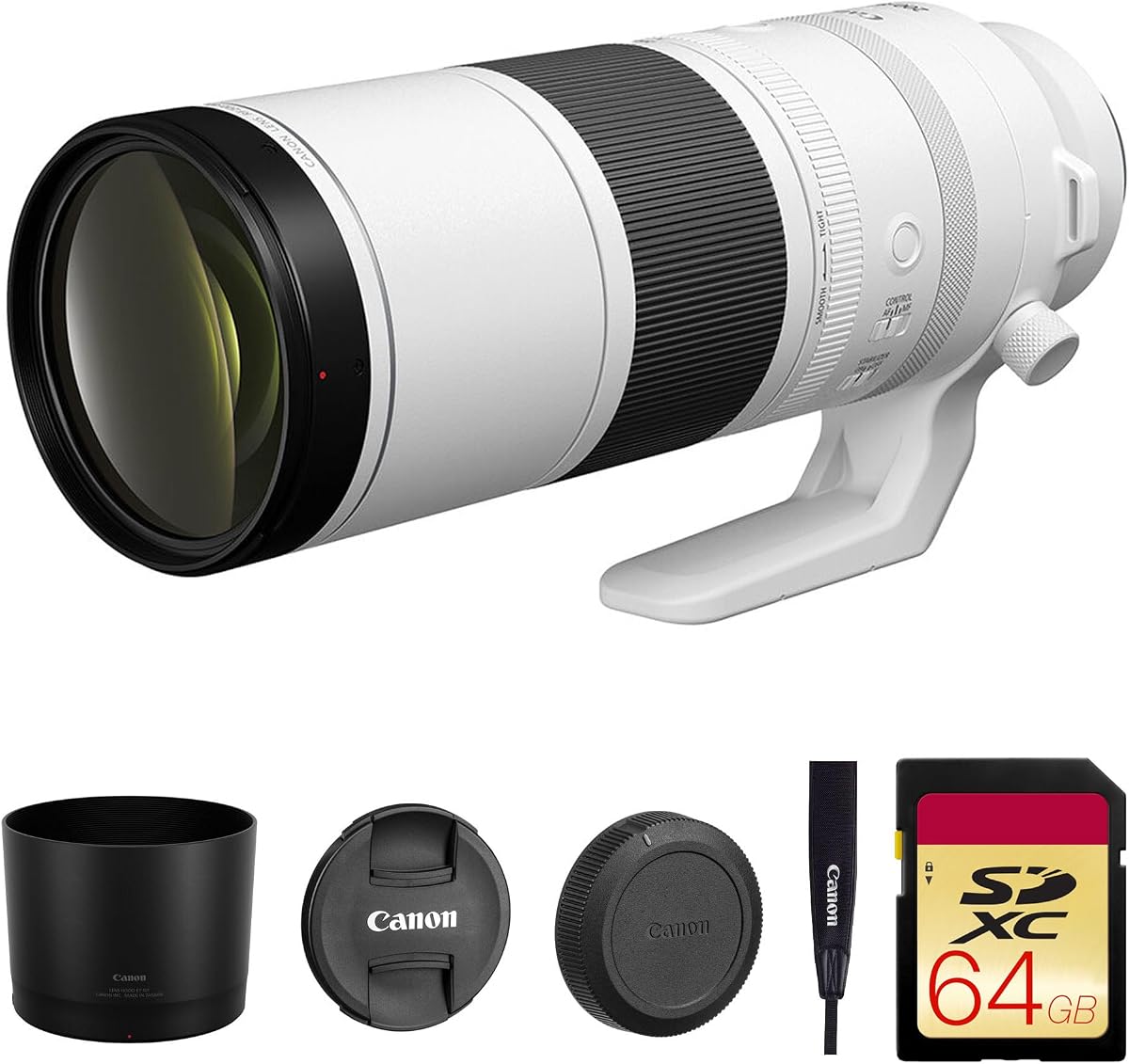
At 800mm this lens provides unprecedented reach for wildlife while remaining light enough to carry all day.
The USM autofocus ensures sharp shots even when subjects move unexpectedly across the frame.
We may earn a commission when you buy through this link, at no additional cost to you.
This lens is recognized as the worlds first AF super-telephoto zoom with an 800mm end. It delivers excellent image quality across the entire zoom range for wildlife photography.
We may earn a commission when you buy through this link, at no additional cost to you.
Its compact design allows for comfortable handheld shooting even at long focal lengths. The optical design leverages the RF mount to maintain sharpness without excessive bulk.
Photographers can add extenders to push reach further while keeping autofocus functional. This flexibility makes it a versatile choice for various shooting conditions.
It is ideal for mirrorless users seeking maximum reach in a manageable package. The performance justifies its place among top telephoto options.
The RF mount allows for a shorter optical path which reduces size and weight significantly.
Works with RF extenders to maintain autofocus even at extended focal lengths.
We may earn a commission when you buy through this link, at no additional cost to you.
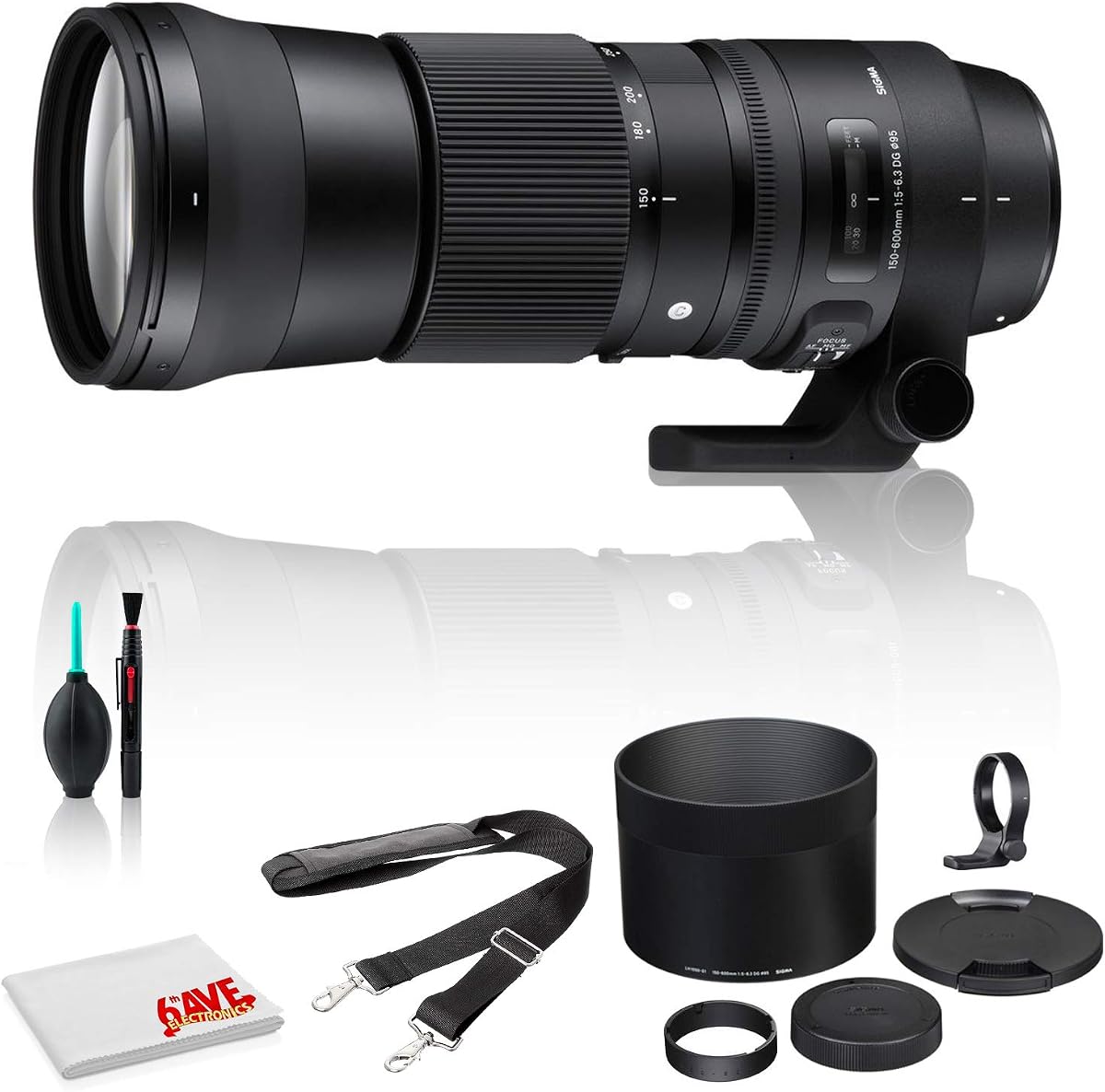
This Sigma lens offers a robust zoom range from 150 to 600mm suitable for distant wildlife. It is designed for Canon EF mount cameras with full frame coverage.
We may earn a commission when you buy through this link, at no additional cost to you.
The HSM autofocus system provides quick and quiet focusing which is essential for animals. Optical Stabilizer technology helps reduce camera shake during handheld shots.
Its construction includes special LD elements to ensure clarity and minimize color fringing. The bundle includes a cleaning kit which is helpful for maintaining optics in the field.
DSLR users will appreciate this lens for its versatility and optical performance. It remains a strong contender for those needing reach without breaking the bank.
One FLD and three SLD elements significantly reduce chromatic aberration for cleaner images.
Includes a deluxe cleaning kit to help you maintain your lens during outdoor trips.
We may earn a commission when you buy through this link, at no additional cost to you.
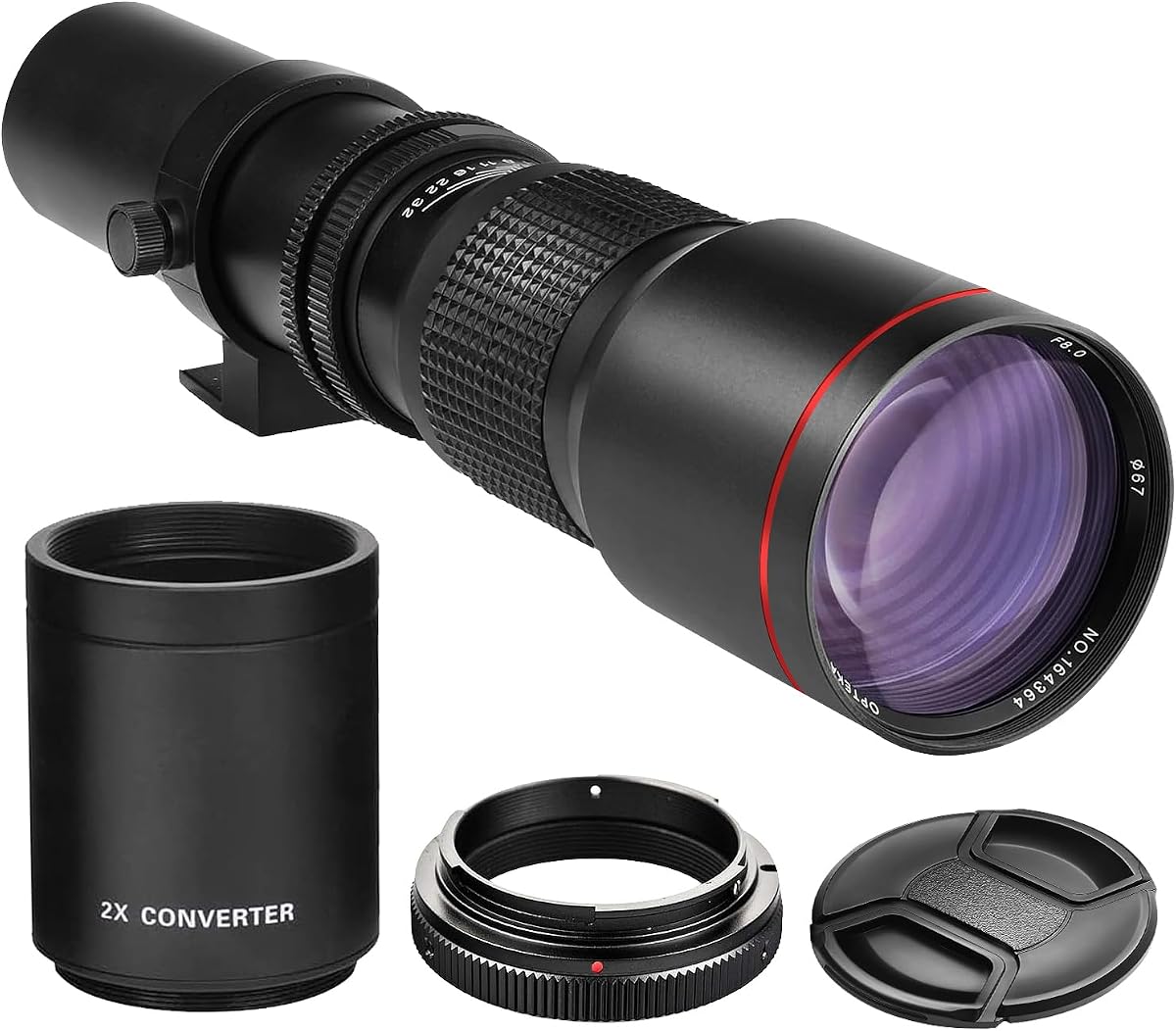
This manual telephoto lens offers extreme magnification at a budget price. It supports Canon EOS DSLRs and comes with a 2X teleconverter for double the reach.
We may earn a commission when you buy through this link, at no additional cost to you.
The lens features low dispersion multi-coated glass to provide clear sharp photos. Manual focus allows for precise control over your shots without relying on electronics.
While it lacks autofocus which is a trade-off for the price. The construction is robust enough to withstand outdoor conditions during photography adventures.
Beginners or those on a tight budget will find this lens useful for distant subjects. It is best suited for static subjects where focus can be set beforehand.
Manual focus lets you fine-tune your shots for precise creative control.
The included 2X teleconverter doubles your lens power up to 1000mm.
We may earn a commission when you buy through this link, at no additional cost to you.
This professional L-series lens covers an expansive 100 to 400mm range for wildlife and sports. It uses fluorite and Super UD elements to minimize aberrations for crisp images.
We may earn a commission when you buy through this link, at no additional cost to you.
The ring-type USM autofocus is fast and quiet allowing you to track subjects effortlessly. Built-in optical stabilization reduces shake improving handheld performance significantly.
A rotating tripod collar supports balanced mounting for heavy gear setups. The included filter kit adds value for those needing protection or creative effects.
Experienced shooters will appreciate the build quality and optical performance of this lens. It remains a reliable choice for full-frame EOS DSLRs and APS-C cameras.
Professional L-series construction ensures reliability in harsh field conditions.
Dedicated panning mode supports continuous tracking of moving subjects effectively.
We may earn a commission when you buy through this link, at no additional cost to you.
This lens offers a massive zoom range reaching up to 1600mm with the included converter. It is designed for Canon EOS DSLRs and provides enhanced photographic flexibility.
We may earn a commission when you buy through this link, at no additional cost to you.
The 2X teleconverter doubles the power from 800mm to 1600mm for extreme reach. Manual focus allows for creative control over your shots without auto interference.
While it is a budget-friendly option image quality may vary at maximum zoom. It remains a great tool for capturing distant landscapes or wildlife when funds are limited.
Photographers looking for extreme reach on a budget should consider this lens. It pairs well with entry-level DSLRs for casual nature photography.
The 2X teleconverter allows you to reach up to 1600mm for extreme magnification.
A low price point makes extreme telephoto photography accessible to more users.
We may earn a commission when you buy through this link, at no additional cost to you.
This RF lens is compact and lightweight with a versatile 100 to 400mm range. It is designed for EOS R series mirrorless cameras with high image quality.
We may earn a commission when you buy through this link, at no additional cost to you.
Optical Image Stabilizer provides up to 5.5 stops of correction for sharp shots. When paired with IBIS it reaches up to 6 stops of shake correction effectively.
Nano USM autofocus ensures smooth and quiet focusing for both photos and video. The minimum focusing distance allows for close-up shots at longer focal lengths.
Users seeking an affordable RF telephoto option will find this lens excellent. It balances performance and portability for everyday wildlife photography needs.
The compact lightweight design makes it easy to carry for long periods.
Nano USM delivers high speed smooth and quiet autofocus for versatile use.
We may earn a commission when you buy through this link, at no additional cost to you.
This lens offers an affordable entry into telephoto photography with a 75 to 300mm range. It is designed for Canon SLR cameras and weighs only 16.8 ounces.
We may earn a commission when you buy through this link, at no additional cost to you.
The improved mechanism makes zooming smoother with a silver ring on the front. It measures 2.8 inches in diameter and comes with a one-year warranty.
While it lacks image stabilization it remains a good practice tool for beginners. The diagonal angle of view ranges from 32 degrees down to 8 degrees.
Those new to photography will appreciate its ease of use and low price. It is best suited for stationary subjects where stabilization is not required.
Improved zoom mechanism provides smooth operation for better handling.
Measuring 2.8 inches in diameter it is easy to carry around.
We may earn a commission when you buy through this link, at no additional cost to you.
This Nikon lens delivers versatile performance with a 200 to 500mm range. It is crafted for FX sensors and DX sensors with up to 750mm equivalent reach.
We may earn a commission when you buy through this link, at no additional cost to you.
The Silent Wave Motor ensures rapid silent and accurate autofocus for wildlife. Vibration Reduction minimizes camera shake providing up to 4.5 stops of stabilization.
A rotating tripod collar provides stable support for vertical or horizontal orientations. The bundle includes filter and cleaning kits for a complete field setup.
Nikon users seeking a reliable super-telephoto zoom should consider this lens. Its balance of reach speed and stabilization makes it a strong choice for wildlife.
Vibration Reduction provides up to 4.5 stops of stabilization for sharp shots.
The Silent Wave Motor ensures rapid silent and accurate autofocus always.
We may earn a commission when you buy through this link, at no additional cost to you.
This renewed lens offers the same features as the new version at a lower cost. It includes an EF mount and DC autofocus motor for smooth operation.
We may earn a commission when you buy through this link, at no additional cost to you.
The zoom ring features a silver accent and improved zoom mechanism. Weighing 16.8 ounces it is lightweight and easy to handle for beginners.
Minimum focus distance is 4.9 feet which suits general wildlife and action shots. A renewed product often comes with a warranty providing peace of mind.
Photographers looking for a budget-friendly option should check this renewed listing. It delivers reliable performance without the premium price of a new unit.
Renewed products offer substantial savings while maintaining essential features.
The DC autofocus motor ensures smooth focus transition for easier shooting.
We may earn a commission when you buy through this link, at no additional cost to you.
Selecting the right telephoto lens involves balancing reach quality weight and compatibility with your camera.
Focal length determines how close you can get to subjects from a distance. For wildlife, 400mm or longer is typically recommended to fill the frame without disturbing animals.
Consider a range starting at 200mm to allow flexibility for closer subjects as well.
Stabilization helps reduce blur when shooting handheld at long focal lengths. Look for lenses with built-in IS or VR systems to achieve sharper images.
Modern systems provide up to 5 or more stops of shake correction for confidence.
Fast autofocus is critical for capturing moving animals quickly. Ultrasonic motors like USM or STM deliver quick silent focus tracking.
Slower manual lenses may struggle with erratic subject movement.
Wider apertures allow more light but often increase size and weight. Many telephotos have variable apertures that narrow at longer focal lengths.
A maximum aperture of f/5.6 or f/8 is common in long reach zooms.
Heavy lenses can fatigue your arms during long field sessions. Lighter designs are easier to carry on hikes without a tripod.
Balance performance with weight to ensure you can shoot comfortably.
Ensure the lens matches your camera system whether EF RF or F mount. Some lenses work across full frame and APS-C sensors.
Check adapter needs if using lenses with different mounts.
Durable construction ensures reliability in weather and rugged environments. Look for weather sealing or robust materials for longevity.
Tripod collars add stability for heavy telephoto setups.
Telephoto lenses range widely in price depending on optical quality. Budget options provide reach but may lack advanced features.
Invest in features like autofocus and stabilization for frequent use.
Always attach the lens securely to the camera and check focus before shooting. Use a tripod or monopod for heavy lenses to reduce fatigue.
Keep the front element clean using a microfiber cloth and proper cleaning kit. Avoid touching glass directly to prevent scratches and oils.
Store the lens in a dry place with caps on to protect from dust and moisture. Regular maintenance ensures peak performance during wildlife photography.
For distant wildlife, a lens with at least 400mm reach is recommended. Lenses reaching 600mm to 800mm allow you to fill the frame from safe distances.
Yes, image stabilization allows you to shoot handheld at slower shutter speeds without blur. Look for at least 3 to 5 stops of correction for best results.
Most telephoto lenses work on APS-C cameras with a crop factor. This effectively increases the reach by about 1.5x or 1.6x.
Manual lenses can work but lack autofocus speed needed for moving animals. They are better for static subjects or budget-conscious beginners.
A maximum aperture around f/5.6 or f/8 is standard for long zooms. Larger apertures are heavier and more expensive but allow better low-light performance.
Use a soft blower to remove dust and a microfiber cloth for smudges. Apply lens solution sparingly to the cloth, not the glass directly.
Some bundles include 1.4x or 2x extenders to increase reach. Check the product details to see if an extender is included or sold separately.
For heavy lenses over 400mm a tripod is highly recommended for stability. Lightweight lenses can often be shot handheld with proper stabilization.
The top picks in this guide cover a wide range of needs from budget to premium. Each lens offers unique strengths in reach, stabilization, and autofocus performance.
When selecting a lens consider your camera system and how you plan to shoot. Reach and speed are critical but weight and cost should also influence your decision.
Always check current availability and pricing before purchasing. Retailers update stock frequently so verifying details ensures you find the right fit for your setup.