
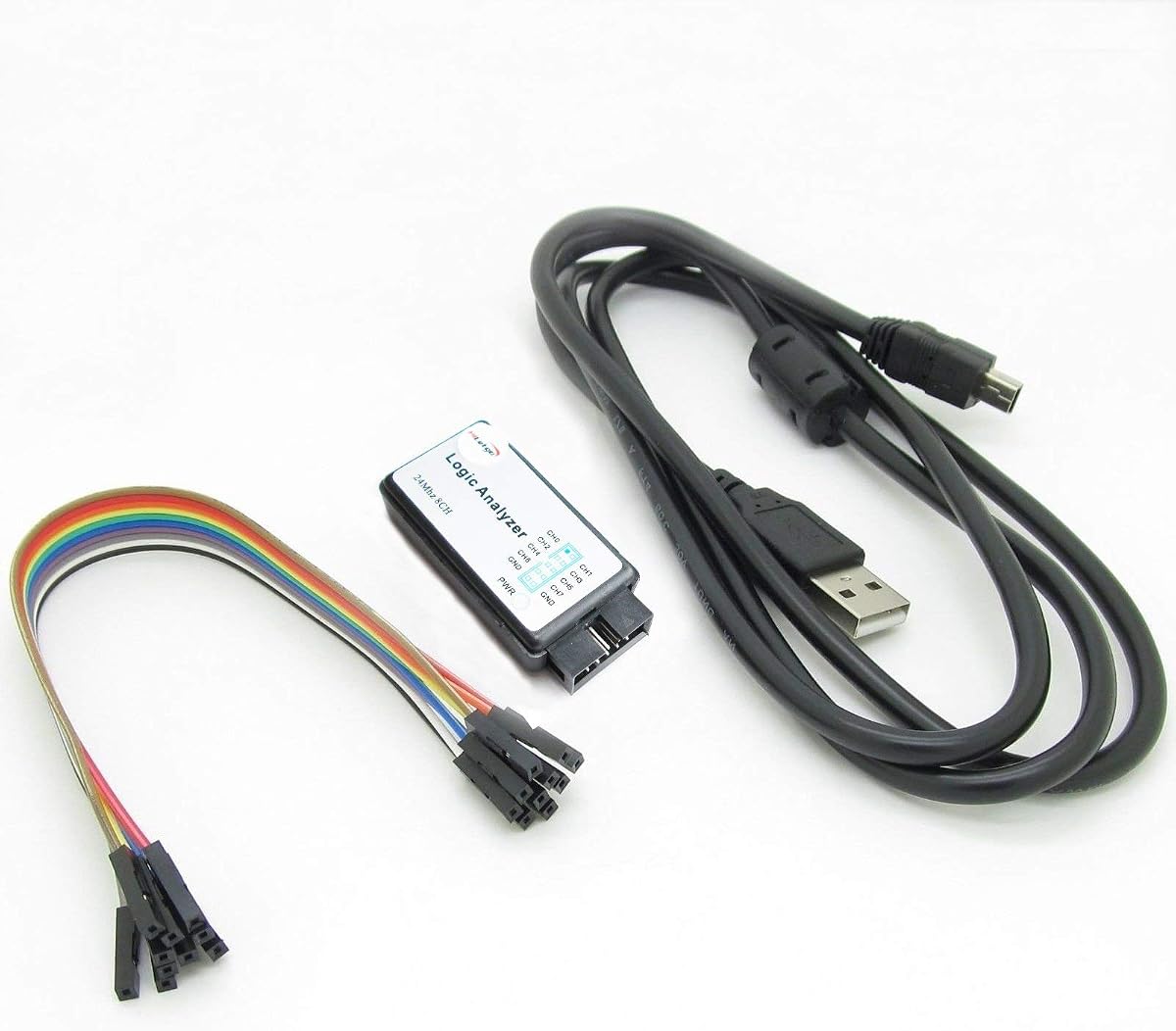
USB Logic Analyzer 24MHz 8 Channel Debug Tool
4.5Editor score
24MHz sampling rate
Compatible with Saleae software
Supports 8 channels
Compare the top 10 Logic Analyzer for Electronics Projects based on channel count, sampling rate, and protocol decoding to find the ideal tool for your
Finding the right Logic Analyzer for Electronics Projects can transform how you debug circuits and verify signals. Modern tools offer high sampling rates and protocol decoding to simplify complex embedded systems work.
We evaluated ten diverse models ranging from budget-friendly USB sticks to professional-grade analyzers. Our comparison focuses on performance, compatibility, and ease of use for hobbyists and engineers.
Each selection highlights specific strengths like channel count or software support to help you choose confidently. Note that availability and pricing may fluctuate, so verify current details before purchasing.
4.5Editor score

4.5Editor score
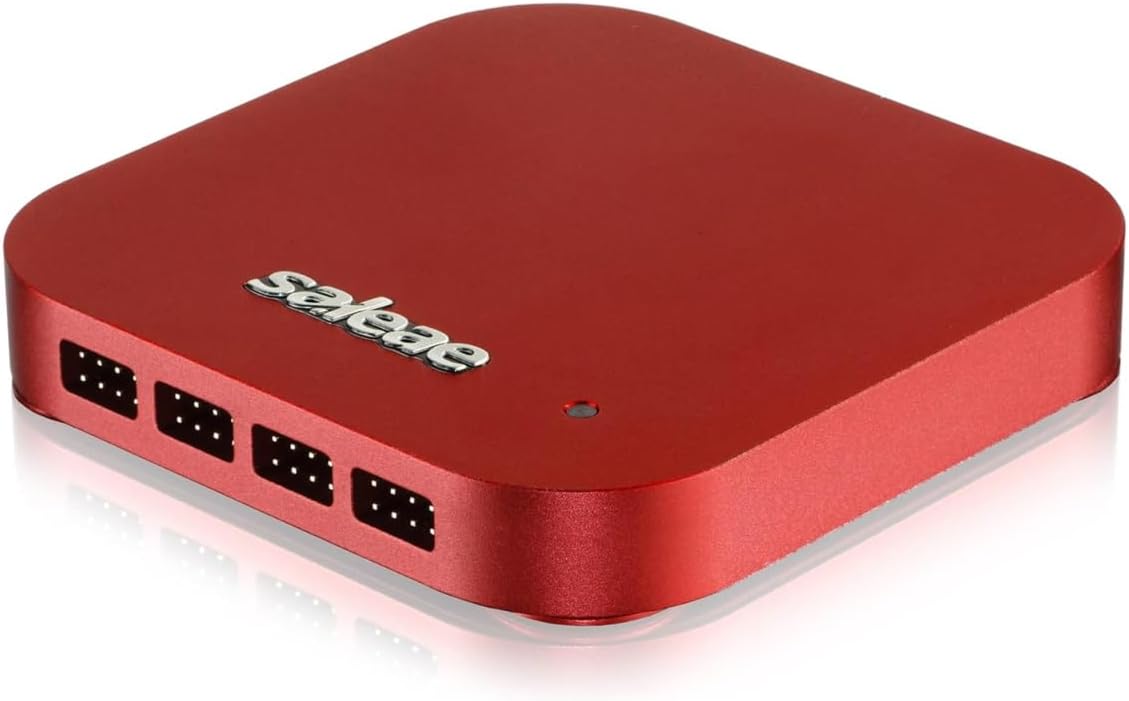
4.8Editor score
This table provides a side-by-side look at the key specifications of all ten selected logic analyzers to help you compare performance and features quickly.




The LA1010 is a robust Logic Analyzer for Electronics Projects offering sixteen channels at 100MHz. It balances professional features with a budget-friendly cost effectively.
We may earn a commission when you buy through this link, at no additional cost to you.
Its KingstVIS software provides real-time waveform visualization and decodes over thirty standard protocols like I2C and SPI. This accelerates debugging for embedded systems significantly.
While the interface is less polished than premium options, the hardware performance is strong. The device consumes low power and supports long monitoring sessions easily.
Buyers looking for high channel counts without overspending should consider this model. It is ideal for developers testing microcontrollers and digital circuits regularly.
Simultaneously capture sixteen digital signals and convert them into clear digital waveforms displayed instantly on your PC screen for precise analysis.
Supports Windows, macOS, and Linux with auto-installing drivers, requiring no configuration for seamless integration into your workflow.
We may earn a commission when you buy through this link, at no additional cost to you.
This affordable Logic Analyzer for Electronics Projects delivers essential functionality for hobbyists and students. It supports the widely used Saleae Logic Analyzer software seamlessly.
We may earn a commission when you buy through this link, at no additional cost to you.
With eight channels and a 24MHz sampling rate, it handles UART, SPI, and IIC debugging effortlessly. The voltage range fits most microcontroller projects like Arduino.
The device uses standard USB for power, eliminating the need for external adapters. While not suited for high-speed signals, it covers common development tasks well.
Students and beginners seeking a cost-effective entry point into logic analysis will find this ideal. It provides reliable performance for learning digital protocols.
Designed to be compatible with Saleae Logic Analyzer software and also supported for PulseView, ensuring familiar tools for users.
Automatically analyze UART, IIC, and SPI standard protocols to get twice the result with half the effort during debugging sessions.
We may earn a commission when you buy through this link, at no additional cost to you.
The Saleae Logic Pro 16 represents the top tier for Logic Analyzer for Electronics Projects available today. It combines sixteen digital channels with analog support for mixed-signal work.
We may earn a commission when you buy through this link, at no additional cost to you.
Sampling rates reach up to 500 MS/s digitally and 50 MS/s for analog inputs. This performance captures fast edges and complex timing issues that other tools miss.
Its proprietary software offers intuitive decoding and visualization across Windows, Mac, and Linux. The device uses USB 3.0 and PC memory for massive storage capacity.
Professional engineers working on high-speed designs or complex FPGA interfaces should invest in this model. It saves significant time during rigorous development cycles.
Digital sample rates up to 500 MS/s and analog rates up to 50 MS/s provide precise capture of fast and mixed signals.
Captures over 10 billion digital samples and 500 million analog samples by using PC memory and USB 3.0 bandwidth.
We may earn a commission when you buy through this link, at no additional cost to you.
This Logic Analyzer for Electronics Projects offers eight channels with analog support similar to the Pro 16 but at a lower price point. It remains a powerful tool for mixed-signal debugging.
We may earn a commission when you buy through this link, at no additional cost to you.
Like its larger sibling, it achieves up to 500 MS/s digital sampling and 50 MS/s analog. This speed is sufficient for most embedded and IoT protocol debugging tasks.
The software interface is consistent across devices ensuring a smooth learning curve. It supports Windows, Mac, and Linux effectively for broad compatibility.
If you need analog inputs but not sixteen digital channels, this model is the right choice. It delivers professional features without the maximum cost.
Eight digital and analog inputs allow for versatile testing of mixed-signal circuits without needing separate equipment.
Decode SPI, I2C, and over twenty-three more analyzers to streamline analysis of standard communication protocols easily.
We may earn a commission when you buy through this link, at no additional cost to you.
This Logic Analyzer for Electronics Projects stands out for its comprehensive accessory kit. It includes breakout boards and breadboard adapters to simplify physical connections immediately.
We may earn a commission when you buy through this link, at no additional cost to you.
With eight channels and 24MHz sampling, it handles standard I2C, SPI, and UART debugging well. The dual USB cables ensure compatibility with various laptop and PC ports.
A compact storage container keeps test clips and jumper wires organized for on-the-go projects. This convenience reduces setup time significantly in busy workflows.
Hobbyists who value ready-to-use accessories will appreciate this kit. It provides everything needed for immediate use out of the box.
Bundled with 10 test clips, 5 alligator clips, jumper wires and a portable storage case for immediate out-of-the-box use.
Ideal for hobbyists, students, and professionals working on embedded systems, IoT, or protocol analysis efficiently.
We may earn a commission when you buy through this link, at no additional cost to you.
This Logic Analyzer for Electronics Projects includes an EMI ferrite ring on the USB cable to reduce noise interference. This feature improves signal clarity during sensitive debugging.
We may earn a commission when you buy through this link, at no additional cost to you.
It supports up to 24MHz sampling across eight channels with adjustable thresholds. General applications around 10MHz are well covered for common digital circuits.
The input voltage range allows flexible testing from low power to standard logic levels. It is compatible with PulseView software for analysis.
Users needing basic debugging with extra noise protection should consider this device. It offers a balance of features at a competitive price point.
Input voltage range from -0.5V to 5.25V accommodates various logic levels for flexible testing across different systems.
A 24MHz crystal with +/-20ppm precision ensures accurate timing measurements for reliable signal analysis.
We may earn a commission when you buy through this link, at no additional cost to you.
The DSLogic Plus Logic Analyzer for Electronics Projects features sixteen channels with a 400MHz sampling rate. It offers unique dual-mode support for flexible capture options.
We may earn a commission when you buy through this link, at no additional cost to you.
In buffer mode, it captures up to 400MHz using 256Mbits of on-board SDRAM memory. In stream mode, it transfers data to PC memory for long durations.
DSView software is open-source and supports nearly a hundred protocol decoders. It runs on Windows, macOS, and Linux for broad access.
Advanced users who value on-board memory for high-speed captures will find this appealing. It provides high performance at a mid-range cost.
Stream mode transfers data to PC for long duration while buffer mode stores on-board for high sample rate.
DSView supports nearly a hundred protocol decoders, allowing deep inspection of standard and custom protocols.
We may earn a commission when you buy through this link, at no additional cost to you.
This entry-level Logic Analyzer for Electronics Projects provides eight digital and analog inputs for versatile testing. It focuses on portability and ease of use for everyday tasks.
We may earn a commission when you buy through this link, at no additional cost to you.
It captures at up to 100 MS/s digitally and 10 MS/s for analog signals. This speed covers many common embedded and IoT protocols adequately.
The device uses USB 2.0 and PC memory to store up to 10 billion digital samples. It works seamlessly on Mac, Windows, and Linux systems.
Students or hobbyists needing simple mixed-signal testing will find this model sufficient. It balances affordability with the benefits of the Saleae ecosystem.
Small USB Logic Analyzer design makes it easy to carry and use in different workspaces without bulk.
Eight digital and analog inputs allow multi-use testing of mixed circuits in a single compact device.
We may earn a commission when you buy through this link, at no additional cost to you.
This Logic Analyzer for Electronics Projects delivers sixteen channels with a 400MHz sampling rate at an accessible price. It includes 256Mbits of on-board memory for buffer captures.
We may earn a commission when you buy through this link, at no additional cost to you.
In stream mode, it supports up to 16G sample depth over USB 2.0. This allows long-duration monitoring without losing data during low-bandwidth transfers.
DSView software offers open-source flexibility and supports many protocol decoders across platforms. It is compatible with Windows, macOS, and Linux effectively.
Engineers needing high-speed sampling without premium pricing will benefit from this device. It offers powerful performance for demanding debugging tasks.
USB 2.0 Type-C interface with up to 16G sample depth in stream mode for extended monitoring.
Supports nearly 100 protocol decoders and is open-source on Github for community contributions.
We may earn a commission when you buy through this link, at no additional cost to you.
The Analog Discovery 3 is a multifunctional device offering a Logic Analyzer for Electronics Projects plus oscilloscope and power supply features. It consolidates lab tools into one USB package.
We may earn a commission when you buy through this link, at no additional cost to you.
Its logic analyzer provides sixteen digital I/O channels at up to 125 MS/s per channel. It also includes a waveform generator and programmable power supplies for full testing cycles.
Software includes advanced tools like FFT, spectrum analyzers, and protocol analyzers. It supports programming via C, Python, and MATLAB for automation tasks.
Researchers and advanced students needing multiple lab instruments should choose this option. It saves desk space while providing professional-grade functionality.
0.5 V to 5 V variable power supplies provide necessary voltage for powering and testing circuits simultaneously.
SDK for hardware control in C, C++, Python, and other languages allows advanced automation.
We may earn a commission when you buy through this link, at no additional cost to you.
Choosing the right tool requires understanding your specific project needs and the features that matter most.
The number of input channels determines how many signals you can monitor at once. Basic designs might only need four to eight channels, while complex systems benefit from sixteen or more to avoid constant rewiring.
Choose a channel count that matches your typical debugging complexity to ensure efficient workflow.
Sampling rate defines how often the device captures a signal value per second. Faster signals require higher rates to avoid missing critical details like glitches or timing errors.
Look for rates of at least 24MHz for standard work, but consider 100MHz or higher for modern microcontrollers.
The software interface is critical for interpreting data. Good tools provide protocol decoders that translate raw binary into readable text for UART, I2C, and SPI.
Ensure the software runs on your operating system and offers the visualization features you need.
Memory depth determines how long a signal can be captured at high sampling rates. Limited memory forces shorter capture times which may miss rare events.
Select a device with sufficient on-board memory or PC streaming capabilities for your required duration.
Some logic analyzers include analog inputs to measure voltage levels in addition to digital timing. This is useful for mixed-signal debugging where both voltage and timing matter.
If you work with analog circuits or power rails, a hybrid device can save you from needing multiple instruments.
For fieldwork or moving between labs, a portable device is essential. USB-powered sticks are convenient and save desk space compared to bulky benchtop units.
Consider the physical size and cable management if you plan to transport your equipment frequently.
Durability matters for tools used daily. Devices with robust connectors and shielded cables provide cleaner signals and longer lifespan.
Check for metal cases or sturdy housing that protects against accidental drops in workshop environments.
Budget models offer basic functionality while premium models include advanced protocols and higher speeds. Identify your non-negotiable features to avoid overspending.
Balance the cost against the expected lifespan and the frequency of use in your projects.
Start by connecting the analyzer to a free USB port on your computer and installing the provided drivers. This ensures the software can detect the device properly before you begin any measurements.
Connect the probe clips to the target circuit points carefully. Ensure you are measuring the correct voltage levels to avoid damaging the logic device or the circuit under test.
Regularly store the probes and cables in a protective case to prevent tangling and physical damage. Keeping the device clean from dust and moisture extends its lifespan significantly.
For most hobbyist and embedded projects, a sampling rate of at least 24MHz is sufficient. This covers standard UART and I2C speeds easily. However, faster microcontrollers may require 100MHz or higher to capture high-speed data accurately.
Most modern analyzers support Windows, macOS, and Linux. Always check the product specifications for compatibility with your specific OS version. Some cheaper models might only work with Windows software.
No, a logic analyzer typically measures digital high and low states rather than precise voltages. While some hybrid models have analog inputs, they are primarily designed for signal timing and protocol decoding.
Common analyzers support protocols like UART, SPI, I2C, CAN, and JTAG. High-end models may support over a hundred different protocols automatically decoding data into readable text formats for easier debugging.
Four channels can cover simple communication lines. Eight channels allow monitoring more signals without swapping probes. Sixteen channels are ideal for complex embedded systems requiring full bus analysis.
Yes, you need software to view and analyze the captured signals. Many devices include specific software but others work with open-source options like PulseView or Saleae Logic depending on compatibility.
Yes, some devices like the Analog Discovery 3 combine both functions in one unit. Even separate units can work together for comprehensive testing of both digital logic and analog waveforms.
We reviewed ten top tools ranging from the budget-friendly USB Logic Analyzer 24MHz to the professional Saleae Logic Pro 16. Each offers distinct advantages depending on your specific project requirements.
Prioritize features like channel count and sampling rate based on the complexity of the circuits you build. A device that fits your current needs will serve you better than one that is overly complex.
Prices and availability can change so please check current listings before finalizing your purchase. We hope this guide helps you find the perfect tool for your next electronics project.