
ESP32-S3-Nano Microcontroller
5.0Editor score
8MB PSRAM and 16MB Flash
Arduino Cloud integration ready
HID emulation for input devices
Explore our expert comparison of the top Arduino Nano ESP32 boards for IoT projects, featuring detailed specs, wireless capabilities, and performance insights
The Arduino Nano ESP32 represents a significant leap in embedded development, combining powerful processing with seamless wireless connectivity. This compact board enables creators to build sophisticated IoT applications with ease.
We compared ten leading models based on processing power, wireless range, memory capacity, and ecosystem compatibility. Our analysis highlights which boards offer the best balance of features for various project requirements and skill levels.
Each pick showcases unique strengths tailored to specific use cases like wearables, smart home systems, or industrial automation. Please note that availability and specific configurations may vary over time as manufacturers update their product lines.
5.0Editor score

4.6Editor score

4.8Editor score
This section provides a side-by-side technical comparison of all ten selected boards to help you identify the most suitable hardware for your specific embedded development needs and project constraints.


The Arduino Nano ESP32 with Headers stands out as the top choice for developers seeking a balance of performance and ease of use. With a strong rating, it delivers reliable results for both beginners and experienced makers working on complex IoT tasks.
We may earn a commission when you buy through this link, at no additional cost to you.
Its dual-core ESP32-S3 processor running at 240 MHz handles demanding applications like voice recognition and edge machine learning with ease. The integrated Wi-Fi and Bluetooth 5.0 ensure seamless communication with other devices and cloud platforms without needing extra modules.
While the price is slightly higher than generic boards, the official support and comprehensive feature set justify the cost. The USB-C port provides stable power and faster programming compared to older micro-USB standards found on legacy Arduino boards.
This board is ideal for anyone building smart home systems or advanced wearable tech. We recommend it for projects requiring reliable wireless connectivity and the flexibility to switch between Arduino C++ and MicroPython environments.
The board supports seamless switching between Wi-Fi and Bluetooth 5.0 protocols for flexible device communication.
MicroPython compatibility allows for rapid prototyping with Python code that is easier to write and debug.
We may earn a commission when you buy through this link, at no additional cost to you.
This ESP32-S3-Nano board offers impressive specifications at a competitive price point, earning a perfect rating from users. It is an excellent choice for those who need significant memory and cloud connectivity without breaking the bank.
We may earn a commission when you buy through this link, at no additional cost to you.
The integrated 8MB PSRAM and 16MB Flash allow for storing complex models and large datasets directly on the chip. Users appreciate the ability to monitor projects remotely using the Arduino IoT Cloud app which simplifies remote management tasks.
One unique feature is the HID support which lets you emulate input devices like keyboards or mice via the USB port. This opens up creative possibilities for custom controllers or automation tools that interact directly with computers.
We recommend this board for students and hobbyists working on projects requiring high memory throughput. Just ensure you have access to community forums for support since it is not an official Arduino product.
With 8MB PSRAM this board handles data-intensive tasks like image processing more efficiently than standard models.
Integration with Arduino IoT Cloud allows users to visualize data and control devices from anywhere.
We may earn a commission when you buy through this link, at no additional cost to you.
For developers requiring advanced multimedia capabilities, this ESP32-P4-NANO board is unmatched in the category. Its high rating reflects the robust hardware features designed for professional and industrial applications.
We may earn a commission when you buy through this link, at no additional cost to you.
The inclusion of MIPI-CSI and MIPI-DSI interfaces allows direct connection to high-resolution cameras and displays without extra breakout boards. This makes it ideal for robotics vision systems or smart home dashboards.
Security is a major focus here with features like Secure Boot and Flash Encryption built into the chip. The hardware access protection mechanisms help safeguard sensitive data which is critical for commercial products.
We suggest this board for engineering teams working on projects that need visual feedback or camera input. While the learning curve is steeper, the performance and interface variety justify the investment.
MIPI interfaces provide high-bandwidth connections for cameras and displays essential for vision tasks.
Built-in cryptographic accelerators and Secure Boot protect your firmware and data from unauthorized access.
We may earn a commission when you buy through this link, at no additional cost to you.
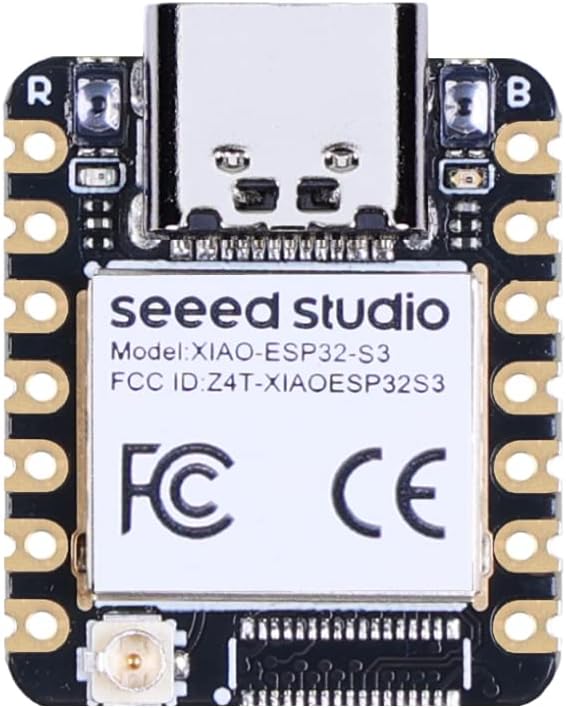
The Seeed Studio XIAO ESP32S3 is designed for wearables and space-constrained projects where size matters. Its thumb-sized form factor makes it easy to integrate into tight enclosures like watches or health trackers.
We may earn a commission when you buy through this link, at no additional cost to you.
Power efficiency is a standout feature with a deep sleep mode drawing only 14 microamps. The built-in battery charge management supports lithium batteries which extends device longevity significantly without needing extra power circuits.
While it has fewer pins than full-sized boards, the design is optimized for direct soldering and breadboard use. The U.FL antenna connector allows for high-gain external antennas if long-range connectivity is required.
This board is perfect for portable IoT devices like remote sensors or fitness trackers. If you need maximum connectivity on a small footprint this is a top-tier choice for modern wearables.
Deep sleep modes allow devices to run for months on small batteries making it ideal for remote sensors.
At 21 x 17.5mm this board fits into spaces where traditional Arduino boards cannot be used.
We may earn a commission when you buy through this link, at no additional cost to you.
Waveshare offers a practical solution for makers needing multiple boards by selling this development kit in a pack of three. It provides a reliable entry point into ESP32-S3 development without a high financial commitment.
We may earn a commission when you buy through this link, at no additional cost to you.
The castellated module design allows these boards to be soldered directly onto custom carrier boards. This feature is useful for creating custom PCBs where the ESP32 module serves as the core component of the final product.
Each unit includes a ceramic antenna which simplifies wireless setup without needing external components. While the memory is smaller than premium models it is sufficient for many standard IoT applications like data logging.
We recommend this pack for students or teams working on multiple prototypes simultaneously. It is also a good option for hobbyists planning to embed ESP32 modules into larger custom electronics projects.
Castellated edges enable direct PCB mounting which is essential for custom hardware designs.
Buying three units allows for testing different configurations or building a network of devices easily.
We may earn a commission when you buy through this link, at no additional cost to you.
This starter kit is designed to provide everything needed to begin electronics and coding projects right out of the box. The inclusion of tutorials makes it a safe choice for those new to embedded development.
We may earn a commission when you buy through this link, at no additional cost to you.
You get access to over thirty projects with clear circuit diagrams and complete code. This structured approach helps learners understand how to connect sensors like OLED screens and servos to the ESP32 board effectively.
The kit covers a wide range of components from buttons to motor drivers which allows for diverse project exploration. Quality is generally good for the price point though some components may feel lighter than industrial standards.
We recommend this for students or parents looking to introduce kids to coding and electronics. It is a comprehensive package that covers the basics needed to build smart home and weather station projects.
Detailed tutorials guide you from simple circuits to complex IoT applications systematically.
Over 35 modules ensure you have the right parts for almost any beginner project idea.
We may earn a commission when you buy through this link, at no additional cost to you.
Although it uses a different processor, the Arduino Nano 33 IoT is a robust option for secure applications. Its official status ensures high compatibility with the Arduino ecosystem and software libraries.
We may earn a commission when you buy through this link, at no additional cost to you.
The board features a dedicated secure element for hardware-level encryption which protects data privacy. This makes it suitable for projects requiring secure cloud communication where data integrity is a primary concern.
It comes with pre-soldered headers which simplifies the setup process for quick prototyping. However, the SAMD21 processor has less RAM and a lower clock speed compared to the ESP32-S3 models.
We suggest this for projects where security is paramount and raw processing power is not the main driver. It is a reliable choice for simple sensor nodes or secure smart home controllers.
The integrated secure element ensures encrypted data transmission to the cloud securely.
Full support from Arduino IDE ensures you have access to extensive libraries and examples.
We may earn a commission when you buy through this link, at no additional cost to you.
This classic ESP32 board remains a solid choice for general purposes due to its proven reliability. The integrated RF amplifier helps maintain signal strength in varied environments.
We may earn a commission when you buy through this link, at no additional cost to you.
It supports low power consumption modes which are useful for battery-powered deployments. The ability to switch between AP and STA modes offers flexibility for setting up local networks without a router.
While newer boards offer more features, this one provides a stable foundation for learning and prototyping. It is a cost-effective way to get multiple units for testing different project configurations.
We recommend this for users comfortable with the classic ESP32 libraries. It is suitable for home automation tasks where the latest Bluetooth features are not strictly required.
AP and STA modes allow the board to act as a hotspot or connect to existing networks.
Optimized power management ensures long life for battery-driven IoT sensors.
We may earn a commission when you buy through this link, at no additional cost to you.
This pack offers a practical upgrade with USB-C connectivity making power and upload easier. The CP2102 USB-to-UART bridge ensures reliable serial communication across different operating systems.
We may earn a commission when you buy through this link, at no additional cost to you.
Support for Over-the-Air updates is a significant feature for deployed devices. This allows you to fix bugs or add features via Wi-Fi without physical reconnection which saves time and maintenance costs.
The inclusion of dynamic clock scaling helps manage power consumption based on workload. It is a solid choice for projects where you need multiple units and convenient charging capabilities.
We recommend this for makers building small networks of devices. The USB-C port simplifies your workspace and the OTA capability adds long-term value to your projects.
OTA updates let you deploy firmware changes remotely which is essential for large-scale IoT.
Modern USB-C ports match current cables and improve stability during data transfer.
We may earn a commission when you buy through this link, at no additional cost to you.
The Arduino UNO R4 WiFi combines a Renesas microcontroller with the ESP32-S3 for a unique dual-core setup. This hybrid architecture provides significant flexibility for complex industrial or robotic applications.
We may earn a commission when you buy through this link, at no additional cost to you.
Its built-in 12×8 LED matrix allows for immediate visual feedback without external screens. The 12-bit DAC and OP-AMP offer precise analog output for audio or motor control tasks.
CAN bus support makes it suitable for automotive or industrial control systems. The Qwiic connector simplifies adding I2C sensors which reduces wiring complexity significantly during assembly.
We recommend this for advanced projects requiring multiple features in one board. It is an excellent choice for those needing both wireless and robust analog control in a single platform.
Combining two processors allows dedicated tasks to run simultaneously without conflicts.
DAC and OP-AMP provide precision signal generation for audio and sensor interfacing.
We may earn a commission when you buy through this link, at no additional cost to you.
Selecting the right Arduino Nano ESP32 board depends on your specific project needs such as processing power, memory requirements, and physical constraints.
The processor speed and core count determine how well the board handles complex tasks like machine learning or real-time data analysis. Dual-core processors like the ESP32-S3 offer better performance for multitasking applications.
Look for boards with high clock speeds and appropriate instruction sets to ensure your project runs efficiently without lag or overheating during operation.
Storage needs vary based on whether you are storing firmware, images, or sensor data. Boards with extra PSRAM or flash memory are essential for applications involving large datasets or graphical displays.
Ensure the board has enough memory to run your code plus any required libraries to avoid performance bottlenecks during execution.
Check if the board supports the specific wireless protocols your project requires such as Wi-Fi 5 or Bluetooth 5.0. Some boards also offer Ethernet or CAN bus which may be necessary for industrial settings.
Wireless range and signal stability are also critical factors to consider for reliable communication in environments with interference.
Compact boards are preferred for wearables or space-constrained enclosures where bulk is an issue. Ensure the pin layout matches your existing components or breadboard setup to simplify wiring.
Also consider the type of connector like USB-C for modern convenience and durability in frequently moved devices.
Battery-powered projects require efficient power management features like deep sleep modes. Boards with dedicated battery charging circuits save space and reduce complexity in portable designs.
Check the current draw specifications to calculate battery life accurately for your intended use case duration.
For projects handling sensitive data hardware-level security is vital. Look for features like Secure Boot, flash encryption, and secure elements that protect against tampering.
Security ensures your device remains robust against external threats which is important for commercial or public-facing deployments.
Some developers prefer MicroPython for rapid development while others stick to C/C++ for performance. Ensure the board supports the language you are comfortable with to reduce development time.
Compatibility with the Arduino IDE is a standard requirement for most makers to access extensive libraries and community support.
Official boards typically come with better documentation and community support. Third-party boards might require you to search for wiring guides which can slow down your progress.
Consider the availability of drivers and libraries for specific modules to ensure smooth integration with your software stack.
Begin by connecting the board to your computer using a high-quality USB-C cable to ensure stable power and data transfer. Install the latest drivers for your operating system and open the Arduino IDE to select the correct port.
Upload your code using the built-in tools in the IDE ensuring that the board is not in a deep sleep mode during the upload process. For Wi-Fi projects configure your network credentials in the sketch before uploading to avoid connection errors.
Store unused boards in an anti-static bag to protect sensitive components from electrical discharge. Avoid exposing the board to excessive heat or moisture which can degrade the performance of the wireless modules over time.
Yes, the Arduino Nano ESP32 is compatible with MicroPython which allows developers to write code in Python. This feature simplifies prototyping and makes it accessible for those who prefer Python over C++.
The ESP32-S3 focuses on AI and IoT with strong Wi-Fi and Bluetooth support while the ESP32-P4 adds advanced interfaces like MIPI for cameras and displays. The P4 is better for multimedia projects requiring high-resolution video input.
All the boards in this guide are compatible with the Arduino IDE either natively or with additional board manager configurations. This ensures you can use the same coding environment for most Arduino and ESP32 projects.
You can power the board via USB or an external battery source depending on the board design. Some models like the XIAO have built-in charging circuits for lithium batteries making them ideal for wearables.
The built-in antenna typically offers a range of 50 to 100 meters in open spaces. For longer distances you may need to use an external antenna connected via a U.FL connector on supported models.
While many hobbyists use these for prototypes official Arduino boards often have better documentation and reliability for commercial use. Check specific regulatory requirements for your region before scaling production.
Our top picks cover a wide range of needs from budget-friendly options to high-performance boards with advanced multimedia features. The Arduino Nano ESP32 with Headers remains the best overall choice for its balance of power and ease of use.
When choosing, prioritize memory and wireless capabilities if you are building complex IoT systems or machine learning projects. For simple tasks, a compact and low-power board like the XIAO might be more practical.
Always check the latest specifications and prices before purchasing as technology evolves quickly. We hope this guide helps you select the perfect board to bring your next embedded project to life.