
KETOTEK Digital AC Voltmeter
4.6Editor score
Dual color LED display
No external power needed
Compact panel size
Discover the top frequency meters for generators. This guide compares features, accuracy, and reliability to help you choose the right monitoring tool for your
Keeping your generator running smoothly requires monitoring its electrical output. A frequency meter for generator ensures your power supply stays within safe limits for connected devices.
We compared ten leading models based on display clarity, measurement accuracy, and ease of installation. Each option offers unique benefits for home or industrial use.
Our picks highlight specific strengths like dual display or compact design. Prices may vary by retailer, so check current listings before purchasing your next meter.
4.6Editor score

4.7Editor score

4.4Editor score
This comparison table outlines key specifications for all ten models. Use it to quickly identify which meter meets your specific voltage and frequency requirements.



This meter stands out for its ability to show six different parameters simultaneously. Users appreciate the clear LED display and the option to adjust the current transformer ratio.
We may earn a commission when you buy through this link, at no additional cost to you.
It is designed for serious users who need more than just voltage and frequency. The IP54 rating ensures durability in outdoor or dusty environments where generators often operate.
While it offers premium features, the setup might be complex for casual users. The higher cost reflects the additional data points and build quality compared to basic meters.
Ideal for generators owners seeking detailed monitoring without a full control panel. It balances functionality and ease of use effectively.
You can track voltage, current, frequency, power, power factor, and hours all from one device.
The IP54 rating protects against dust and water spray, making it suitable for outdoor generator setups.
We may earn a commission when you buy through this link, at no additional cost to you.
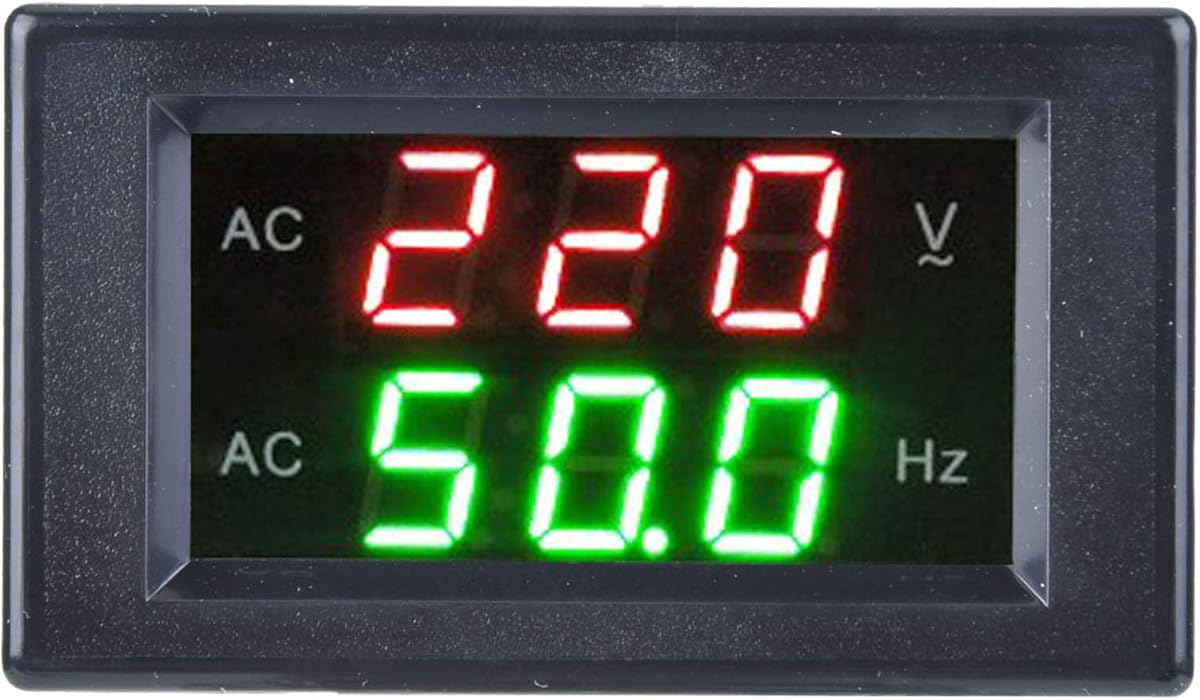
This model is perfect for those needing a straightforward voltage and frequency check. The red and green LED display makes it easy to distinguish between the two readings at a glance.
We may earn a commission when you buy through this link, at no additional cost to you.
Its self-powered design means you do not need a separate power supply. This simplifies installation significantly, especially for smaller generator setups where space is limited.
The voltage range is somewhat limited compared to industrial models, but it covers most standard home generators. It is not suitable for square wave or inverter outputs.
Great for basic maintenance and safety checks without breaking the budget. It provides essential data clearly and efficiently.
You get essential voltage and frequency readings without paying for advanced features you might not need.
Connect two wires directly to the tested voltage and start reading immediately without extra wiring.
We may earn a commission when you buy through this link, at no additional cost to you.
This meter offers advanced monitoring features tailored for popular generator brands. It replaces existing meters directly, providing a seamless upgrade for your generator panel.
We may earn a commission when you buy through this link, at no additional cost to you.
The ability to receive alerts for abnormal voltage or frequency helps prevent damage to sensitive electronics. It also tracks engine hours, which is crucial for maintenance schedules.
One important note is that replacing the meter resets the hour reading. You must record the previous data manually before swapping the unit to keep accurate maintenance logs.
Excellent for owners of specific brands who want factory-grade monitoring capabilities. It simplifies maintenance tracking and enhances safety.
Designed to fit panels from Westinghouse, DuroMax, Pulsar, and other major brands without custom modifications.
Get notified when voltage or frequency levels deviate from safe ranges to prevent equipment damage.
We may earn a commission when you buy through this link, at no additional cost to you.
This meter covers a wider voltage range than many competitors, making it versatile for different generator outputs. The LED display is bright and clear, ensuring readability in various lighting conditions.
We may earn a commission when you buy through this link, at no additional cost to you.
It operates without an external power supply, using the tested voltage itself. This reduces wiring complexity and installation time significantly.
The embedded buckle installation ensures stability once mounted. However, like many in this category, it is not suitable for measuring inverter outputs or modified sine waves.
A solid choice for users needing a broad voltage range without complex features. It performs reliably for standard AC mains monitoring.
Accommodates generators from 80V up to 500V, covering a wide spectrum of power needs.
Connect directly with two wires and use the embedded buckle for a secure fit.
We may earn a commission when you buy through this link, at no additional cost to you.
This meter uses a two-color LED display to differentiate voltage and frequency intuitively. The red and green distinction makes monitoring fast and error-free during operation checks.
We may earn a commission when you buy through this link, at no additional cost to you.
It supports the same wide voltage range as many other models in this guide. The embedded buckle installation adds stability, preventing movement that could affect readings.
Like similar devices, it relies on the main power for operation. It is designed specifically for pure AC supplies and cannot handle inverter outputs or modified sine waves.
A reliable tool for quick generator checks where clarity is key. The design prioritizes ease of reading and secure mounting.
Color-coded readings allow you to distinguish between voltage and frequency instantly without confusion.
The embedded buckle design ensures the meter stays firmly in place even during generator vibrations.
We may earn a commission when you buy through this link, at no additional cost to you.
This meter stands out by also measuring current, which is crucial for preventing generator overload. The CT sensor allows safe conversion of high current to low current for accurate measurement.
We may earn a commission when you buy through this link, at no additional cost to you.
The voltage and frequency ranges are broad, accommodating various industrial and home generator types. The display is designed to be sharp and visible from a distance.
Installation involves setting up the CT sensor, which adds a step to the process. This extra effort is worthwhile for users who need detailed load monitoring.
Ideal for users managing larger loads who need to track amp usage. It provides a complete picture of power consumption beyond just voltage.
Monitor amp usage up to 120A to prevent overloading your generator with connected appliances.
The CT sensor converts high current safely, protecting both the user and the meter from electrical hazards.
We may earn a commission when you buy through this link, at no additional cost to you.
This model offers an analog alternative to digital meters, featuring a clear scale and pointer. The transparent appearance allows easy visibility of the dial for quick checks.
We may earn a commission when you buy through this link, at no additional cost to you.
It requires a dedicated AC power supply, which is different from self-powered digital meters. This might add wiring considerations for some installations.
The ability to fine-tune the dial with a button ensures accuracy over time. It is designed specifically for power system frequency measurement.
Great for those who prefer the classic look and feel of analog gauges. It offers a different user experience for frequency monitoring.
For users who value traditional gauge design, this meter provides a clear and reliable analog readout.
A dedicated button allows for fine-tuning the dial to maintain precise frequency readings.
We may earn a commission when you buy through this link, at no additional cost to you.
This meter is targeted towards maintenance engineers and professional use. It emphasizes a precise user-friendly interface that simplifies data interpretation during maintenance tasks.
We may earn a commission when you buy through this link, at no additional cost to you.
The design prioritizes placement and accessibility, ensuring readings are easy to take in various scenarios. It is described as suitable for front vehicle placement.
While it offers professional features, details about specific ranges are less detailed than consumer products. It focuses on reliability and ease of use in field conditions.
Suited for professionals who need a reliable tool for generator maintenance tasks. It provides a straightforward way to monitor electrical parameters.
Tailored for maintenance professionals who need precise data for ensuring generator reliability.
The front placement design ensures that monitoring is straightforward even in tight or awkward spaces.
We may earn a commission when you buy through this link, at no additional cost to you.
This meter supports a range of voltages including 110V, 220V, and 380V. This flexibility makes it a versatile choice for generators that operate at different standard voltages.
We may earn a commission when you buy through this link, at no additional cost to you.
It functions as a detection tester, providing essential data on power, voltage, and frequency. The digital display ensures that readings are clear and easy to record.
While it offers broad voltage compatibility, users should verify the exact requirements for their specific generator model. It serves well as a general-purpose detection tool.
Ideal for users who have multiple generators with different voltage ratings. It provides a unified monitoring solution for various setups.
Supports 110V, 220V, and 380V, making it adaptable for different generator standards and regions.
Acts as a tester to quickly identify power parameters during maintenance or initial setup.
We may earn a commission when you buy through this link, at no additional cost to you.
This device focuses on providing an intuitive digital readout for generator parameters. It is designed to simplify the monitoring process with clear displays.
We may earn a commission when you buy through this link, at no additional cost to you.
It includes ammeter functionality and places the reading interface at the front for easy access. The design prioritizes user experience and quick data interpretation.
Specific model details are less detailed, suggesting a focus on the general monitoring experience rather than specific specs. It is suited for those valuing ease of use.
A good option for users seeking a straightforward interface without complex menus. It helps ensure accurate parameter monitoring with minimal effort.
The intuitive interface ensures that even non-technical users can monitor generator parameters effectively.
Front placement of the display allows for quick checks without needing to rearrange the generator setup.
We may earn a commission when you buy through this link, at no additional cost to you.
Selecting the right frequency meter involves considering voltage range, display type, and installation needs. This guide breaks down the key factors to help you decide.
Ensure the meter supports your generator's output voltage. Common ranges include 80-300V or 80-500V. Mismatched ranges can lead to inaccurate readings or damage to the meter.
Always check your generator's specifications before purchasing. Select a meter with a range that covers your expected output levels.
LED displays offer better visibility in bright conditions compared to LCD or analog gauges. Look for high-brightness options if you operate generators outdoors.
Consider whether you need color coding for easy differentiation between voltage and frequency. Clear readouts reduce errors during monitoring.
Some meters require a separate power supply while others are self-powered. Self-powered units simplify installation by using the tested voltage to run the device.
Self-powered meters are generally easier to install. Verify the power requirement to avoid unexpected wiring needs.
Accuracy determines how close the reading is to the actual frequency. Look for meters with an accuracy rating of 1% or better for reliable monitoring.
Higher accuracy ensures your generator runs within safe limits. This protects connected electronics from damage due to frequency fluctuations.
Embedded buckle installation provides stability, especially in vibrating environments. Panel mounting meters should fit standard cutouts for a clean setup.
Check the dimensions to ensure the meter fits your panel space. Secure mounting prevents movement that could affect readings.
Some meters offer more than frequency, including current, power, and power factor. Additional parameters provide a complete picture of generator health.
Decide if you need extra data or just frequency. Advanced meters are useful for complex electrical loads but may cost more.
If the meter will be used outdoors, check for IP ratings like IP54. These indicate protection against dust and water spray.
Durability is key for outdoor generators. A protected meter lasts longer and performs better in harsh conditions.
For replacement meters, ensure compatibility with your specific generator brand. Some models are designed for brands like Westinghouse or DuroMax.
Direct replacements save time on modification. Verify the model number and brand fit before buying.
First, turn off the generator before connecting the meter. Follow the wiring diagram carefully to connect the wires to the correct terminals. Ensure all connections are tight and secure.
Next, start the generator and allow it to reach a stable operating speed. Check the LED or digital display to see the voltage and frequency readings. Compare them to the standard range for your equipment.
Regularly inspect the meter for signs of wear or damage. Clean the display gently with a soft cloth and avoid exposure to excessive moisture. If readings seem inconsistent, recheck the connections and wiring.
A frequency meter measures the number of electrical cycles per second, typically in Hertz. It ensures your generator output matches the required 50 or 60 Hz standard for your devices.
Yes, many models are designed for DIY installation. They often require simple two-wire connections. However, always follow safety protocols and consult a professional if unsure.
Many modern meters are self-powered and draw electricity directly from the tested voltage. This eliminates the need for extra wiring. Always check the product specifications.
Most household devices require 50 Hz or 60 Hz. A safe range usually falls between 45 Hz and 65 Hz. Deviations can damage sensitive electronics connected to the generator.
Look for an accuracy rating of 1% or better. Compare readings with a trusted multimeter if possible. Consistent readings over time indicate reliability.
Most basic frequency meters are not compatible with inverter outputs or modified sine waves. They are designed for pure AC supply. Check the product description carefully.
High frequency can cause motors to spin faster than intended, leading to overheating or mechanical damage. It may also stress connected electronic components.
Monitoring ensures your generator operates within safe limits. It protects connected devices from damage and helps identify engine issues before they become serious.
Our top picks include the 6-in-1 Panel Meter for versatility, the KETOTEK for budget-friendly needs, and the VFT Digital Readout for brand-specific upgrades.
Prioritize accuracy and display clarity when selecting your meter. Ensure the voltage range matches your generator to avoid issues with readings or hardware damage.
Remember that prices and stock levels change frequently. Check current availability and retailer offers before completing your purchase to get the best deal.