
AGFRC 20A BLHeli_S DSHOT600 ESC for FPV Drone (XR-20A)
4.3Editor score
Damped light enabled
Ultra compact lightweight size
Wide protocol support range
This guide compares the top ten ESCs for racing quadcopter to help builders choose the best speed controllers for performance and reliability.
Choosing the right speed controller is critical for any racing quadcopter build. A high-quality ESC ensures precise motor control, efficient power delivery, and consistent performance during intense flights. Without it, even the best frame cannot reach its full potential.
We evaluated ten leading ESC options based on firmware support, current handling, and build quality. Each product was analyzed for compatibility with modern flight controllers and protocol support. This list covers diverse needs from budget builds to high-power freestyle setups.
Each pick highlights unique strengths and real-world performance characteristics. You will see how each ESC handles throttle response and heat management. Prices may fluctuate so check current listings before purchasing your next racing quadcopter component.
4.3Editor score
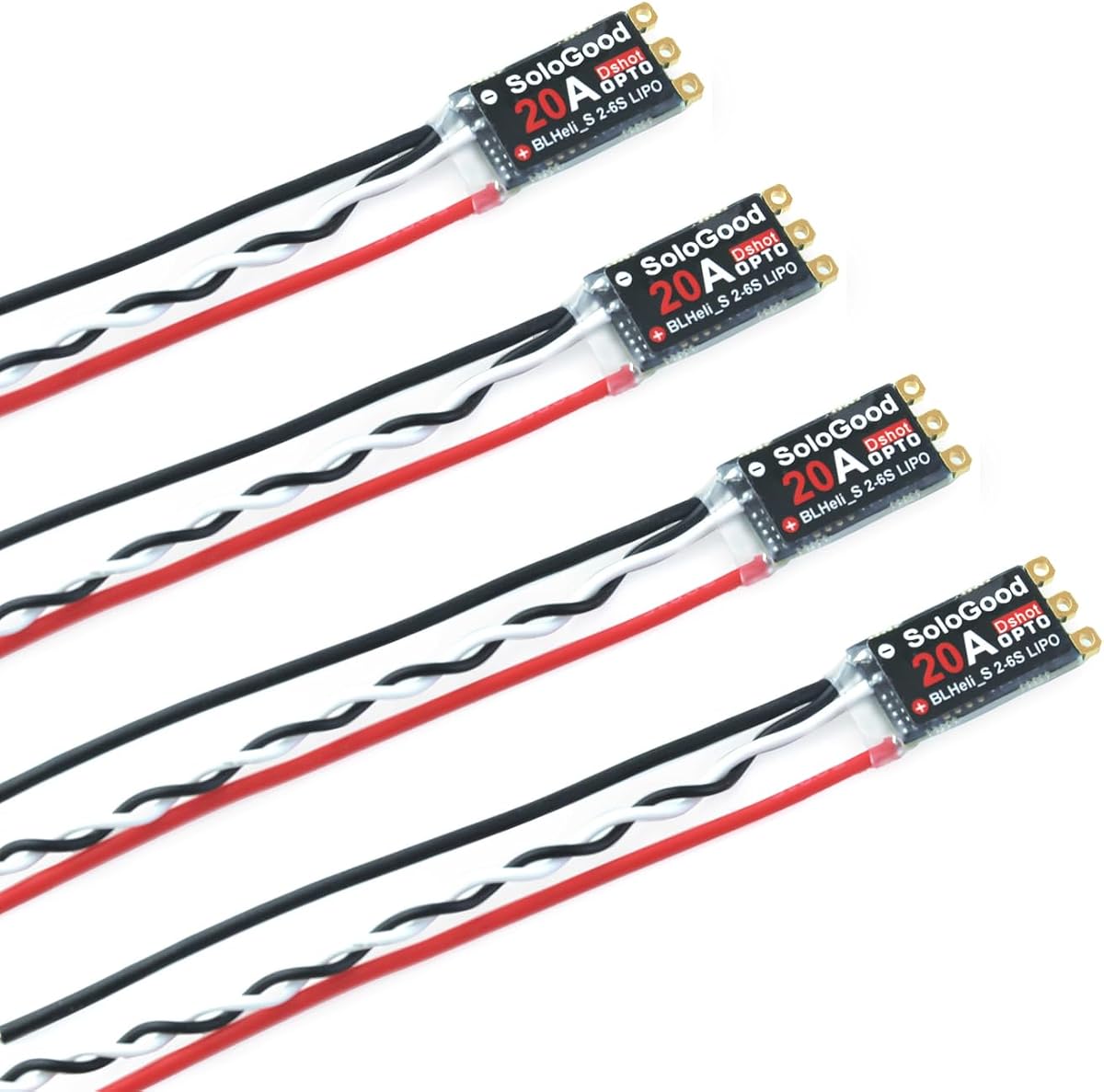
4.4Editor score

4.5Editor score
The following table provides a side-by-side comparison of all ten ESCs. Use it to quickly identify am ratings, key specifications, and unique features for your specific racing quadcopter build requirements.




This ESC ranks top for its balanced performance and reliability. It holds a strong rating and delivers smooth motor control ideal for racing. The BLHeli_S firmware ensures compatibility with most modern setups and flight controllers.
We may earn a commission when you buy through this link, at no additional cost to you.
Its twisted pair throttle signal cable reduces crosstalk effectively improving signal integrity. The use of original components ensures high-quality current handling. It supports both fixed-wing and helicopter modes alongside standard multirotor builds seamlessly.
The throttle range is configurable for various receivers but lacks 6S support. While acceptable for most racing builds, advanced users may need higher voltage options. This trade-off ensures stable performance within the safe 2-4S range.
Buyers seeking dependable performance for FPV QAV drones should consider this ESC. It offers excellent control feel and reliable power delivery. Its ease of flashing via signal cable adds practical value for custom builds.
The twisted pair signal cable design minimizes interference. This ensures precise throttle commands reach the motor reliably without noise or lag.
Users can upgrade or flash firmware through the signal cable. This simplifies maintenance and ensures your ESC stays current with the latest improvements.
We may earn a commission when you buy through this link, at no additional cost to you.
The Favourite LittleBee ESC delivers smooth precise motor control for racing and freestyle quadcopters. It supports DShot protocol with muted mode for quieter efficient operation. Its compact design integrates seamlessly into tight racing builds.
We may earn a commission when you buy through this link, at no additional cost to you.
Preloaded bootloader and firmware ensure reliable performance from the start. It handles up to 25A burst current on 2-4S LiPo setups. This makes it perfect for lightweight builds needing high agility without weight penalty.
The small footprint might complicate wiring for some users. Beginners may find the limited space for soldering challenging. However, its stability and performance justify the extra effort in most cases.
Racers prioritizing weight savings and clean installs will love this ESC. It offers high performance in a tiny package. Ideal for those building competitive FPV drones where every gram counts.
Muted mode reduces noise while maintaining efficiency. This creates a quieter flight experience ideal for stealth or low-profile builds.
DShot protocol enables fast digital signals. This ensures responsive throttle inputs critical for high-speed racing maneuvers.
We may earn a commission when you buy through this link, at no additional cost to you.
This 60A ESC offers powerful flight with stable output for demanding applications. Its immersion gold design resists high temperatures and current loads. Large ESC pads allow direct plug-in eliminating soldering hassles for flight controllers.
We may earn a commission when you buy through this link, at no additional cost to you.
Supporting DShot600/300/150 protocols ensures compatibility with high-speed digital systems. It handles 6S LiPo setups making it versatile for advanced builds. The gold finish provides durability against wear during intensive racing.
The direct plug-in design is great for quick swaps but increases size. It requires careful planning to fit smaller frames. Still, its robust performance makes it a top choice for power-focused users.
Pilots building high-power freestyle or racing drones should consider this ESC. Its thermal resistance and power stability are unmatched. Ideal for those pushing beyond standard 4S limits safely.
Direct plug-in pads remove the need for soldering. This speeds up assembly and reduces risk of damaging sensitive flight controllers.
Designed for 2-6S LiPo inputs. This flexibility lets users upgrade battery voltage for increased speed and throttle punch.
We may earn a commission when you buy through this link, at no additional cost to you.
The MAD AMPX ESC delivers high intelligent adaptive default settings. Its new core software improves throttle response significantly for racing. It supports wide flight controller compatibility with signal frequencies above 600HZ.
We may earn a commission when you buy through this link, at no additional cost to you.
Auto-adjusting timing meets almost all applications reducing manual setup time. Crosstalk reduction of signal transmission ensures cleaner control inputs. These features make it reliable for demanding flight scenarios.
Its reliance on specific signal frequency might limit older controllers. Users must ensure their hardware supports the requirements. Despite this, its performance and intelligence justify the consideration.
Builders seeking smart ESC features should explore this option. It adapts to needs automatically and simplifies tuning. Perfect for those wanting advanced control without complex configuration.
Default settings auto-adjust for optimal performance. This saves time and ensures the ESC works well across different flight scenarios.
Crosstalk reduction technology minimizes noise. This ensures consistent throttle signals even in high-noise environments.
We may earn a commission when you buy through this link, at no additional cost to you.
This ESC comes with BLHeli_S firmware allowing easy upgrades via signal cable. Hardware PWM drive ensures low voice smooth throttle response. Damped light enabled makes it sensitive and effective while reducing motor speed.
We may earn a commission when you buy through this link, at no additional cost to you.
Compact size and light weight suit competition FPV drones well. It supports various protocols including DShot600/300/150 and PWM modes. High quality components deliver super fast running speeds for racing.
The 20A limit may not suffice for large motors. However, for lightweight racing frames it is perfectly adequate. Its smooth response and low noise justify the compact design.
Competitors seeking budget friendly reliable performance should choose this ESC. It balances cost and quality effectively. Ideal for those racing on a tight budget without sacrificing performance.
Damped light mode optimizes motor response. This reduces lag and improves precision during high-speed racing maneuvers.
Supports multiple signal protocols. This ensures compatibility with a wide range of flight controllers and receivers.
We may earn a commission when you buy through this link, at no additional cost to you.
This ESC provides continuous 160A per channel with peak up to 280A. It ensures optimal power and responsiveness for heavy FPV drones. A built-in ammeter supports telemetry transmission for real-time updates on motor data.
We may earn a commission when you buy through this link, at no additional cost to you.
Equipped with large metal heat sink it enhances heat dissipation during high power output. The dual pad power supply design makes welding easier and increases current capacity. It supports multiple signal protocols including DShot PWM One-Shot Multi-Shot.
The heavy sink and current capacity add significant weight. This limits use to larger frames only. However, the telemetry features provide critical data for tuning and safety.
Racers building high-power long-endurance drones will benefit most. Its thermal stability and real-time monitoring are unmatched. Ideal for advanced pilots needing precision and durability under load.
Real-time telemetry updates allow precise tuning. This helps monitor motor health and current draw during flight.
Large metal heat sink manages excess heat. This ensures stable performance during extended high-power operation.
We may earn a commission when you buy through this link, at no additional cost to you.
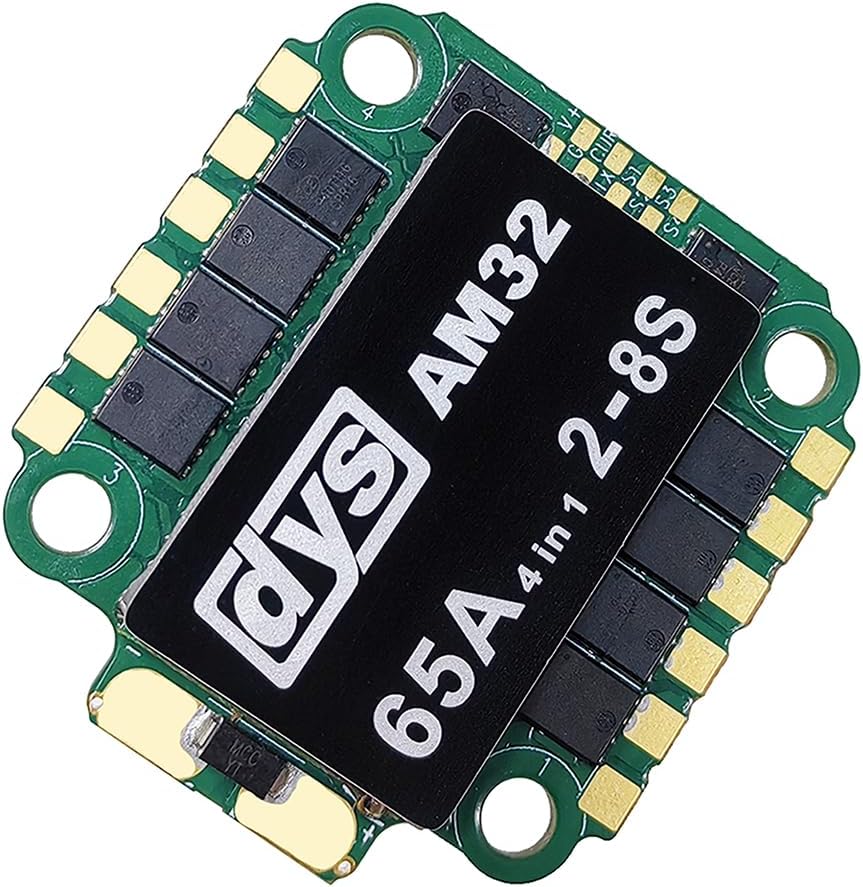
This 32-bit 4in1 ESC supports AM32 firmware for advanced features. It uses premium MOSFETs upgraded for 15% performance improvement. The 2-8S lipo input allows flexibility across various voltage setups.
We may earn a commission when you buy through this link, at no additional cost to you.
The 30.5*30.5mm installation holes fit various frames conveniently. It offers precise control and robust performance suitable for freestyle and racing. The 32-bit processor enables fine-tuned motor control.
Higher noise may be noticeable in quiet environments. AM32 firmware compatibility adds complexity for beginners. However, its power range and performance gains make it attractive.
Pilots wanting advanced tuning capabilities should choose this ESC. It supports 8S setups ideal for high voltage racing. Perfect for those seeking the latest firmware advantages.
AM32 firmware unlocks advanced motor tuning features. This allows precise customization for specific motor and prop setups.
Support for 8S inputs increases voltage options. This enables faster flight speeds and improved throttle response.
We may earn a commission when you buy through this link, at no additional cost to you.
The SEQURE AIO stack integrates a flight controller with 70A ESC. It uses STM32H743 MCU and onboard barometer for flight data. Integrated dual BEC outputs provide independent power for DJI O3 and analog VTX.
We may earn a commission when you buy through this link, at no additional cost to you.
Supporting up to 8 motors allows X8 construction easily. The 20mm or 30.5mm mounting suits most models on market. Angled solder pads reduce welding difficulty improving installation speed.
Integrating ESC and FC creates single point failure risk. This limits repairability compared to separate components. However, it simplifies builds for those seeking compact designs.
Pilots needing compact builds with high motor support should choose this. Its integration and BEC features add convenience. Ideal for those wanting simplified assembly without sacrificing power.
FC and ESC in one unit simplifies build. This reduces weight and cabling complexity for clean installations.
Dual BEC outputs power different systems independently. This ensures stable voltage for VTX and flight controller during load.
We may earn a commission when you buy through this link, at no additional cost to you.
This ESC offers 55A continuous current with Bluejay and BLHeli-S firmware options. Its dedicated 3-in-1 driver IC provides smoother starting. Hardware-generated motor PWM improves throttle response and reduces noise.
We may earn a commission when you buy through this link, at no additional cost to you.
Dimensions of 45x41x5.8mm suit high-speed racing multirotors well. It supports various throttle modes including Oneshot and Multishot. The EFM8BB21 MCU ensures reliable performance for multirotors.
The 8-bit MCU may limit future advanced features. This is acceptable for current racing needs. However, 32-bit options may be preferred for future-proofing.
Racers valuing firmware options should choose this ESC. Its low noise performance and smooth throttle are standout features. Ideal for those wanting proven reliability and hardware PWM.
Hardware-generated PWM reduces noise significantly. This improves throttle feel and ensures smoother acceleration in flight.
Supports both Bluejay and BLHeli-S. This flexibility allows users to select firmware based on their specific needs.
We may earn a commission when you buy through this link, at no additional cost to you.
This ESC uses AT32F421 processor with PWM frequency support up to 96KHz. It delivers 65A continuous current and peak up to 120A. Multi-layer PCB design increases over-current capability and effectively dissipates heat.
We may earn a commission when you buy through this link, at no additional cost to you.
High-power MOSFETs enable ultra-high efficiency conversion reducing losses. This extends flight time and improves overall efficiency. Angled solder pads reduce welding difficulty during installation.
The 6S limit excludes 8S setups. This restricts voltage options for advanced users. However, its efficiency and heat management are solid for standard builds.
Pilots seeking efficiency and cooling performance will appreciate this ESC. Its multi-layer design adds durability and stability. Ideal for those valuing heat management and efficiency.
High-power MOSFETs minimize power losses. This efficiency translates to longer flight times and reduced heat generation.
Multi-layer PCB effectively dissipates heat. This ensures reliable operation during extended racing sessions.
We may earn a commission when you buy through this link, at no additional cost to you.
Selecting the right ESC involves understanding your build's power requirements and flight style. The following factors will help you make an informed decision for racing quadcopter builds.
Current rating indicates how much power the ESC can handle safely. For racing, ensure the continuous rating matches your motor's max draw. Burst ratings matter for aggressive maneuvers but sustained power is crucial.
Choose an ESC with a rating higher than your motor's max to prevent overheating and ensure longevity.
Modern ESCs use BLHeli_S or AM32 firmware offering advanced tuning options. BLHeli_S is widely supported and easy to configure. AM32 allows deeper customization for specific motor and prop combos.
Select firmware that matches your flight controller's capabilities and your comfort with tuning.
Voltage range determines battery compatibility. Common options include 2-4S for lightweight builds or 2-6S for high-speed racing. Ensure the ESC supports your planned battery configuration.
Always match voltage range to your battery to avoid damage or poor performance during flight.
Digital protocols like DShot ensure fast throttle response. Most racing ESCs support DShot600 or DShot125. PWM support is also important for compatibility with older systems.
Prioritize DShot600 support for the best throttle precision and minimal lag.
Size impacts frame compatibility. Standard 30.5×30.5mm ESCs fit most racing frames. Compact 20x20mm options exist for smaller builds but may limit cooling.
Measure your frame's mounting area before selecting an ESC to ensure proper fit.
Hole spacing must match your frame's screw pattern. M3 holes are standard for most racing quads. Check dimensions carefully to avoid drilling modifications.
Verify hole spacing to ensure hassle-free installation and structural stability.
Efficient heat dissipation prevents throttling during high-power flights. Look for ESCs with metal heat sinks or multi-layer PCB designs. Good airflow in your frame also helps.
Choose an ESC with solid thermal design to maintain consistent performance under load.
High-quality capacitors and MOSFETs increase durability. Look for ESCs rated for high current loads with strong solder points. Premium builds resist heat and vibration better.
Invest in solid build quality to avoid failures during critical racing moments.
Install the ESC on a flat surface with good airflow. Solder motor and power leads securely to avoid resistance. Ensure the throttle signal is properly connected to your flight controller.
Regularly inspect solder joints for cracks caused by vibration. Tighten mounting screws to prevent shifting during flight. Clean dust and debris from heat sinks to maintain cooling efficiency.
Avoid over-tightening screws which can damage the ESC casing. Update firmware using manufacturer tools when updates are available. Store ESCs in a cool dry place when not in use.
BLHeli_S is widely supported and easy to configure for general use. AM32 offers deeper customization options for advanced users. Both support digital protocols like DShot for precise control.
Yes, ESCs supporting higher voltage ranges work on lower voltage batteries. Just ensure your motors are rated for 6S voltage before applying. This provides flexibility for future upgrades.
Burst current indicates maximum current the ESC can handle briefly. It is useful for aggressive maneuvers like flips or dives. Continuous ratings matter more for steady flight and racing.
DShot provides fast digital signals with minimal noise and lag. This ensures precise throttle response critical for racing. PWM is slower and more prone to interference.
Use BLHeli Configurator or AM32 Configurator with a USB adapter. Connect the ESC signal cable to your computer. Follow the tool instructions to flash the latest firmware version.
Overheating often results from undersized ESCs or poor airflow. Check current ratings and ensure proper ventilation. Solder joints can also cause resistance leading to heat.
The top picks offer diverse solutions for different racing needs. From budget-friendly 20A units to high-power 160A options there is something for every build. Consider your motor and battery requirements before choosing.
Prioritize current rating firmware support and build quality for reliable performance. Features like DShot and efficient heat management enhance flight experience. Match the ESC to your racing style and frame size.
Prices may fluctuate so check current listings before purchasing your next racing quadcopter component. Investing in a quality ESC ensures smooth flights and durability during intense racing sessions.