
STEM Electric Circuit Kit, Electricity Science Project Light Bulb Experiments for Kids Teens
4.5Editor score
8 circuit experiments included
Detailed circuit book guide
Ideal for home or classroom
This guide compares the top electricity learning kits for students and enthusiasts, highlighting features, safety, and educational value to help you choose the
Electricity learning kits provide hands-on experiences that bring abstract physics concepts to life. These kits allow students and enthusiasts to build circuits, explore magnetism, and understand energy flow through interactive experiments designed for various skill levels.
We evaluated ten top-rated kits based on project variety, component quality, safety features, and instructional clarity. Each product offers unique benefits for different age groups, from elementary learners to high school students seeking deeper engineering insights.
Each pick highlights key strengths and ideal use cases to match your educational goals. Please note that prices and availability may change over time, so verify current details before making your final selection for your STEM journey.
4.5Editor score

4.7Editor score

4.5Editor score
The following comparison table provides a side-by-side overview of all ten kits, highlighting their core specifications and unique selling points to help you quickly identify the best fit for your educational needs.



The National Geographic Circuit Kit stands out with over 120 projects that keep kids engaged for hours. It combines safety with creativity, offering activities like building light shows and amplifying voices without complex tools.
We may earn a commission when you buy through this link, at no additional cost to you.
Its standout feature is the QR code linking to video instructions, ensuring even younger learners can follow along easily. The snap-together components make setup quick, fostering independence while reinforcing concepts like conductivity and energy.
While it requires AA batteries which are not included, the ease of use justifies the cost. Some users might find the price higher than basic kits, but the sheer volume of projects offers long-term value.
This kit is ideal for families seeking a comprehensive STEM tool that sparks curiosity. Its award-winning reputation and thoughtful design make it a top recommendation for introducing children to electrical engineering.
The keyboard mode and sound system allow kids to create music and amplify voices, turning abstract concepts into tangible fun.
Components are designed for complete safety with no tools needed, reducing frustration and encouraging independent exploration.
We may earn a commission when you buy through this link, at no additional cost to you.
This kit offers an affordable entry point into electrical engineering with eight engaging experiments. It includes unique projects like saltwater power generation and fruit batteries, making learning accessible for young minds.
We may earn a commission when you buy through this link, at no additional cost to you.
The detailed circuit book guides users through each step, promoting critical thinking and creativity. It is designed for ages eight and up, ensuring instructions are easy to follow for both home and classroom settings.
While the kit does not include batteries, its low cost makes it an excellent trial option. Some components are basic, but they effectively demonstrate core concepts like series and parallel circuits.
Ideal for educators or parents seeking a cost-effective STEM tool, this kit balances simplicity with educational value. It encourages exploration without breaking the budget.
The fruit battery and saltwater power generation experiments teach alternative energy sources in a fun, hands-on way.
The circuit book fosters problem-solving skills, helping students understand how circuits work through guided discovery.
We may earn a commission when you buy through this link, at no additional cost to you.
This premium kit is tailored for high school students, offering 56 electricity and 21 magnetism items. It covers advanced topics like Oersted experiments and Ohm's law, providing deep learning opportunities.
We may earn a commission when you buy through this link, at no additional cost to you.
The full-color manual enhances understanding by explaining principles clearly. Included tools and a storage bag ensure components stay organized, making it suitable for both classroom labs and home study.
While it requires three AA batteries not included, the thoroughness justifies the investment. Some users may find the price higher than simpler kits, but the magnetism integration adds unique educational value.
Best for serious students or educators, this kit bridges the gap between basic circuits and real physics. Its design supports long-term exploration of electromagnetism.
The kit includes experiments like Amper's Force Investigation, which deepen understanding of magnetic fields and electricity.
Components come in a storage bag with a full-color manual, ensuring easy cleanup and clear guidance for complex projects.
We may earn a commission when you buy through this link, at no additional cost to you.
This kit combines electricity and magnetism with over 50 DIY experiments. Unique modules like the Joule's first law experiment offer insights into physics that standard kits often skip.
We may earn a commission when you buy through this link, at no additional cost to you.
The manual explains not just how to build but why it works, fostering deep learning. A solid storage case keeps every item organized, making it easy to transport for school projects.
While it may require careful battery setup, the creative design possibilities are rewarding. Some beginners might find the concepts challenging, but the guided approach supports growth.
Ideal for students wanting more than basic circuits, this kit excels at integrating magnetism. It encourages designing custom experiments beyond the manual.
The Joule's first law module helps students understand energy transformation, a key concept in physics education.
Each item has a fixed place in the solid case, ensuring easy transport and organization for collaborative projects.
We may earn a commission when you buy through this link, at no additional cost to you.
Focused on motor experiments, this kit includes two motors and various propellers for dynamic projects. It is designed to inspire curious kids with Montessori-style learning through building.
We may earn a commission when you buy through this link, at no additional cost to you.
The crocodile clips and switches make connections simple, perfect for school science fairs. The included buzzer adds sound elements to circuits, enhancing engagement for younger learners.
While it is affordable, users must control usage time to prevent heat buildup. Safety warnings about small parts mean adult supervision is essential for optimal use.
Best for introducing motor basics, this kit is a great back-to-school gift. Its simplicity ensures kids can experiment safely while learning core concepts.
The kit includes two motors and multiple propeller options, allowing students to explore mechanical energy in circuits.
Users must limit usage time to prevent heat buildup and follow safety guidelines to avoid choking hazards.
We may earn a commission when you buy through this link, at no additional cost to you.
This kit encourages family science activities with 18 hands-on experiments like electric bells and hand crank generators. It includes tools like voltmeters to make measurements part of the learning.
We may earn a commission when you buy through this link, at no additional cost to you.
The 40-page manual provides a foundation for learning, suitable for ages eight and up. Durable components ensure it withstands repeated use during school projects or home fun.
While it may be complex for very young children, the parent-child focus enhances collaboration. Some users may need to source batteries separately for full operation.
Ideal for families looking to bond over STEM, this kit balances play and education. It teaches measurement and circuit concepts effectively.
Includes a voltmeter and ammeter, allowing kids to measure electrical values and deepen their understanding of circuits.
The hand crank generator and electric bell projects encourage observation and critical thinking in a shared activity.
We may earn a commission when you buy through this link, at no additional cost to you.
Designed for high school students, this kit features sensitive ammeters and unique modules like Joule's first law. It helps deepen understanding of circuits and magnetic fields in a structured way.
We may earn a commission when you buy through this link, at no additional cost to you.
The double-layer storage box ensures components stay organized with fixed positions. This makes it easy to transport and store, ideal for both classroom and home use.
While it requires three AA batteries, the educational depth is significant. Some users may find the price higher, but the components support advanced learning.
Best for juniors and seniors exploring physics, this kit offers comprehensive tools. It bridges textbook learning with practical experimentation.
Features like a sensitive ammeter and magnetically controlled switch support detailed exploration of electrical fields.
The sturdy double-layer box with fixed positions ensures every item has a place, reducing loss during experiments.
We may earn a commission when you buy through this link, at no additional cost to you.
This basic kit helps students consolidate textbook knowledge with series and parallel circuit projects. It includes English instructions to simplify setup for junior high school learners.
We may earn a commission when you buy through this link, at no additional cost to you.
The plastic storage box keeps accessories organized, and the safe design ensures it is suitable for beginners. It is a great choice for summer camps or science clubs.
While it does not include batteries, the low cost makes it an ideal starting point. Some users may want more advanced features, but it excels at basics.
Best for grades seven to nine, this kit builds foundational skills. It is a reliable tool for introducing electricity safely.
The English manual simplifies assembly, making it easier for students to focus on learning basic electrical rules.
A plastic storage box ensures all accessories are kept safe, preventing loss during storage or transport.
We may earn a commission when you buy through this link, at no additional cost to you.
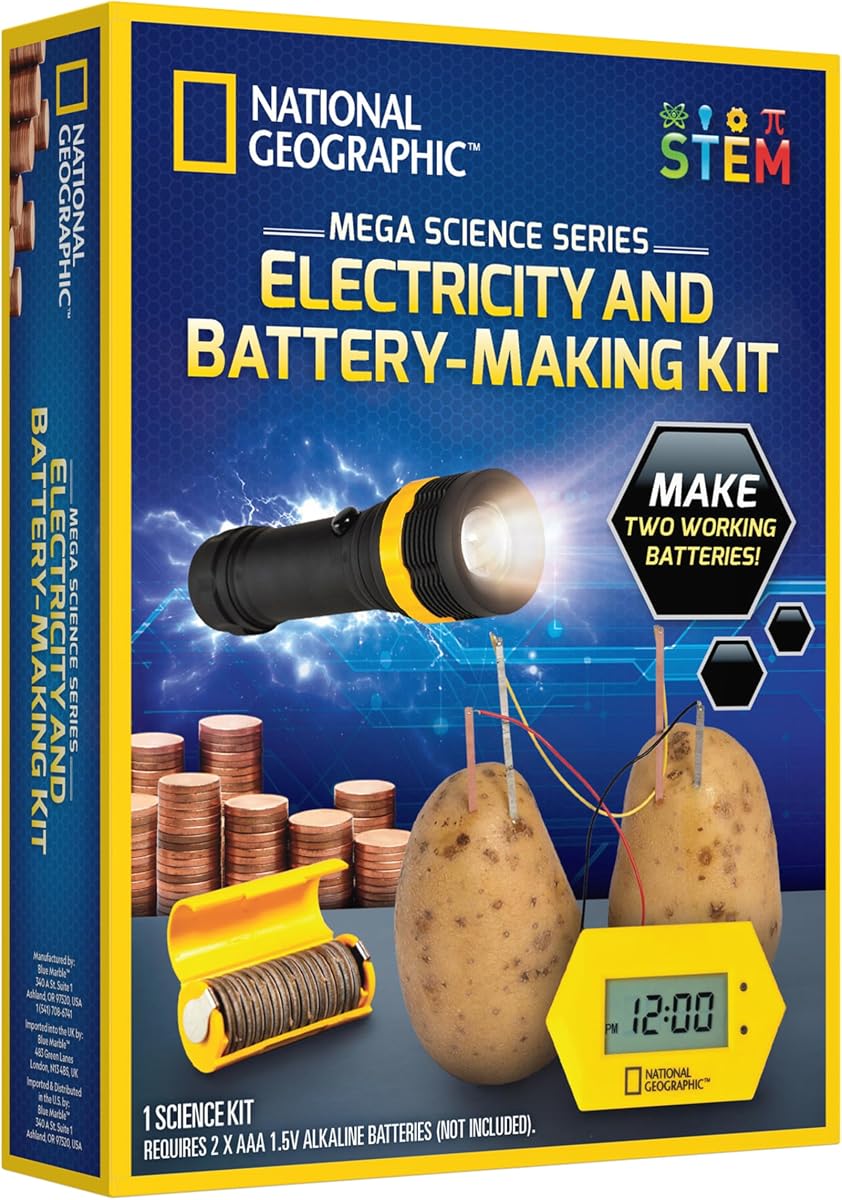
This kit focuses on energy basics with two memorable projects like a potato clock and coin-powered flashlight. It teaches kids how batteries work using household items.
We may earn a commission when you buy through this link, at no additional cost to you.
The detailed learning guide explains the science behind the experiments, making it a great gift for curious kids. The potato battery project is particularly engaging.
While the project count is limited, the focus on fundamentals is strong. Some users may need to source potatoes separately, adding a bit of prep.
Best for introducing battery science, this kit is both fun and educational. It is an excellent choice for sparking early interest in engineering.
The potato battery and coin flashlight projects allow kids to see energy conversion using everyday items.
The detailed guide explains why things work, helping students grasp electrical engineering basics in a fun way.
We may earn a commission when you buy through this link, at no additional cost to you.
This upgrade kit adds unique projects like traffic lights and wind power cars. It includes switches, wires, and LEDs, ready for use right out of the box.
We may earn a commission when you buy through this link, at no additional cost to you.
The transparent storage box offers clear visibility of parts, and the full-color manual supports learning. It is a great choice for building complex models.
While it requires two AA batteries, the variety of projects is appealing. Some users may find it intermediate, but it offers room for creativity.
Best for students wanting more than basic circuits, this kit encourages design. It supports hands-on building with practical components.
The wind power car and traffic light projects allow students to explore motion and control in circuits.
A transparent storage box makes it easy to see and access parts, improving workflow during experiments.
We may earn a commission when you buy through this link, at no additional cost to you.
Choosing the right kit depends on the learner's age, interests, and goals. The following factors help narrow down options to find the perfect match.
Kits often specify age ranges or grade levels based on complexity. Look for simple snap connectors and basic components for younger kids, while older students may need advanced modules like ammeters or detailed physics guides.
Check the age or grade recommendations to ensure the content matches the learner's maturity and existing knowledge.
Some kits focus on basic circuits while others include magnetism, motors, or energy experiments. A wider range of projects keeps engagement high and covers more concepts.
Prioritize kits with multiple project types to maximize learning potential and avoid boredom.
Durable materials ensure components last through repeated use. Kits with storage solutions like boxes or bags help maintain organization and prevent loss.
Look for sturdy parts and secure storage to extend the kit's lifespan.
Clear manuals with color illustrations or video support simplify learning. Detailed guides that explain the why behind experiments deepen understanding.
Ensure instructions are easy to follow and include explanations for concepts.
Child-friendly designs minimize risks like overheating or small parts. Always check safety warnings and ensure adult supervision is available if needed.
Verify safety ratings and design features to protect young users.
Some kits require tools like screwdrivers while others are tool-free. Decide based on the learner's readiness to handle tools independently.
Consider whether you want to provide tools or use a tool-free setup.
Most kits need batteries not included, so check voltage and count. Having a backup supply ensures uninterrupted experimentation.
Check battery specifications to avoid surprises before starting projects.
Award-winning brands like National Geographic offer proven quality and support. Established brands often provide better customer service and educational resources.
Opt for reputable brands to ensure reliability and educational value.
Before starting, read the manual thoroughly to understand safety rules and required materials. Organize components using the provided storage solutions to avoid losing small parts during setup.
Begin with simple circuits to build confidence before moving to advanced projects. Ensure all connections are secure to prevent short circuits or equipment damage.
Store the kit in a cool, dry place after use to preserve component integrity. Keep batteries separate when not in use to prevent leakage or corrosion over time.
Most kits do not include batteries, so you will need to purchase AA or other required types separately. Always check the product specifications to ensure you have the right voltage and quantity before starting projects.
Yes, many kits are designed for beginners with step-by-step instructions and simple connections. Look for kits labeled as basic or introductory if you are new to electrical experiments.
Setup and assembly times vary from minutes to hours depending on complexity. Simpler projects may take under half an hour while multi-component builds can span several sessions.
Yes, components are designed for reuse, allowing endless creativity beyond the manual. You can mix and match parts to design custom circuits and expand learning over time.
Many kits are rated for ages eight and up with safety features like secure connections. Always supervise younger users and follow warnings about small parts and heat risks.
Yes, many are designed for school projects with durable storage and educational guides. They work well for fairs, clubs, or structured STEM lessons in group settings.
Some kits include QR codes linking to video instructions for added clarity. Check the product details to see if visual guides are available alongside the written manual.
Contact the manufacturer for support or check if replacement parts are available. Many brands offer after-sales service to help maintain your kit's functionality over time.
These ten kits offer diverse options for learners from elementary to high school. The National Geographic Circuit Kit leads with versatility, while the EUDAX options excel in advanced physics learning.
Prioritize kits that match the learner's age and educational goals to ensure engagement. Whether budget or premium, each choice supports hands-on discovery and scientific curiosity.
Prices and availability may change, so verify current details before purchasing. Investing in a quality kit sets the stage for lifelong interest in electricity and engineering.